Showing posts with label poetry challenge. Show all posts

Monday, March 17, 2014

Metaphysical Dog, and other winners...

http://bookcritics.org/awards/

The National Book Critics Circle have announced theirs prize winners for 2014:

Poetry
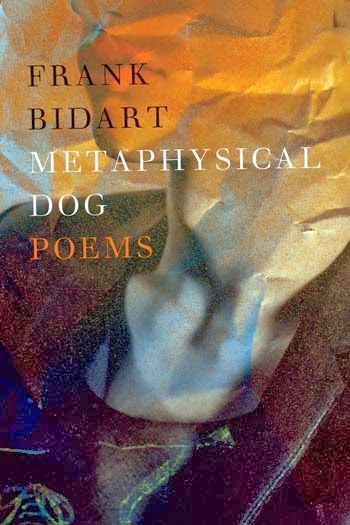
http://discover.halifaxpubliclibraries.ca/?q=title:%22metaphysical%20dog%22Metaphysical Dog
(M) by Frank Bidart

"Reading Frank Bidart can be a mystical, sensual, over the top, daunting experience. It can also be both ecstasy and exorcism. His poetry continually surprises and delights with its ever-changing structure, form and prosody." NBCC


First book - The John Leonard Prize
A Constellation of Vital Phenomena
(M) by Anthony Marra

http://discover.halifaxpubliclibraries.ca/?q=title:%22a%20constellation%20of%20vital%20phenomena%22“A flash in the heavens that makes you look up and believe in miracles....Here, in fresh, graceful prose, is a profound story that dares to be as tender as it is ghastly, a story about desperate lives in a remote land that will quickly seem impossibly close and important....I haven’t been so overwhelmed by a novel in years. At the risk of raising your expectations too high, I have to say you simply must read this book.”  - Ron Charles, Washington Post


Autobiography
Farewell, Fred Voodoo : a letter from Haiti
(M) by Amy Wilentz

http://discover.halifaxpubliclibraries.ca/?q=title:%22farewell,%20fred%20voodoo%22"In her gritty, surprising memoir, Wilentz enlarges her reader’s understanding and discomfort. She insists on sampling the force of Haitian history and its place in global economics, on stopping to smell the predatory journalism and an engorged, counterproductive international aid scene. This is a rare, rigorous memoir with a bibliography and index, and its author’s sharp observational experience from living in Haiti for two years and reporting there for 20, writing for the New Yorker and the Nation magazines." - NBCC


Biography
Jonathan Swift: his life and his world
(M) by Leo Damroschhttp://discover.halifaxpubliclibraries.ca/?q=title:%22jonathan%20swift%22damrosch

"Damrosch’s tolerance for mystery is one of the outstanding features of his spellbinding biography. Where others have filled the gaps with unsupported suppositions, Damrosch consistently surveys the available evidence and recognizes its limitations." - NCCC


Fiction
Americanah
http://discover.halifaxpubliclibraries.ca/?q=title:%22americanah%22(M) by Chimamanda Ngozi Adichie

"With Americanah, which is at once a love story, an immigrant’s tale, and a socially acute snapshot of this chaotic moment in time, she nails the idiosyncracies of three cultures. We knew Adichie was wicked smart. Now we know she can be wicked funny." - NCCC


Non-fiction
Five days at Memorial: life and death in a storm-ravaged hospital
(M) by Sheri Fink

http://discover.halifaxpubliclibraries.ca/?q=title:%22five%20days%20at%20memorial%22"What Sheri Fink has delivered is a big book, not a rant, but one that is a page-turner, a book bursting with stories that defy a single narrative. This is a book about big questions. It’s about what happens when exhausted and stressed doctors and nurses are forced to practice triage, when medical resources don’t exist, and when surviving may not be living." - NCCC


Wednesday, June 12, 2013

Versions of Translation – new collections of Russian poetry

Osip Mandelstam

The library feels rich in poetry these days. Two books that I picked up recently were new collections of work by Osip Mandelstam and Marina Tsvetaeva. These two renowned Russian poets have been dead for over 70 years, but now we have new English translations of their work.

Marina Tsvetaeva
They wrote through the Russian Revolution; they wrote of hunger and anger, of passion and exhaustion. Both are known for their music, and at times, their inaccessibility. There have been many translations of Mandelstam and Tsvetaeva’s writing, but these new translations are praised for the way they have carried over the attention to sound and rhythm.

Neither Christian Wiman (M) (Mandelstam) nor Jean Valentine (Tsvetaeva) wanted to call the poems translations, in order to acknowledge the murkiness of the work; Wiman prefers versions, and Valentine uses the word readings. Both Mandelstam and Tsvetaeva “translated” poems from languages they did not speak, so likely they would understand the desire of non-Russian speakers to bring their work into another language (Wiman is clear about his lack of Russian, and while I couldn’t confirm this for Valentine, the participation of Ilya Kaminsky suggests a need for assistance).

In fact, Odessa-born poet Ilya Kaminsky worked on both collections. He writes an essay in each book, and I found these just as engaging as the poems. He weaves the history of lives and places with examinations of language and translation. He leaves space in his prose for us to breathe and conjure.

And space we need in the reading of these poems. In Stolen Air: selected poems of Osip Mandelstam (M), the sounds of the words increase the strength – and burden – of their meaning. In Dark Elderberry Branch: poems of Marina Tsvetaeva (M), there is a CD with recordings of the poems in their original Russian. How bewildering to listen to what you cannot understand, trusting somewhere that you do.

To learn more about 20th century Russian poets, check out some of these biographies (M). There’s also a new biography of Mandelstam (M) soon to be available.

Wednesday, March 27, 2013

Journeying Through


Some might say that reading a book is like a journey. It's a nice metaphor for the process of reading, which is much like taking a virtual trip through someone else's experiences or imaginings. The authors of the following books really felt that their works represented a journey from one point to another -- they've all included the metaphor in the very title of their books. Looking for an adventure? Why not journey through one of these great books!

For the Love of Physics: from the end of the rainbow to the edge of time - a journey through the wonders of physics (M) by Walter Lewin and Warren Goldstein

I managed to make it through high school and university without even a basic Intro to Physics class. I've always felt like I missed out on something: though intimidating to the novice, physics also seems like a fascinating study that holds so many secrets to the world we know. Walter Lewin's path couldn't have been more different than mine and this book (as described by the library catalogue) is a"largely autobiographical account of the author's life as one who fell in love first with physics and then with teaching physics to students."

If that sounds a bit dry you should consider the following: "Universally praised for the remarkably fun, inventive, and often wacky ways in which Walter Lewin brings the joys of physics to life—from super-charging a tricycle with a fire extinguisher to risking his life by putting his head in the path of a swinging wrecking ball—For the Love of Physics takes readers on a marvelous journey, opening our eyes as never before to the amazing beauty and power of all that physics can reveal to us, from the coolest, weirdest features of the tiniest bits of matter, to the wonders of our everyday lives. "

From Pemmican to Poutine: a journey through Canada's culinary history (M) by Suman Roy and Brooke Ali

With all the focus on food in the media these days -- from celebrity chefs on cooking shows to local food movements and discussions of food security -- it's not surprising to stumble upon this book celebrating Canada's culinary history. Divided by region, it's part cookbook, part history book and contains not just pemmican and poutine, but fiddleheads, lobster rolls, maple syrup and many more Canadian delights.

The Last Great Ape: a journey through Africa and a fight for the heart of the continent (M) by Ofir Drori and David McDannald

The Last Great Ape is the name of an organization run by Ofir Drori that bills itself as the "first Wildlife Law Enforcement NGO in Africa". It supports not only the preservation of apes but of African animals and their habits in general. The book is part environmental commentary, part animal activism and part good old fashioned adventure: "The Last Great Ape is a story of the fight against extinction and the tragedy of endangered worlds, not just of animals but of people struggling to hold onto their culture. The book reveals the intense beauty and strife that exist side by side in Africa, and Ofir makes the case that activism and dedication to a cause are still relevant in a cynical modern world. This dramatic story is one of courage and hope and, most importantly, a search for meaning."

Rez Life: an Indian's journey through reservation life (M)
by David Treuer

The Idle No More movement in Canada has brought many of the issues and challenges facing First Nations People in Canada into the spotlight, Treuer's new memoir looks at similar issues south of our border. "Celebrated novelist David Treuer has gained a reputation for writing fiction that expands the horizons of Native American literature. In Rez Life, his first full-length work of nonfiction, Treuer brings a novelist's storytelling skill and an eye for detail to a complex and subtle examination of Native American reservation life, past and present.With authoritative research and reportage, Treuer illuminates misunderstood contemporary issues of sovereignty, treaty rights, and natural-resource conservation. He traces the waves of public policy that have disenfranchised and exploited Native Americans, exposing the tension that has marked the historical relationship between the United States government and the Native American population." This book would make good companion reading for those who have read or are waiting to read Thomas King's The Inconvenient Indian : a curious account of Native People in North America.

She Walks In Beauty: a woman's journey through poems (M)
by Caroline Kennedy

With April -- National Poetry Month -- approaching, it's time for me to start my annual obsession with the fact that I simply don't read enough poetry: this accessible collection may be a place to get an early jump if you feel the same way. "In She Walks in Beauty, Caroline Kennedy has once again marshaled the gifts of our greatest poets to pay a very personal tribute to the human experience, this time to the complex and fascinating subject of womanhood. Inspired by her own reflections on more than fifty years of life as a young girl, a woman, a wife, and a mother, She Walks in Beauty draws on poetry’s eloquent wisdom to ponder the many joys and challenges of being a woman. Kennedy has divided the collection into sections that signify to her the most notable milestones, passages, and universal experiences in a woman’s life, and she begins each of these sections with an introduction in which she explores and celebrates the most important elements of life’s journey."

Wednesday, February 8, 2012

Oral Storytelling & African Heritage

Long before people could read and write, humans shared stories through oral storytelling. Listening to a storyteller is a more personal experience than the solo act of reading a book; hearing the storyteller’s voice and observing their facial expressions and body language adds dimension to a story beyond what even the most skilled writer can put on a page.

The tradition of oral storytelling continues to be strong in many cultures, including among African Canadians. Over the next few weeks, in celebration of African Heritage Month, there are a number of oral storytelling events taking place at Halifax Public Libraries and beyond. So, consider putting that book or eReader down, just for an evening, to take in (or take part in) a live storytelling or spoken-word event to experience a form of storytelling that predates books, audiobooks, films and of course, eBooks.

On February 9, there are two events from which to choose. The first event, Storied Lives, features filmmaker Juanita Peters (M) and historian, writer and researcher Donna Byard-Sealey (M). Juanita and Donna will share largely unknown stories of African Canadian lives using visual, oral and textual presentations to tell their stories. This program will take place at the Dalhousie Student Union Building at 6 p.m.

On the same night, beginning at 7 p.m., the Halifax North Memorial Library will host an Open Mic Poetry Night celebrating the literature of the African Diaspora. Everyone is invited to read aloud a favourite poem, original work or to choose a poem from a selection of library books that will be on hand. One of my favourite poets of the African Diaspora is Langston Hughes (M).

Past Poet Laureate Shauntay Grant (M) will be hosting a program called Wordrhythm at the Spring Garden Road Memorial Library on February 14 at 7 p.m. Wordrhythm is an improvisatory series that encourages the collaboration between spoken word artists and musicians and focuses on close listening. Shauntay is the author of Down Home and The City Speaks in Drums, two poetic books for children perfect for reading aloud.

For fans of writer and painter David Woods (M), February brings two opportunities to see him live. The first, on February 11 at 2 p.m. at the Tantallon Public Library, is when David will present Once, his collection of stories about the life and death of Africville. David’s performance of Once will be accompanied by an exhibition of paintings and woodcarvings by Halifax artist and Africville descendant Angel Gannon.

Your second opportunity to see David Woods comes on February 16 at a spoken word event called Speak! This event will take place at the Company House (ages 19+) and will start at 8 p.m. Admission is $5.

And since we’re talking about events in celebration of African Heritage Month, this is a good opportunity to direct you to a complete list of what’s being offered at the library in February. The library has a website dedicated to African Heritage, which features information about programming, a history of African Heritage Month at Halifax Public Libraries and other resource information. Another great source for programming information in February is the Office of African Nova Scotian Affairs.

Tuesday, April 28, 2009

Poetry Month Wrap Up

Well, April is waning and so we must say goodbye to Poetry Month for another year, and goodbye to our Poetry Challenge. I for one had fun reading the poetry that I did, and am really glad we got around to doing this.

As the month wraps up, it seems like a good time to highlight the nominees for the Griffin Poetry Prize. A Canadian Prize that honours both Canadian and International poets with an annual $100 000 prize.

This year’s international nominees are:

The Lost Leader by the late Scottish poet Mick Imlah;Life on Earth by Irish poet Derek Mahon;
Rising, Falling, Hovering by US poet C. D. Wright;
Primitive Mentor by US poet Dean Young.


This year’s Canadian nominees are:

Revolver by Kevin Connolly;
Crabwise to the Hounds by Jeramy Dodds;
The Sentinel by A. F. Moritz.

More information on the prize and the nominees - included excerpted poems - can be found at the Griffin Prize website.

The prize also publishes an anthology each year of the nominees - The Griffin Poetry Prize Anthology is a great place to discover new poets.

And finally, HRM announced over the weekend that Halifax poet spoken word artist, children's book author and journalist Shauntay Grant will serve as the city's next Poet Laureate. Congratuations, Shauntay!

Saturday, April 18, 2009

Poetry Challenge - The McSweeney’s Book of Poets Picking Poets

Okay, I’ll admit that I’m a bit of a sucker for literary gimmicks: that’s probably what drew me to the McSweeney’s Book of Poets Picking Poets.

Before I tell you about the book, and its gimmick, let me tell you a bit about McSweeney’s. It is an American publishing house that started in 1998 with the journal McSweeney’s Quarterly Concern. The first issue contained only pieces that had been rejected by other magazines. In the ten years since, McSweeney’s has built a loyal following, moved into book publishing as well as magazines while still aiming to highlight new and emerging writers. But in those ten years, it hasn’t really tried to publish poetry.

So, when the folks from McSweeney’s decided to put together a poetry feature, here’s what they did: they picked one poem by each of ten relatively well known poets to include in the collection. Then, each of those poets picked one of their own poems to also include, as well as a poem by another poet that they liked. And then each of those poets picked one of their own poems and a poem by someone else, and so-on and so-on. The book contains 10 chains of 10 poems by five poets and it gives a wonderful, random glance at a range of living poets from around the world. It’s a great place to dip into poetry and see what is happening today.

My last Poetry Challenge post talked about the fact that verse novels appeal to me. With these poetry chains, there is no single thread flowing through, so I had to find a new approach. So, I read for the flow, for individual images, and individual thoughts that made me smile or remember similar situations. And I’ll admit I rarely sat down and tried to figure out what the poem means; although sometimes, depending on the poet or the story they are trying to tell, it jumped out at me. One of the things I found most interesting was comparing the two poems by the same poet, as frequently the poem picked by the poet him/herself gave a very different impression of their work then the one picked by someone else.

So there were some poems I liked and some I didn’t. A few I loved: James Tate’s “The Radish” for me perfectly juxtaposed the beauty that can be found in a vegetable with the unnatural world of the grocery store; Patrick Lawler’s two poems where he speaks of himself in the third person say a lot about self-perception (one of those "Patrick Lawler writes about "Patrick Lawler" can be found here), and Jane Hirshfield’s “Theology” addresses the big questions of life through the actions of flies and dogs.

The McSweeny’s Book of Poets Picking Poets is available in book form, but was first available as part of issue 22 of the magazine McSweeny’s. The library has copies of both.

Wednesday, April 15, 2009

Poetry in HRM

As part of our Poetry Challenge we contacted HRM’s outgoing Poet Laureate, Lorri Neilsen Glenn for some ideas to share with poetry readers this month. The position of Poet Laureate in HRM was created in 2001 to create an “ambassador and advocate for literacy, literature and the arts, and [to] reflect the vitality of our community through appearances and readings of poetry..."

The Internet is a great place to find works from new and up-and-coming poets, and Lorri has kindly passed along a few sites that she highly recommends. Check them out, discover some new voices:

The Poetry Map of Canada
: a site that features information and poetry from Poet Laureates from across Canada.

Poetry Foundation: a website from “The Poetry Foundation, publisher of Poetry magazine,[an] independent literary organization committed to a vigorous presence for poetry in our culture." Features a searchable database of poetry by author, topic, first line. As well as a daily poem in print and audio, plus lots more.

Poetry 180: created by former US Poet Laureate Billy Collins, offers a poem a day for high school students (and the approximately 180 school days in a year).

Young Poets: a Canadian site of resources and poetry for youth.

Lorri’s web page suggestions hint at something that has been important during her term as Poet Laureate: engaging youth in poetry. As a part of her term, she worked with a youth group called Wordfishing who have since put together both a CD and a chapbook of their work. Watch the library catalogue for copies. Coming soon!

If you’re looking for more poetry suggestions from the library collection - check out the legacy project To Find Us: Words and Images of Halifax of previous HRM Poet Laureate Sue MacLeod to find some more great local talent. And of course the library stocks books by both Lorri Neilsen Glenn and Sue MacLeod.

HRM will be announcing its newest Poet Laureate later this month.

Saturday, April 11, 2009

Poetry Month Challenge - Is that considered poetry?

Poetry. As I sit and stare with dread at the tome before me of Longfellow’s poems, I’m not sure I did the right thing by agreeing to give poetry a shot. But, it is poetry month and okay, maybe it’s not a tome…maybe it is really a rather short book of selected poems, but for me it doesn’t matter. With my reluctance to crack open the book and start reading poetry, it could be a tome.

Am I alone? I don’t think so. It isn’t that I don’t like poetry but I’m a story type of girl. I like fiction. A lot. I like memoirs or biographies – something that feels like there is a beginning, middle and end. For that reason, I thought I’d mention a few of the poems I really do enjoy. They also follow the story-like format which I prefer.

My first introduction to poetry was Longfellow’s Paul Revere’s Ride (my reason for choosing the Longfellow tome, I mean, book). Every summer vacation, my Mom encouraged my brother and me to learn something new. One year, it was the State capitols, the next year, memorizing Paul Revere’s Ride. I have to admit, I enjoyed myself. It’s a story, combined with history and, *bonus*, it rhymes! That made it so much easier to memorize.

I find a lot of Longfellow’s poems follow this pattern. Many tell stories or are history and are quite easy and direct. Nothing too flowery or wordy for my taste and, did I mention that he often includes rhymes? Okay, in all seriousness, if you aren’t sure about poetry, I’d suggest giving Longfellow a try. And, if you’re not sure what to start with, try his poem Evangeline. It’s historical and local. That gives the poetry meaning to me, and it is told like a story.

I do, however, have two other favorites that I thought I’d mention. If you enjoy Loreena McKennitt’s music, than you are already fans of poetry. One of my favorite pieces performed by McKennitt is the Highwayman. While she does an amazing job setting this poem to music, many of you Anne of Green Gables fans will recognize this poem from the movie, where Anne recites this poem for the town. Romance readers as well as those who enjoy a good story should give this poem a try. It is, I believe, my favorite poem.

Finally, for those fans of Broadway musicals, there’s T.S. Eliot's Old Possum’s Book of Practice Cats. These are the poems used in Andrew Lloyd Webber’s musical Cats.

Will I ever be a fan of poetry? Well, what makes a fan? Are some of you fans of Leonard Cohen? Much of his music is poetry. Perhaps you don’t want to read it, but we can listen to it and isn’t that amazing? While I am not a big fan of reading poetry, some of the most beautiful music consists of poems set to music. So, does that make me a fan of poetry? I think it does.

Keep an open mind next time someone asks you if you like poetry. You may like it more than you realize. I’m going to try. And, maybe I’ll even break open this collection of Selected Tales and Poems by Longfellow. It's April, it's poetry month. Get a little wild and crazy and give poetry a chance!

Tuesday, April 7, 2009

Poetry Month Challenge - A Shropshire Lad by A.E. Housman


When it comes to poetry, I need someone to tell me what is good.

When Kristina issued this challenge, a couple of lines of poetry that have been rattling through my head since university days came rattling back,

"Terence this is stupid stuff,
You eat your victuals fast enough"

Probably time to put them back in context.

The Collected Poems of A.E. Housman contains his very famous A Shropshire Lad. It has all the big themes: home, war, love, death. For the most part, the poem is centered around a young Shropshire lad named Terence. He is encouraged to live life to the fullest, for death will come soon enough. It seems to me both pessimistic and sometimes humorous. Soldiers die young and are mourned. Young women sometimes disappoint. Brothers murder brothers and are then hanged. The loss of young life recurs throughout the poem. "To an Athlete Dying Young" is commonly recited at a young person's untimely funeral. There is the virtue of the county compared to the darkness of London.

There are flashes of humor (or maybe irony).

"Terence this is stupid stuff:
You eat your victuals fast enough;
There can't be much amiss, 'tis clear,
To see the rate you drink your beer.
But oh, good Lord, the verse you make,
It gives a chap the belly-ache."

and I enjoyed:

"Oh, when I was in love with you,
Then I was clean and brave,
And miles around the wonder grew
How well did I behave.

And now the fancy passes by,
And nothing will remain,
And miles around they'll say that I
Am quite myself again."

This poem has stood the test of time and is used and quoted frequently to this day. (Including an episode of The Simpsons). It experiences renewed interest in time of war.

So...the challenge. Do I have a renewed interest in poetry? Not really. I tend to gravitate towards fiction, biographies and history. I like a story. I felt like I had to work to wrest the story out of this poem. Will I do another challenge? Maybe, we'll see.

Friday, April 3, 2009

Poetry Month Challenge - I and I by George Elliott Clarke

I first read George Elliott Clarke when I was assigned Whylah Falls in a modern poetry class during my undergrad. It was my first experience with the idea of a verse novel, where the poems in a collection work together to tell a single story. This was a real hook: it appealed to the fiction reader in me, but also allowed me to experience the playfulness of language that is more commonly associated with poetry.

George Elliott Clarke has a command of language like of no author I’ve ever encountered, drawing on a vast catalogue of words (English, French, vernacular), and references (local, academic, popular) to create crystal clear images and evoke sounds and scents and rhythms. I’ve been a fan of his writing ever since, dipping into some of this other poetic works, championing his novel George and Rue amongst fiction readers and even taking a peek at his opera libretto Québécité. So, I was naturally excited to learn of a new piece from him, and another that is considered a verse novel at that.

I and I is the story of Betty Browning and Malcolm Miles, two young Haligonians who fall in love in the 1970s. The narrative part of the collection tells the story of their blossoming love, their elopement style escape from Halifax to Corpus Christie, Texas, their encounters with violence and its aftermath and their eventual return to Halifax.

I tore into this with excitement, but about midway, I was surprised to find my enthusiasm lag.
The elements that make me love Clarke’s writing are here, but there was a certain gaudiness I wasn’t sure what to make of. With frequent and effusive descriptions of the lead characters’ blossoming love life, as well as graphic descriptions of violence and degradation, there were times when eye rolling and/or stomach queasiness were my instinctive reactions. When I looked to reviews, I found I wasn’t the only one feeling a mix of admiration and doubt.

In a Globe and Mail review that ended up really shaping my final impression of the book (a review called, btw, “A Teenager’s Wet Dream”), Sonnet L’Abbé heaped praised on Clarke, while acknowledging that I & I has cheap thrills, a “seamy, sex-sells plot” and “graphic depictions of violence [that feel] gratuitous”. Why did the Globe’s review change my reaction? Because it also points out that the excesses in the writing style perfectly match the era of the setting, the age of the characters and the action of the story that’s being told, and recognizing that, I couldn’t help but respect the choice to embrace those excesses. As a result, it’s the very indulgences that I first shied away from that make me think the book is great.

Which is why, when all is said and done, I feel like this is the perfect book to review here during our April poetry challenge. My vision of our poetry challenge is that we’ll entice someone who previously hasn’t read poetry (because they think it’s dry or difficult or something you read in school) to try some, and I feel like I & I might be a great place to start. This is poetry ripped from the headlines: romance, intrigue, violence, revenge; but’s it’s still poetry with rich, beautiful (or sometimes, ugly) images, allusions and creativity. It’s the stuff of tabloid news, but it’s also the stuff of literature (hey - isn’t that the same thing we’ve said before of Shakespeare?)

Wednesday, April 1, 2009

A Poetic Challenge

Did you know that April is national Poetry Month?

Organized in Canada by the League of Canadian Poets the event was "established in Canada in April 1999 by the League, [to bring] together schools, publishers, booksellers, literary organizations, libraries, and poets across the country to celebrate poetry and its vital place in Canada's culture."

Look for poetry displays at your local library branch or think about attending a library hosted Poetry Workshop with Sue MacLeod on Wednesday April 15th at 7pm at the Keshen Goodman library (call 490-6410 for more information).

Here at The Reader, we've issued each other a poetry challenge. Throughout the month of April we've committed to reading some poetry and blogging about it here. So keep your eyes peeled for our reviews and our experiences and think about joining us and reading some poetry yourself. There's lots of space in the comments field for you to add your impressions.

Happy Reading!