Showing posts with label book reviews. Show all posts

Sunday, December 6, 2015

Staff pick: Atmospheric historical mystery set in Halifax


Published by Nimbus Publishing, What Kills Good Men is a historical police procedural mystery set in Halifax, Nova Scotia in 1899.

The setting was of special interest to me as Halifax is where I grew up and is very near where I live today.  Reading a novel in a locale with which you are very familiar sheds a different light on the reading experience.

The story follows one week of a murder investigation.  The victim was a prominent member of society, a city alderman, who was living a double life.  The policemen in charge of the murder investigation were a duo of high integrity and morals.  The elder, Culligan Baxter, was a married man and a Catholic who was burnt out, embittered, and highly judgmental.  The younger,  Kenny Squire, was just learning the ropes and was applying his keen intellect to his very first murder inquiry.  There was obviously a lot of respect between the two policemen and their rapport was a pleasure to read.


The vivid descriptions of the historic city of Halifax transported the reader to both the time and place of the book’s setting.  The characters were so well developed that the reader knows what they are thinking as well as what they are doing.  Written with thoughtful prose, the language of the novel also serves to transport the reader to the turn of the century.  You can appreciate the societal confines and almost feel the dampness of the fog and the coldness of the wind off the harbour.

The author has previously written a non-fiction work about poverty in 19th century Halifax.  The research for that work has stood him in good stead with this novel.  The historical data was accurately and skillfully portrayed with a sound rendering of class distinction, religious polarity, and the differences between the well-educated and those less so.

The chapters were quite long with each covering a day in the investigation.  The reader was reminded of the impediments faced by police during this time period and of the more tedious aspects of police work.

Halifax City Police on the Grand Parade steps, Halifax, Nova Scotia 1914
 Halifax City Police on the Grand Parade steps, Halifax, Nova Scotia 1914
Rich in character and description, this atmospheric novel will appeal to anyone who enjoys having a little history lesson with their murder mystery.  The message of the novel was that power corrupts and nothing is black or white.  The ending was realistic in that justice does not always prevail.  My rating:
4.5 stars
Though I know the area well, I feel the book could have benefited from a map for those less acquainted with the locale.

My bookclub read the novel for the month of November and we discussed the title’s significance.  We determined that the ‘good man‘ of the title was not the murder victim, but rather the policeman, Culligan Baxter.  What ‘kills‘ him is the fact that justice is often denied, and that the world is not black or white, but a shade of gray as murky as the Halifax fog.

1899 Halifax
Halifax in 1899


Halifax in 2015

David Hood grew up just outside of Halifax, Nova Scotia, and has lived in the city for many years. His previous publications include Down but Not Out, an examination of nineteenth-century poverty in Halifax. For much of the past fifteen years he has been teaching at the secondary and post-secondary levels. He is currently teaching in Singapore.   Hood said he has talked to Nimbus Publishing about a possible series. He’s started working on a second book, one that may involve an assassination attempt on the city’s archbishop.


This post was originally published on the blog: Fictionophile

Wednesday, November 18, 2015

Staff Pick - Shades of Grey by Jasper Fforde


Imagine a society in which each person can only see a very limited range of colour, and then the society is ordered around a hierarchy relating to those colours—a Collective or “colourtocracy.” Those who can see mostly Purples are at the top of the chain with the most status and privilege, then Blues, Greens, Yellows, Oranges, Reds, and finally Greys, who are at the very bottom and are given the most dangerous and demeaning jobs. Everything, from a person’s name, position, clothing, and even postal code, is determined by this colour-based social hierarchy. Such is the case for the denizens of Jasper Fforde’s Shades of Grey, the book chosen for November’s book club at the Halifax Central Library—and not to be confused with E.L. James' 50 Shades of Grey.

To illustrate this world, Fforde employs a supremely clever naming scheme: each of the characters and towns have names that correspond with the colour they can predominantly see. For example, our protagonist is Eddie Russet (a Red), who lives in Jade-Under-Lime (a Green town) but temporarily moves to East Carmine (a Red town). Every character and city has a similarly creative colour-based name.

Although this is technically a dystopian novel, the tone is anything but grim. Instead, the writing is blithe and airy, a comedy of manners lifted from 1950s England with plenty of humour and politeness lathered on the top. It becomes a puzzle for the reader to try to work out the dark underpinnings of this society, with its rigid caste system headed by a faceless totalitarian regime that destroys all spirit of individuality and routinely erases the past in “leap backs.” It was a little amusing but also very unsettling to hear the narrator continue in his bright, pleasantly conversational tone even when discussing horrible things like people catching the Mildew, an unexplained disease that is inevitably painful and fatal, or being sent to Reboot, a secret re-education camp.

There were also many curiosities in the Collective, such as their chronic shortage of spoons, libraries with no reading material at all, abundance of man-eating trees, ability to heal injuries by applying different colour combinations to the area, fear of lightning, and inability to see in the dark. One of the most entertaining situations was the absurd way they treat things that their rules don’t address by deciding to collectively ignore them, like a certain “Apocryphal” man who wanders around naked and whom everyone pretends doesn’t exist, to the point of not being able to talk about him even when he is living in the same house and eating food from the same table.

While there is an effective satire at the edges of this novel, though, the extensive world-building often felt complicated for complication’s sake, unnecessarily muddling the point with each new situation or adding random details that were not explored. However, because the novel is the first in a series, perhaps the next will feature more of a plot now that the heavy world-building has been explained.

Author Jasper Fforde was influenced by several classic dystopias, including these:

1984 by George Orwell: set in a world where even thought is strictly controlled and monitored by Big Brother, the main character, Winston Smith, has the job of constantly rewriting history so that the historical record always supports the totalitarian political party in power. Shades of Grey has similar ideas in terms of history revision, language control, and all-powerful regimes.

Brave New World by Aldous Huxley: Both the dystopias in this novel and Shades of Grey have strict caste systems and have banned natural reproduction, critical thought, and initiative, while conditioning the members of each caste to accept their unequal lots.

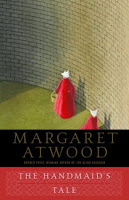
The Handmaid’s Tale by Margaret Atwood: In this dystopia, a theocratic military dictatorship overthrows the United States and begins stripping women of their rights, including preventing them from reading. All members of the society wear colour-coded clothing, and like in Shades of Grey, the lowest caste are essentially considered subhuman, doing the dirtiest and most dangerous jobs, and wearing the colour grey.

http://discover.halifaxpubliclibraries.ca/?q=title:1984%20author:orwell http://discover.halifaxpubliclibraries.ca/?q=title:brave%20new%20world%20author:huxley http://discover.halifaxpubliclibraries.ca/?q=title:handmaid%27s%20tale

Friday, September 25, 2015

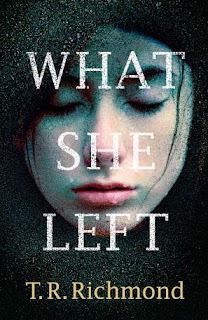
Staff Pick: "What She Left" by T.R. Richmond


http://discover.halifaxpubliclibraries.ca/?itemid=|library/m/halifax-horizon|1879593 Unlike footprints in the sand which disappear at the first high tide, our digital footprints remain long after we are gone...

What She left tells the tragic story of the death of twenty-five year old Alice Salmon. The story is told in snippets of emails, Twitter messages, texts, diary entries, and letters (our collective modern memory). Years ago, when someone died all that was left was a few paper records, birth and marriage certificates, photos etc. Now, the internet generation leaves a more prominent mark on our psyche via their digital footprint.
digital-footprint
Digital footprint

Alice Salmon, a budding journalist, went clubbing with three friends one cold February night and died alone by drowning in the River Dane in Southampton. Her demise went unseen by anyone who would admit to it, and ironically unobserved by close circuit cameras.
 
Alice was someone I would have liked to have met. Obsessed with truth, quotations, literature, and love. She drank to excess and loved to excess. She suffered from episodes of depression. She was over-analytical, loved Jane Austen, had great empathy for her fellow man, and had a deep affection and respect for the written word.

After her death, the internet generation have the wherewithal to make Alice whoever they want her to be. It all depends on interpretation. Why let the facts get in the way of a good story? In attempting to capture the legacy of her life, even the good stuff they say is tainted by opinion and biased interpretation. Everyone has an opinion. Those who loved her and knew her well. Those who were mere acquaintances but wanted others to think they were more…  With the power fueled by social media, speculation can be interpreted as fact.

One of Alice’s former university professors, Jeremy Cooke spent hundreds of hours trawling through the minutiae of Alice’s life for a book he is writing entitled “What she left”. He considers himself to be the guardian of Alice’s memory and writing a book about her was to be his ‘swansong’. He is terminally ill. He wants Alice to be her own story, so he utilizes our collective modern memory in the writing of his book. He maintains that ‘Love’ is what remains after everything else. It’s what Alice gave out every day and now she’s gone it’s what she left.

An award-winning academic, he is called “Old Cookie” by students and faculty alike. He is viewed by others as pompous, patronizing and superior. His opinion of himself is much different. He uses the moniker ‘Silver Surfer’ when online. He loves two women, his wife Fliss – and Alice’s mother, Elizabeth. Thirty years ago, Elizabeth was a student of his, and they had a brief affair. He and Fliss never had children and since his diagnosis he is now obsessed with recognition and legacy.

Jeremy Cooke has no male friends with the exception of Larry, a pen-friend he’s had since childhood, but never met. He and Larry still correspond, always with utmost truthfulness. Larry is the only person he can really vent with. Now however, Larry has died…

The novel has myriad characters, and we catch glimpses of their relationships with Alice. We wonder, did she slip in an alcohol fueled accident? Did she commit suicide? Or, did one of these fine characters ‘do her in’?

We meet Gavin (Mocksy) a blogger and former housemate who was obsessed with Alice. He stalked Alice and pilfered her possessions. He contacted one of Cooke’s former co-workers and got the dirt on “Cookie”. He then proceeded to spread vicious innuendo via his blog. Gavin’s character leads the reader to believe that Cooke might have murdered her.

Then there is Luke Addison, Alice’s boyfriend. Alice loved him despite an earlier betrayal. If she had lived they would have had a happy life together… Luke is feeling guilty after her death. The police went so far as to arrest him for her murder, then they released him due to lack of evidence. Could he have done it?

We come to know and empathize with her grieving mother, Elizabeth – and her best friend from childhood, Megan. We briefly meet the three friends who were with her the night she died.
We meet Ben Finch, a former boyfriend whom she jilted. Could he have anything to do with her death?

“What she left” is a treatise on modern communication, the fragility of human life and how people handle bereavement. A murder mystery as well as a story about love unrequited and reciprocated. Written with intelligence and empathy, the novel depicts loss in a unique way. T.R. Richmond certainly utilized a different approach in telling this story. However, in this case it was the only way to do it well. I took longer than usual to read this book as I found the epistolary format off-putting and a tad distracting. However, that being said, I find I cannot fault anything else about it. A literary mystery with uniquely divulged red-herrings and twists, “What she left” will appeal to lovers of psychological thrillers and literary fiction alike.

Monday, September 21, 2015

Staff Pick: Just Beneath My Skin by Darren Greer


Each year, Nova Scotia comes together as a community to read the same book through One Book Nova Scotia. Past books have included Twenty-Six   by Leo McKay Jr. (2012), Fauna by Alissa York (2013), and Roost by Ali Bryan (2014).

For 2015, the chosen book is Just Beneath My Skin by Darren Greer.

This is a book of extremes, grim at times but also fanciful, with beautiful scenes of introspection and descriptions of the natural world, and then sudden extreme violence. It explores both the depths of human cruelty and the power of love.


Set in the 1980s in the fictitious impoverished town of North River, Nova Scotia, the story focuses on Jake McNeil and his 8-year-old son, Nathan. Nathan is an isolated boy living with his abusive, alcoholic mother; he idolizes his largely absent father and treasures every moment they have together. His father, Jake, has overcome difficulties in his own life, including the guilt of leaving Nathan behind, but is now back and just wants to do the right thing for his son. Their search for a better life in Halifax together sends both careening into danger.

Just Beneath My Skin has an extremely quick pace, alternating between Jake and Nathan’s first-person perspectives with each short chapter (some are just a paragraph long). Later chapters have an unrelenting tension that left me anxious with a growing feeling of foreboding. The narrative also skips around in time, telling us the poignant memories Jake has of his sister, parents, and grandparents.

While the structure helps to highlight the parallels and contrasts between Jake and Nathan’s lives, unfortunately, this fast pace does short-change some of the other characters, particularly the female ones, who are portrayed as either angels or demons when a more nuanced take would have been better. The motivations of secondary characters like Jake’s resentful drug-addicted friends, too, are often frustratingly muddled.

But ultimately, I enjoyed Just Beneath My Skin due to the strong relationship between the unlikely father and son, whose connection runs so deep that they dream about each other. It seems everyone in Greer’s North River has chosen to numb the tragedies of their lives with religion, violence, or substance abuse, but Jake and Nathan are the exceptions, choosing hope for the future over despair even when it seems that the whole world is against them.

http://discover.halifaxpubliclibraries.ca/?q=title:twenty%20six http://discover.halifaxpubliclibraries.ca/?q=title:fauna http://discover.halifaxpubliclibraries.ca/?q=title:roost%20author:bryan

Thursday, August 27, 2015

Staff Pick - "Little Black Lies" by Sharon Bolton

http://discover.halifaxpubliclibraries.ca/?itemid=|library/m/halifax-horizon|1879072
For several years now I have been a huge fan of Sharon Bolton’s novels.

The setting of “Little Black Lies” was one which I’ve never encountered before in popular fiction. The Falkland Islands were portrayed vividly with both geographical and historical accuracy. It reminded me a bit of the Scottish Hebrides with its abundant wildlife, windswept rolling hills and sea.
Aerial photo of Stanley

Amongst this breathtaking scenery we meet some of the inhabitants of Port Stanley, the main town of the Falklands. Stanley has a population of just over two thousand people. Not much at all for the capital of a country the size of Wales.
The narrative of “Little Black Lies” is told over the course of one week via the perspective of three different people. A plot device that is very effective in this instance.
Three years ago the women in “Little Black Lies” were vastly different people. Catrin Quinn was married to Ben and had two healthy boys with another baby on the way. Rachel Grimwood, her best friend, was also the mother of two young boys with a third on the way. The women had been friends since childhood and were closer than sisters, sharing every thought and aspiration.
Faulklands
The narrative begins with Catrin Quinn – a very damaged woman who has endured what is for most people is the very worst thing imaginable. She has lost two young sons in a careless accident and as a result of this trauma she has miscarried a third son… Catrin is coping as well as she can. Her marriage to Ben has dissolved and she now lives alone with her Staffordshire Terrier, Queenie.
QueenieHer days are filled with her work as a cetaceans specialist at the Falkland Conservation Headquarters. However, never a day passes that she does not think of her boys and her thoughts have become suicidal… She thinks the only reason she does not ‘end it all’ is the vast rage she feels for who she blames for their death, her former best-friend, Rachel. She keeps a diary detailing her rage and plans for vengeance.

This week is no ordinary week in the Falklands. A young boy has gone missing. This is the third boy to go missing in as many years. This has made the entire island population tense with fear and suspicion. Unlike England or the U.S., where a missing child brings about fear of pedophiles, in the Falklands people fear drowning, animal attacks or something less sinister. But with three missing children the hard-working islanders are desperate for answers and they begin imagining something more fearful. They try to assure themselves that nothing evil could happen here…
beached pilot whalesIn addition, the week holds a natural disaster. Almost two hundred pilot whales have beached themselves on the shores and it is Catrin Quinn’s mandate to cope with this distressing natural disaster.

The book’s second narrative traverses this disastrous week with Catrin’s former lover Callum Murray.  From Scotland, Callum originally came to the Falklands as a soldier in the Falkland’s War. It is as a result of this war that he now suffers from post-traumatic stress disorder. Callum is a tall, handsome man who chose to make his home in the beautiful country he so bravely defended.  The country where he accidentally met the married Catrin –  with whom he fell immediately in love.
The third narrative follows Rachel Grimwood’s week. Rachel feels like a pariah. Her guilt weighs so heavily upon her that she has difficulty coping with everyday life. She cannot look people in the eye. She shows little affection for her youngest son, though she loves her two elder sons dearly. She is often home alone with the boys as her husband Sander travels with his work. As a result of a her actions three years ago two little boys have lost their lives.  Little boys that she once cared for deeply.  She has lost her best friend. She is seriously depressed.

An intricately plotted story of how one moment of thoughtlessness can lead to tragedy that impacts upon countless people, “Little Black Lies” is filled with a pervading sense of loss. There are many surprises in store for the reader. With solid, empathetic characters and jaw-dropping plot revelations, it is a novel that will be appreciated by anyone who admires crime fiction with a psychological bent. It contains all of the elements of a great thriller: betrayal, secrecy, passion, despair, fear – and Sharon Bolton uses these elements in a seamless way that grabs you and won’t let go until the very, very end.
Highly recommended!

Saturday, July 18, 2015

Staff Pick: "Five Night Stand" by Richard J. Alley


A beautifully written tale of three disparate yet kindred souls – all at a crossroads in their lives.

5nightstand coverOliver Pleasant, an octogenarian jazz pianist of some renown is finally retiring from the music business. He is wrapping up his long career with a final five night stand on the stage of a New York hotel owned by an old friend. Sadly, his lifestyle of travel, music, and women have left him estranged from his grown children. The table he has reserved for his family remains accusingly vacant throughout his last shows. His wife, Francesca, the love of his life, has been dead for two decades. Oliver has lived through the racism of the South, traveled to Europe in the heyday of jazz, fathered children, bedded myriad women, and enjoyed the camaraderie of his fellow musicians. Through it all he had a deep and abiding love and respect for the ‘music’. Now he feels little other than the loneliness, regret and fear that comes with old age.

Agnes Cassady, also a pianist, is in her early twenties and suffering from what she believes to be a fatal neurological disorder. She hails from Memphis, Tennessee but has lived in New Orleans for the past few years plying her trade. Recently the pain and tremors that result from her condition have hampered her musical ability. The reason for Agnes’ trip to New York is yet another hospital with yet more tests. This time it is the famous Mount Sinai with its expert physicians. Since learning of her probable early demise, Agnes has packed a lot into her short life. She loves music and men in that order. When she learns that Oliver Pleasant is playing while she is in town, she knows that she must attend his final performances. He has long been her idol.

Frank Severs, a former journalist, also from Memphis – is in town to write about Oliver Pleasant’s life and last performances. He greatly admires the man and his music and feels he could do justice to a story about him. Frank’s personal life is in flux. He is distant from his wife whom he still loves. Their many years of trying to conceive a child has left a rift in their marriage. It is a rift that Frank doesn’t know how to bridge – or if he should even try to bother.

The meeting of these three lost souls and their brief time spent together was nothing short of magical.
The characters are fully developed and are so ‘human’ that it is a joy and a privilege to share time with them.  The early winter New York setting is described clearly with an affection for the place.
Thelonious Monk 1962Thelonious Monk 1962

Filled with the joy, sadness, regret and confusion that is life, Five Night Stand was a novel for music lovers and non-music lovers alike. I actually read part of it whilst listening to the infamous Thelonious Monk via YouTube. His music was a wonderful background for the novel.

This novel should be on the bestseller lists! Highly recommended!

Friday, June 26, 2015

Staff Pick: "Five Night Stand" by Richard J. Alley

A beautifully written tale of three disparate yet kindred souls – all at a crossroads in their lives.

Oliver Pleasant, an octogenarian jazz pianist of some renown is finally retiring from the music business. He is wrapping up his long career with a final five night stand on the stage of a New York hotel owned by an old friend. Sadly, his lifestyle of travel, music, and women have left him estranged from his grown children. The table he has reserved for his family remains accusingly vacant throughout his last shows. His wife, Francesca, the love of his life, has been dead for two decades. Oliver has lived through the racism of the South, traveled to Europe in the heyday of jazz, fathered children, bedded myriad women, and enjoyed the camaraderie of his fellow musicians. Through it all he had a deep and abiding love and respect for the ‘music’. Now he feels little other than the loneliness, regret and fear that comes with old age.5nightstand cover
Agnes Cassady, also a pianist, is in her early twenties and suffering from what she believes to be a fatal neurological disorder. She hails from Memphis, Tennessee but has lived in New Orleans for the past few years plying her trade. Recently the pain and tremors that result from her condition have hampered her musical ability. The reason for Agnes’ trip to New York is yet another hospital with yet more tests. This time it is the famous Mount Sinai with its expert physicians. Since learning of her probable early demise, Agnes has packed a lot into her short life. She loves music and men in that order. When she learns that Oliver Pleasant is playing while she is in town, she knows that she must attend his final performances. He has long been her idol.

Frank Severs, a former journalist, also from Memphis – is in town to write about Oliver Pleasant’s life and last performances. He greatly admires the man and his music and feels he could do justice to a story about him. Frank’s personal life is in flux. He is distant from his wife whom he still loves. Their many years of trying to conceive a child has left a rift in their marriage. It is a rift that Frank doesn’t know how to bridge – or if he should even try to bother.

The meeting of these three lost souls and their brief time spent together was nothing short of magical.
The characters are fully developed and are so ‘human’ that it is a joy and a privilege to share time with them.  The early winter New York setting is described clearly with an affection for the place.


Filled with the joy, sadness, regret and confusion that is life, “Five night stand” was a novel for music lovers and non-music lovers alike. I actually read part of it whilst listening to the infamous Thelonious Monk via YouTube. His music was a wonderful background for the novel.

 In my humble opinion this novel should be on the bestseller lists!
Highly recommended!

musicline66
Richard J. Alley photoRichard J. Alley, a longtime freelance writer and editor, was born and raised in Memphis, Tennessee, where he lives with his wife and four children.

Saturday, June 20, 2015

Staff Pick: In a Vertigo of Silence by Miriam Polli


Just like a person’s memories are ‘snatches of time’ not in chronological order, so too is In a Vertigo of Silence. Written as the collective memory of a family, the novel moves back and forth in time to reveal snatches of the lives of three different generations of a Polish immigrant family.

The writing style could be confusing and distracting, but it is not. This is due to the fully rounded characterizations and the skillful writing. With loss and female tenacity as recurring themes throughout, the characters become so well known to the reader that they will remain in the memory as friends.

The family is a matriarchy with Marishka at its head. A strong and eminently likeable woman, she came to the United States via Ellis Island with her husband, Antoni. They settled in Pennsylvania where he found work in a coal mine. Tragically, like so many other miners in the early 1920s, he perished in the mine. This when Marishka was only days away from giving birth to her third daughter… Marishka’s tenacity is evident in how she went on to become a talented seamstress, laundress and sometimes house cleaner to make ends meet.

Over time, we meet Marishka’s three daughters. Paulina, the eldest, is an artist and very close to her mother. Anna, the beautiful middle child, is a mentally fragile women who drinks to excess. Eva, the youngest, makes a ‘sound’ marriage and has one son.

We then come to meet Emily, Anna’s daughter. Emily is bullied at school partly because she comes from a fatherless family. She faced betrayal by her best friend, Wanda. In her adolescent years she developed an eating disorder. Her grandmother fears for Emily living with her disturbed mother, so she moves in with them to take over Emily’s care and welfare. Emily and her grandmother are soul mates. Things go well until Marishka becomes ill, and Anna is institutionalized. At that time both Marishka and Emily go to live with the dutiful Eva.

The strange thing is, although the bond between grandmother and granddaughter is very close, Emily grows up believing that she only has one aunt… This family secret and the reason it came about affects the entire family.

We follow Emily’s life as she goes off to college and becomes an adult. Then, after a family tragedy, the family secret is revealed…

I mused about the title. Perhaps the silence is the ‘not knowing’ of the family secret. Perhaps the vertigo is the dizzying maelstrom of emotion one feels when something shocking or life-changing is revealed.

I wondered at the many mentions of the moon. I had to look them up as I had never heard of some of them. The beaver moon, the hunter moon, the sap moon, the hunger moon, the buck moon, the planting moon. Then of course the ‘O’ in vertigo of the title on the cover is the moon… Does the author use this device to put forth the adage that the family members, although separated, are all under one moon, so therefore united? Or, did she have something profound and entirely different in mind?


Miriam Polli has written an empathetic and captivating family saga that many will enjoy. Highly recommended literary fiction!

Saturday, May 23, 2015

Staff pick - The Ice Twins by S.K. Tremayne


“When you love someone and they die, it is as if part of you dies with them. Therefore all love, if you like, is a form of suicide”.--S.K. Tremayne

S.K.Tremayne’s novel “The Ice Twins” exhibits a pervading sense of menace. Not the overt kind of menace where the protagonist is feeling threatened by harm, but the insidious kind born of a mixture of mistrust, suspicion, social isolation and self-doubt.

Sarah and Gus Moorcroft once had it all. Careers they were good at and enjoyed, a nice house in Camden, a loveable dog, and beautiful and perfectly identical twin girls, Lydia and Kirstie. The girls were everything to each other, sharing a bond stronger than other sisters, with private jokes and their own special twin language. Then, when the girls were six years old, a tragic fall killed one of the girls. Their perfect life was shattered forevermore… You see the twins were so identical that even Sarah wasn’t really sure which girl died. At the time she thought it was Lydia. But now… she is not so sure. Have they mourned the loss of the wrong girl? The remaining twin exhibits character traits of both girls, and appears to be mourning her sister by claiming to be her… Almost as if they are ice twins melting, one into the other.

As a measure of getting on with life, the Moorcrofts decide to move to Scotland. Gus has inherited a tiny island in the Hebrides on the Sound of Sleat.


The cottage and the lighthouse on the island are in desperate need of repair as they have been uninhabited for years. There is no cell signal, no internet, and no television. The only way to access the island is by boat, with walking only possible at the low tide and then dangerous because of the sucking mudflats.

Once the Moorcrofts move to this beautiful and isolated spot, they hope that things will change and that life will hold some promise. But, it seems as though this isn’t to be. Their beloved dog ‘Beany’ seems to behave differently and doesn’t really like to be in the cottage which is perpetually cold and damp. There is a tension between Sarah and Gus that even the hard work required to live in this remote spot will not destroy. They both suffer from survivor’s guilt and fear for their remaining daughter’s welfare. When they enroll Kristie in the village school, her odd behavior – talking to an invisible someone and claiming to be Lydia – causes her to be ostracized by her schoolmates. When Sarah, in desperation for her daughter to have a friend, invites one of the little girls from the village over to the island for a play date, the day ends disastrously. Sarah secretly consults a child psychologist. She fears for her daughter’s sanity. The little girl seems to not know who she is and asks “Which one of ‘me’ is dead?”

Gus and Sarah themselves seem secretive and cannot recapture their previous relationship. The loss of their child has formed a rift in their family and this rift is filling with bitterness, deception and anger. There seems to be a huge question of what really happened the day of Lydia’s fall. Sarah herself cannot quite remember the sequence of events. Perhaps this is because directly after the fatality, Sarah was heavily medicated…

Set in a stunningly beautiful place, “The Ice Twins” is a novel with imagery second to none. The reader can almost hear the sound of the wind, the surf and the lamenting sea birds. As well, one could feel the vulnerability of being so dependent on the whims of mother nature. With the conditions becoming more and more bleak as winter approaches, the feeling of isolation is complete.

The narrative contained many red herrings, with suspicion and doubt abounding. The story was told mostly from Sarah’s point of view, but some passages were from Gus’s viewpoint. The atmosphere was creepy and the Moorcroft’s predicament distressing.

I was so invested in the story that I took my book everywhere I went and read during my coffee break and lunch at work. I appreciated the photographs contained within the novel as they brought the imagery into an even sharper focus. “The Ice Twins” was a genuine page turner that held my interest from beginning to end.

S. K. Tremayne is a bestselling novelist and award-winning travel writer, and a regular contributor to newspapers and magazines around the world. The author has two daughters, and lives in London.

“The Ice Twins” has been optioned by Alcon Entertainment.

This book review originally published on Fictionophile

Monday, November 17, 2014

Under your skin by Sabine Durrant


A few years ago I read a wonderful little novel The Great Indoors which I loved and recommended to friends. Now I’ve found that the author of this little novel has turned her talents to writing a thriller.   How could I not read it?

In Durrant’s latest novel we are off to London, England where we enter the life of morning television co-host, Gaby Mortimer.  Gaby has it all, or seems to.  A wonderful high-profile job, a handsome and very successful husband, a darling eight-year-old daughter, a ritzy South London address, and live-in help.

Then, one pre-dawn morning in early spring Gaby goes out to the common near her house for her daily run. When during her run she discovers the body of a dead young woman – her life is irrevocably changed. In her shock she touches the girls hair and clothing.  A few days later these factors and other physical evidence lead the detectives to arrest her!   Gaby’s shock, dismay and panic at being arrested are palpable.  With her husband in Singapore on a business trip she has no one to support her during this trying time.  After thirty-six hours pass, with nothing other than circumstantial evidence the police have to release her.  One would think that was the end of Gaby’s nightmare, but no…. her nightmare is only just beginning.   It turns out that the dead woman (who resembles Gaby physically) has been wearing Gaby’s clothes!  The police said that she was at Gaby’s house to interview for the position of nanny – but Gaby has no recollection of such an interview.  And the nightmare goes on….

Marta, Gaby’s present nanny is a cold, uncommunicative women from Poland.  Gaby hired her the week her mother died, when she was emotionally vulnerable.  Gaby’s husband, Philip is increasingly distant and Gaby fears for the future of her marriage. To further enhance Gaby’s torment, the television studio seem to have cut their ties to her.  Her beloved job seems to be a thing of the past.  Also, she is being stalked!  The police detective inspector that arrested her seems to have her in his sights as the most likely murderer and seems to be lurking every time she leaves the house. Then, just when it seems Gaby has no support, she meets an investigative journalist who seems to be on her side.  They meet on several occasions and he seems to believe in her innocence. I’m not sure how the title Under Your Skin factors in however.

I would love to hear what other readers think in this regard.  Is it that Gaby herself “gets under your skin”?  The meaning of the phrase is to irritate someone.  Does Gaby irritate the reader?  Perhaps it refers to DNA evidence?  I’d love to hear the author’s reason for choosing the title.

Under Your Skin by Sabine Durrant fairly drips with tension.  Masterfully constructed with Gaby as narrator, the novel is a page-turner in the truest sense.  This psychological thriller is everything you want in a novel.  Good characterization, tight plot, red herrings and a surprising and disturbing ending.   Highly recommended!

Sunday, October 26, 2014

Staff Picks - The Cellist of Sarajevo by Steven Galloway

The Cellist of Sarajevo by Stephen Galloway 

Galloway addresses the question,"How does war affect ordinary people? ". The Siege of Sarajevo lasted four long years killing nearly 10 000 people. Galloway was inspired by Vedran Smailovic, a cellist in the Sarajevo Philharmonic Orchestra, who played his cello in acknowledgment of twenty two people who were killed while waiting for bread.

The cellist was actually a minor character is this novel. His actions, his twenty two days of performing, linked the stories of the three main characters involved. Kenan is a family man who makes the perilous journey to fetch water for his family. Dragan works at a bakery and his family has fled the city. Finally, there is Arrow, a girl who excelled at target shooting and who unwilling became a soldier and a sniper.

There are no labels to define nationalities. There is the we/us in the city and "the men on the hills" who shoot us. No one seems to understand why this is happening. Everyone's lives have been ripped away. When society falls apart how do we act? Kenan stays focused on the future. As he trudges home under his burden, narrowly missing the snipers bullets, he thinks about his children and how their family life will be different - going out for ice cream and counselling his daughter about the dangers of boys. Dragan looks to the past. He remembers what life was like and does not want the world to see his city like this. And Arrow, Arrow is the grim reality of the present.

Yann Martel has been sending Stephen Harper books. Reflecting on stillness, Martel concluded that in order to read we must be still and in order to reflect upon life we must be still. Watching Prime Minister Harper's busyness he vowed to send him books that have been "known to expand stillness" The Cellist of Sarajevo was number 21.

I came across another book that seems to have some similarity to The Cellist of Sarajevo. Pretty Birds by Scott Simon tells the story of Irena Zaric, a spirited teenager who has all the usual celebrity crushes and enthusiasm for basketball. Her girlhood is abruptly brought to an end by this war. Her new life as a sniper strikes a chord with readers as we feel for her (as we did for Arrow's) loss of innocence.

A review for The Cellist on the CBC website referred to the book as "Book Club Catnip". I certainly understand what they meant. There are plenty of issues to address. 

Monday, October 6, 2014

You Better Watch Out: A Memoir by Greg Malone

Greg Malone has written an engaging and touching account of growing up in St. John's in the 1950's. Best known for his work with the comedy troupe CODCO, Malone proves himself to be an insightful storyteller in You Better Watch Out: A Memoir.

He has the unique ability to remember childhood with all its joys, painful moments and humiliations. The stories are told consistently from the point of view of a child. The narrative is not interrupted by adult perspective. Every experience has the intense importance you feel in childhood. The tragedy of receiving the wrong present at
Christmas and guilt over the ingratitude; the joy of recognizing those moments when you are certain you are valued by your parents.

He (of a mixed religious heritage) grew up in a time when St. John's was strongly polarized Catholic Protestant. Education of the mind, soul and body was controlled by the sometimes fierce and often baffling Christian Brothers. And he names names. We expect to hear about his early friendship with Andy Jones, but Danny Williams, too?

There is an early dissonance between desire for play acting and dressing up and his parent's desire for him to behave like other boys. One of my favourite passages:
- One day while Barbara Lynn and I were playing, Jimmy threatened to beat us up if we didn't let him play too.
"Okay, come on, Jimmy. You can be the son. I'll be the father."
"I don't want to be the son. I want to be the father."
"Okay, you be the father, and you have to go to work."
"Where do I work?"
"On the verandah. That's your office."
"I don't want to work. I want to stay here. I want to have a gun."
"No, Jimmy. It's not that kind of game."
"I don't care. I'm having guns. Watch out. Bang. Bang."It was impossible to keep house under such conditions. -


Malone, though the central character, oftentimes takes a back seat to his family. It is as much a family history as an autobiography.

As I was reading this book, a couple of books
by Wayne Johnston kept coming to mind. The Divine Ryans and The Story of Bobby O'Malley are both set in Newfoundland in the latter half of the twentieth century and capture a moment in a boy's young life. Although these are fictional stories, there is the same bewilderment a child often feels trying to make sense of an adult world.

Too Close to the Falls by Catherine Gildiner tells the story of a precocious child whose parents employ her to work in their drugstore in order to channel some of her excess energy. She befriends their delivery driver and together they have adventures. Again, a story told from the enthusiastic and innocent perspective of a child.

If you look closely at the childhood of a successful comedian, you are sure to find, as with Malone, in addition to insightfulness, a sharp sense that they are different from those around them.

In a different part of the world, there is Mishna Woolf, author of I'm Down: A Memoir. Born to white parents, Mishna (now a humourist and a model) is raised by a father who wishes he was black. She comes to find that she is not truly at home in either world, black or white. The story is peppered with hilarious anecdotes and is ultimately bittersweet.

published 2009


Sunday, October 5, 2014

Staff Picks - Rhino Ranch by Larry McMurtry

Rhino Ranch by Larry McMurtry appears to be the final installment in his series of novels set in the fictional town of Thalia, Texas.

OK - the story so far. In The Last Picture Show (written in 1966) we meet Duane Moore, Jacy Farrow and Sonny Crawford, lovesick teenagers who come of age in a dusty one stop light town (Thalia, Texas). Duane and Sonny fight over the beautiful and selfish Jacy, permanently injuring Sonny. Duane enlists in the army and all face an uncertain future.

We meet them again, 30 years later, in Texasville. Duane, now an oilman who is deeply in debt is married to Karla and they have a number of unruly children. Jacy returns to town after a mildly successful acting career and Sonny is tired and dispirited. And now poor Duane's Depressed. He disturbs the residents of Thalia by abandoning his truck and taking up walking as his mode of transportation. His psychiatrist prescibes Proust in lieu of Prozac.

When the Light Goes finds Duane returning from a trip to Egypt, recovering from Karla's death, and finding himself at loose ends in Thalia. On the home front his son Dickie is running the company and his daughters are irritating him. Duane unexpectedly finds himself romantically involved with young Annie Cameron.

So, deep breath. In this latest (and presumabley final installment) Duane's marriage to Annie crumbles and he returns to Thalia and his beloved grandson Willy. Local billionairess K.K. Slater has opened a ranch (employing old friends Bobby Lee and Boyd) to rescue and breed black rhinos. One old rhino, named Double Aught, takes a liking to Duane and joins him on his walks. As Duane approaches the end of his life he witnesses the passing of old friends, but in true Duane Moore style, continues to forge new friendships whether with women, cowboys or rhinos.

McMurtry offers an unromanticized view of small town life in modern day Texas. Locals do not accept change or new people very easily. New businesses are regarded with suspicion as are residents who depart and return. Thalia is as much a character in these novels as Duane or Bobby Lee. Sometimes you are left with the impression that not alot has happened, but the characters are so vividly drawn that they will come to mind again and again.

Fans of Larry McMurtry's contemporary fiction might also enjoy Cormac McCarthy. His Border Trilogy also begins in Texas in the 1950's and features adolescents struggling with their rural environments.

John Irving, though different in terms of setting, does offer up eccentric characters,which are reminiscent of McMurtry's, and puts them in sometimes tragic situations which can still somehow seem humourous.

McMurtry's Thalia books bring to mind John Updike's Rabbit Angstrom novels. Here, again, we can follow Rabbit Angstron from his youth to his final decline. His books, like McMurtry's were written over decades with the authors aging along with their characters.

published 2009


Monday, September 29, 2014

Old Filth by Jane Gardam

Sir Edward Feathers, known as Old Filth (Failed In London Try Hong Kong), reflects back on his life in Old Filth by Jane Gardam. Recently widowed, his finds himself at loose ends and tries to make connections with his past.

Feathers was a Raj Orphan, born in the far east and sent to live with strangers in Wales in the years between the two wars. His is a life slowly revealed. It is a case of appearances being deceiving. He lead a seemingly uneventful life. Near the end of his life, he finds himself widowed and apparently friendless. Although he had a distinguished career and became quite wealthy, most in his profession viewed him as legendary and supposed him to be already dead. His marriage was childless and sexless. He did not see front line service in World War II, rather he was a bodyguard to Queen Mary. This quiet man, plagued with a stammer, reveals himself as he reflects back on this life. The truth is layered and surprising. He is a survivor of an era and and empire that no longer exists.


Old Filth was shortlisted for the Orange Prize in 2005.


Gardam was inspired in part by Rudyard Kipling's autobiography Something of Myself which tells about his early life in Ceylon and his own miserable experiences as a Raj Orphan.


The Rain Before it Falls by Jonathan Coe is another story which reveals family secrets while reminiscing in old age. Feathers in Old Filth says that he was never loved as a child and as a result could only have damaged a child of his own. In The Rain Before It Falls we see the tragic consequences of violence on generations of a family. However, while this book is fairly intense in tone, Old Filth is really quite funny.


Another book which reflects upon the effect of war on life in England is The Lost Garden by Helen Humphreys. During World War II Gwen Davis volunteers in the Devon countryside overseeing a group of girls who grow crops for the war effort.

originally published in 2009