Showing posts with label Ashlee. Show all posts

Saturday, April 16, 2016

The Buzz About Bees Onscreen


Bees have always been fascinating to me, with their interesting social colonies, their ability to keep our agricultural systems going through pollination, their cute fuzzy bodies, and—of course—their delicious honey. And as we learn more about them, the more remarkable and complex they become, and the more we discover just how much our ecosystem relies on their hard work.

A free program on this topic, Beekeeping Basics, will be held at the Halifax Central Library on Saturday, April 30. In preparation, here are some documentaries that investigate and celebrate these amazing insects:

Queen of the Sun: what are the bees telling us?

This informative documentary delves into the long relationship humans have had with honeybees: imagery of bees has been drawn on prehistoric cave walls, ancient Egyptian pharaohs were entombed with honey pots, and in many cases bees were seen as religious symbols. While celebrating our symbiotic relationship through interviews with a wide variety of beekeepers, the documentary doesn’t shy away from showing the various ways that humans may have interfered too much with nature, such as using pesticides that hurt bees and other vital pollinators while contaminating their honey, planting just one crop over a wide area (this leads to increased blights and prevents pollinators from getting nutrients), stressing the bees by transporting them thousands of miles on trucks, using too many antibiotics, and limiting genetic diversity by artificially inseminating queen bees.

Vanishing of the Bees

Narrated by Ellen Page, this profoundly disturbing documentary focuses on the alarming phenomenon known as Colony Collapse Disorder—what seems like a worldwide plague that causes entire colonies of bees to suddenly disappear. In just a few years, millions of beehives have been lost in this way, costing the economy billions of dollars in the loss of these crucial pollinators. Speaking with various beekeepers, both those at huge industrialized companies and smaller organic hobby farms, the filmmakers investigate many possible causes of this disorder and suggest ways to help bees overcome it.

Colony: the endangered world of bees

This gorgeously-filmed documentary follows several migratory beekeepers who have brought their boxes of beehives to California for the pollination of almond trees. This type of commercial beekeeper moves thousands of bees around on trucks throughout North America, following the pollination seasons of various crops. As the documentary explains, the bees’ greatest value is not in honey or beeswax but in their pollination abilities, without which we would lose about a third of all fruits and vegetables. They then delve into the tragedy and possible causes of Colony Collapse Disorder, which is responsible for killing huge amounts of bees—over 30% of North American bees in just the past few years. However, even if the bees were healthy, another problem facing the industry is very demanding work for very low prices, so it is difficult to stay in business even under the best conditions. I liked how the filmmakers emphasize that our food doesn’t just come from the store; it has a long history before that, and sometimes we can forget that we are part of the food chain, too.

If you are interested in learning how to keep your own beehive, check out these resources:

Top-Bar Beekeeping

In this instructional DVD, married couple Les Crowder and Heather Harrell provide details about how to organically raise bees. They include practical information about using a smoker (to calm the bees), opening the hive, doing maintenance, preventing swarms, expanding the beehive, and harvesting honey and beeswax without needing to buy fancy equipment. Unlike other beehive designs, top-bar beekeeping does not use a metal frame, so the bees build the honeycombs organically down from a wooden bar. Crowder and Harrell even include a section on the best flowers to plant if you want to attract bees and provide a diversity of nectar and pollen. They stress the importance of listening to bees, allowing them to teach us instead of forcing them into conditions that just maximize honey output, ending with the line, “Honeybees enrich our gardens and our lives.”

Save the Bees with Natural Backyard Hives: the easy and treatment-free way to attract and keep healthy bees by Rob and Chelsea McFarland

With plenty of colour pictures, the authors promote treatment-free apiculture (the technical name for beekeeping) as a set of principles. They explain that our understanding of honeybees is ever-evolving and that the bees need help in order to continue their work. The book focuses on the urgency of small, personal solutions to big problems, recognizing that beekeeping is ultimately not about honey or profit but about survival—both of the bees and of humankind. But I liked that it also highlights the principle that beekeeping should be fun.

The Rooftop Beekeeper: a scrappy guide to keeping urban honeybees by Megan Paska

For those in a more urban environment, this book provides advice, checklists, guides to community resources, and lots of recipes from an urban apiarist. Living in Brooklyn, New York, the author notes that at first she was terrified of bees and didn’t realize their importance to the urban environment: “the concrete jungle is not exactly the backdrop one imagines as a honeybee heaven.” But she quickly overcame her fear and discovered that city bees actually have a great chance of thriving in big cities, and the rooftop beehives mostly go unnoticed by neighbours.

If you want to know more about bees and beekeeping, check out the upcoming library program Beekeeping Basics on April 30!

Sunday, February 28, 2016

Staff Pick: Uprooted by Naomi Novik


Naomi Novik’s Uprooted is a fantasy novel based on Polish folklore taken from the author’s own ancestry. In the book, a young woman named Agnieszka and her family live in a small rural village that is generally quiet…except that occasionally its inhabitants disappear or suddenly go insane. The reason is that the creeping Wood that borders their village will literally swallow up livestock, people, or even entire towns and leave them “corrupted,” a horrifying sickness for which the only cure is death.

This menacing Wood is only kept at bay by an enigmatic magician named “the Dragon,” who in return picks an eligible girl from the town to be his servant, locked away in his tower for a decade. At this year’s “choosing,” although every indication points to her best friend, Kasia, being chosen, Agnieszka is stunned when she is picked instead.

This begins Agnieszka’s journey of adjusting to her new role in society and discovering more about the world around her, like the intricacies of magic and secrets about her village and herself.

I loved how the author skillfully plotted the story, which enthralled me with its loveable characters, details, and cleverness. Even though the kingdom and its lands are complex, the author doesn’t inundate readers with too many characters, places, and complicated names at once. Instead, we are introduced to this fantasy world and its inhabitants carefully, getting to slowly see the intricacies in each one. And yet the story remains fast-paced but emotionally satisfying.

Uprooted has been deservedly nominated for both the Nebula Award and the Hugo Award, which recognize excellent writing in science fiction and fantasy, and I am excited to see which books will take home the awards this year!

For similar reads, try these:

Howl’s Moving Castle by Diana Wynne Jones

Both this and Uprooted have the trappings of traditional fairy tales but add richness and depth to the characters and worlds. The two novels involve a pragmatic young woman (Sophie from Howl’s Moving Castle and Agnieszka from Uprooted) moving into a castle with a vain and grumpy wizard (Howl and the Dragon). The main characters then slowly begin to realize that there is more to everything than meets the eye, including the castle, the magician, the nature of magic, and even themselves. They even both have to face a wicked witch who attempts to take over their worlds. It’s interesting to discover each detail of the fantasy universes through their experiences.

His Majesty’s Dragon by Naomi Novik

This is another book by author Naomi Novik, and I enjoyed it just as much as Uprooted. His Majesty’s Dragon is the first book of the Temeraire series, an alternate history set in the early 1800s in which the British are fighting Napoleon…via exciting aerial combat on specially trained dragons! Will Laurence is a stiff and proper navy man, captain of his ship, when they engage in battle with the French and capture a precious dragon egg. When it hatches onboard, Laurence names the dragon Temeraire, and they form a special lifelong bond (the dragon talks!).

Like with Uprooted, I found that this book just flew by: the world-building is rich and the action scenes are thrilling, but it’s really the three-dimensional characters that make the world come alive. Both the novels have a little romance, but they focus more deeply on the bonds of friendship, community, and duty. This is the first book in the ten-part Temeraire series (the final book, League of Dragons, was just released), and I am so excited to read the next one!

Monday, December 21, 2015

Have Yourself a Merry Local Christmas


Atlantic Canada celebrates the holidays! Here are some local holiday-themed books to enjoy over the Christmas break.

Celebrate!: the history and folklore of holidays in Nova Scotia by Clary Croft

This informative book covers many of Nova Scotia’s evolving religious, patriotic, and folk holidays, which are constantly blending with other cultures and being reinvented, revived, or forgotten. I enjoyed how the author emphasized that there is no “right” way to celebrate holidays because traditions and celebrations are very personal things.

A Maritime Christmas Treasury: stories, songs, and poems to celebrate the season

This anthology includes beautiful pictures to entertain both children and adults. Sweet, humourous stories feature a protective Canadian goose, a special little girl and a dollhouse she desperately desires but cannot afford, and a mouse’s Christmas in Prince Edward Island. Also included is a story about a Nova Scotian girl and her uncle choosing the huge Christmas tree that will be sent to Boston that year as an ongoing show of gratitude for the city’s aid after the Halifax Explosion in 1917. There are also many poems and songs that highlight a different part of the holiday: the food, family memories, presents, and the beauty of the natural world.

Mary Morrison’s Cape Breton Christmas by Bette MacDonald

This very funny book allows the beloved Cape Breton character Mary Morrison to give her sage advice for getting through Christmas: avoiding family, making fruitcake that no one will eat, and always keeping a cocktail handy so you can drink your way through the holiday. Mock recipes end in amusing anecdotes like “I cannot, in good conscience, reveal the remaining ingredients for this recipe” (due to the dangers encountered by those who have eaten it in the past).

Sleigh Tracks in New Snow: Maritime Christmas stories by Wayne Curtis

This collection of Christmas stories features snapshots from the author’s life, from his childhood growing up in rural New Brunswick in the 1950s to visiting the Yukon for three months as an adult. It’s fascinating to read about how life has changed since the 1950s—as the author puts it, a time “when life was more innocent, more romantic, and perhaps not so much commercialized.” But Curtis’ stories also reveal how life then was filled with more danger and uncertainty as well, without many of the social programs that support people when they are ill, injured, or laid off from work, all of which put pressure on families during the holidays.

Twelve Christmas Stories by Jess Bond

In this collection of stories from Cape Breton, the author shares tales about tradition, family, misunderstandings, forgiveness, and the meaning of home. Running through the stories are themes of troubles with money, dysfunctional families, and the joys of friendship and home cooking. I especially enjoyed how each story had an underlying message that love and acceptance are what the Christmas holiday is all about.

The Man in the Red Suit by Bruce Templeton

With a preface by former Newfoundland and Labrador premier Danny Williams, this book contains stories from Bruce Templeton, the man who was a real-life Santa Claus to over 1,000 children in the province for 33 years. Each chapter contains a tricky question that a child asked him as Santa and the lessons it taught him, all of which are touching and profound, funny, or heartbreaking, like the children he visited in the hospital who later passed away or children coming from sad family situations. I was amazed at the planning and effort it takes on the part of so many helper elves and Santa himself to create a magical experience in children’s lives.

Wednesday, November 18, 2015

Staff Pick - Shades of Grey by Jasper Fforde


Imagine a society in which each person can only see a very limited range of colour, and then the society is ordered around a hierarchy relating to those colours—a Collective or “colourtocracy.” Those who can see mostly Purples are at the top of the chain with the most status and privilege, then Blues, Greens, Yellows, Oranges, Reds, and finally Greys, who are at the very bottom and are given the most dangerous and demeaning jobs. Everything, from a person’s name, position, clothing, and even postal code, is determined by this colour-based social hierarchy. Such is the case for the denizens of Jasper Fforde’s Shades of Grey, the book chosen for November’s book club at the Halifax Central Library—and not to be confused with E.L. James' 50 Shades of Grey.

To illustrate this world, Fforde employs a supremely clever naming scheme: each of the characters and towns have names that correspond with the colour they can predominantly see. For example, our protagonist is Eddie Russet (a Red), who lives in Jade-Under-Lime (a Green town) but temporarily moves to East Carmine (a Red town). Every character and city has a similarly creative colour-based name.

Although this is technically a dystopian novel, the tone is anything but grim. Instead, the writing is blithe and airy, a comedy of manners lifted from 1950s England with plenty of humour and politeness lathered on the top. It becomes a puzzle for the reader to try to work out the dark underpinnings of this society, with its rigid caste system headed by a faceless totalitarian regime that destroys all spirit of individuality and routinely erases the past in “leap backs.” It was a little amusing but also very unsettling to hear the narrator continue in his bright, pleasantly conversational tone even when discussing horrible things like people catching the Mildew, an unexplained disease that is inevitably painful and fatal, or being sent to Reboot, a secret re-education camp.

There were also many curiosities in the Collective, such as their chronic shortage of spoons, libraries with no reading material at all, abundance of man-eating trees, ability to heal injuries by applying different colour combinations to the area, fear of lightning, and inability to see in the dark. One of the most entertaining situations was the absurd way they treat things that their rules don’t address by deciding to collectively ignore them, like a certain “Apocryphal” man who wanders around naked and whom everyone pretends doesn’t exist, to the point of not being able to talk about him even when he is living in the same house and eating food from the same table.

While there is an effective satire at the edges of this novel, though, the extensive world-building often felt complicated for complication’s sake, unnecessarily muddling the point with each new situation or adding random details that were not explored. However, because the novel is the first in a series, perhaps the next will feature more of a plot now that the heavy world-building has been explained.

Author Jasper Fforde was influenced by several classic dystopias, including these:

1984 by George Orwell: set in a world where even thought is strictly controlled and monitored by Big Brother, the main character, Winston Smith, has the job of constantly rewriting history so that the historical record always supports the totalitarian political party in power. Shades of Grey has similar ideas in terms of history revision, language control, and all-powerful regimes.

Brave New World by Aldous Huxley: Both the dystopias in this novel and Shades of Grey have strict caste systems and have banned natural reproduction, critical thought, and initiative, while conditioning the members of each caste to accept their unequal lots.

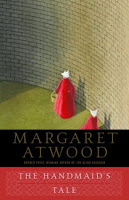
The Handmaid’s Tale by Margaret Atwood: In this dystopia, a theocratic military dictatorship overthrows the United States and begins stripping women of their rights, including preventing them from reading. All members of the society wear colour-coded clothing, and like in Shades of Grey, the lowest caste are essentially considered subhuman, doing the dirtiest and most dangerous jobs, and wearing the colour grey.

http://discover.halifaxpubliclibraries.ca/?q=title:1984%20author:orwell http://discover.halifaxpubliclibraries.ca/?q=title:brave%20new%20world%20author:huxley http://discover.halifaxpubliclibraries.ca/?q=title:handmaid%27s%20tale

Thursday, September 24, 2015

Staff Pick: The Marauders by Tom Cooper


In The Marauders, Tom Cooper’s first novel, setting is everything: the Louisiana bayous where a cast of outlandish characters make their living catching shrimp from Barataria Bay on the Gulf Coast of Louisiana. The characters in the book must battle two catastrophic disasters to their homes and livelihoods: Hurricane Katrina and then the BP Deepwater Horizon oil spill.

Tied to the land—or rather, to the water—by their small shrimp boats and their ramshackle homes, many of which have been devastated by the hurricane, they watch in dismay as the oil spill wrecks their livelihoods: they can hardly catch anything from the bay anymore, and even if they could, many restaurants are boycotting fish from the Gulf.

While the novel gives us a snapshot of a unique time and place, it also provides a portrait of a resilient culture that has withstood many shocks with hardiness, determination, suspicion of outsiders, and its own brand of zany humour. The book is filled with characters who are both pitiable and admirable but who always subvert expectations. Sometimes the characters who seem the least present and aware will turn out to be the sharpest observers with the best handle on a situation.

Through it all lurks the character Grimes, a former resident of the Barataria-turned-BP employee whose job is to give the residents a pittance of settlement money to ensure they don’t sue the company for damages later. Clearly from his very name, he is meant to be one of the antagonists, but we are also left with the impression that there are no real winners in such a disaster.

This is a book filled with crazy adventures, covering everything from alligators in bedrooms, a marijuana island, pirate treasure, and stolen prosthetic arms, to the many tragedies of Hurricane Katrina and the lasting effects of environmental damage from the BP oil spill. One of the most interesting scenes to me was when two of the characters are employed by a bird rescue society to wash the oil off of pelicans, which they do while covertly planning an elaborate heist for drugs. This mix of dark comedy with a background of sadness defines the book.

For similar fiction authors whose novels blend suspense with humour and a strong sense of place, try the works of Carl Hiaasen or Elmore Leonard.

For more about the BP oil spill, check out Run to Failure: BP and the making of the Deepwater Horizon disaster by Abrahm Lustgarten. This non-fiction book chronicles a 20-year history at British Petroleum of poor management and cost-cutting measures that lead to the tragic Deepwater Horizon drilling rig explosion in 2010, which killed 11 people and caused millions of gallons of oil to be spilled into the Gulf of Mexico.

For more about Hurricane Katrina, try Hurricane Katrina: the storm that changed America by the editors of Time Magazine, with an introduction by New Orleans native Wynton Marsalis. The magazine chronicles the greatest natural disaster to hit the United States with in-depth reporting, gripping pictures, and first-hand accounts of the hurricane and aftermath. The book also raises haunting questions such as why the hurricane formed in the first place, why New Orleans flooded, and why it took so long for the government to respond to the desperate request for aid.

Monday, September 21, 2015

Staff Pick: Just Beneath My Skin by Darren Greer


Each year, Nova Scotia comes together as a community to read the same book through One Book Nova Scotia. Past books have included Twenty-Six   by Leo McKay Jr. (2012), Fauna by Alissa York (2013), and Roost by Ali Bryan (2014).

For 2015, the chosen book is Just Beneath My Skin by Darren Greer.

This is a book of extremes, grim at times but also fanciful, with beautiful scenes of introspection and descriptions of the natural world, and then sudden extreme violence. It explores both the depths of human cruelty and the power of love.


Set in the 1980s in the fictitious impoverished town of North River, Nova Scotia, the story focuses on Jake McNeil and his 8-year-old son, Nathan. Nathan is an isolated boy living with his abusive, alcoholic mother; he idolizes his largely absent father and treasures every moment they have together. His father, Jake, has overcome difficulties in his own life, including the guilt of leaving Nathan behind, but is now back and just wants to do the right thing for his son. Their search for a better life in Halifax together sends both careening into danger.

Just Beneath My Skin has an extremely quick pace, alternating between Jake and Nathan’s first-person perspectives with each short chapter (some are just a paragraph long). Later chapters have an unrelenting tension that left me anxious with a growing feeling of foreboding. The narrative also skips around in time, telling us the poignant memories Jake has of his sister, parents, and grandparents.

While the structure helps to highlight the parallels and contrasts between Jake and Nathan’s lives, unfortunately, this fast pace does short-change some of the other characters, particularly the female ones, who are portrayed as either angels or demons when a more nuanced take would have been better. The motivations of secondary characters like Jake’s resentful drug-addicted friends, too, are often frustratingly muddled.

But ultimately, I enjoyed Just Beneath My Skin due to the strong relationship between the unlikely father and son, whose connection runs so deep that they dream about each other. It seems everyone in Greer’s North River has chosen to numb the tragedies of their lives with religion, violence, or substance abuse, but Jake and Nathan are the exceptions, choosing hope for the future over despair even when it seems that the whole world is against them.

http://discover.halifaxpubliclibraries.ca/?q=title:twenty%20six http://discover.halifaxpubliclibraries.ca/?q=title:fauna http://discover.halifaxpubliclibraries.ca/?q=title:roost%20author:bryan

Monday, August 10, 2015

Dolphin and Whale Documentaries


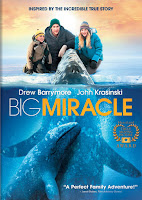
Ever since I was a child watching movies like Free Willy and Flipper (and more recently family-friendly films like (Big Miracle, Dolphin Tale, and Whale Rider), I’ve been captivated by stories of highly intelligent marine mammals: whales and dolphins—or cetaceans, for their scientific name! Since then, there has been more attention paid to these creatures in the wild, including how they play and strategize, how human activities affect them, and what we can learn from them. While I enjoy reading books about dolphins and whales, I also love watching nature documentaries: in these movies, the world under the sea comes to life thanks to the work of many skilled filmmakers and high-definition underwater cameras. They reveal amazing sights previously hidden to us and reinforce how humans can be both a source of danger and of hope to the ocean. Check out these fascinating dolphin and whale documentaries:

http://discover.halifaxpubliclibraries.ca/?q=title:big%20miracle http://discover.halifaxpubliclibraries.ca/?q=title:dolphin%20tale http://discover.halifaxpubliclibraries.ca/?q=title:whale%20rider

Ocean Giants

Narrated by Stephen Fry, this 3-episode documentary series features many different types of whales, including the blue whale, the largest known animal to have ever lived on Earth—bigger even than the dinosaurs! This series is unusual because it explicitly tells the story from the perspective of the cameramen, those who are usually silent behind the camera. Experienced underwater cameramen Doug Allan and Didier Noirot are some incredibly brave people, venturing into Arctic temperatures and getting as close as possible to such huge creatures who could seriously injure or even kill them with a flick of their tail.

Blackfish

Although I loved visiting Sea World as a kid and sitting in the “splash zone” at Shamu Shows, I would feel seriously conflicted about going back after watching this profoundly disturbing documentary. The film covers a killer whale in captivity named Tilikum, who has been responsible for killing several of his trainers. Such attacks happen often in captivity but are rare in the wild. The filmmakers posit that keeping such intelligent wild creatures in small artificial tanks is the height of cruelty. One of the most haunting images in the film is that of the collapsed dorsal fins that many orcas in captivity develop, which are unusual to see in the wild (hypothesized to be because the whales in captivity don’t have enough space to swim around and keep their fins upright).

If you saw Blackfish and want to learn more, check out the book that spawned the influential documentary, Death at SeaWorld: Shamu and the dark side of killer whales in captivity.

Disneynature Oceans

Pierce Brosnan narrates this documentary, which was filmed all throughout the globe, touching on creatures in each of the five oceans. While whales and dolphins are heavily featured, the film includes many other oceanic dwellers, such as sharks, birds, crabs, turtles, otters, and the lovely colourful sea slug called the “Spanish dancer.” All films about the ocean tend to be visually stunning, but this one is particularly so. I would have loved to see it in the theaters or even on an IMAX big screen. In addition to presenting scenes of wonder, though, the film meditates on the current state of the oceans due to the effects of pollution, rising sea temperatures, overfishing, and other environmental problems, ending with the line, “Instead of asking, ‘What exactly is the ocean?’ maybe we should be asking, ‘Who exactly are we?’”

The Cove

Awarded the Oscar for Best Documentary in 2010, this documentary works more like a fast-paced thriller with the filmmakers trying to get photographic evidence of a horrifying secret dolphin hunt that goes on in the small cove of Taiji in Japan. The documentary is told from the perspective of activist Ric O’Barry, a former dolphin trainer who helped capture the wild dolphins who shared the lead role in the television series Flipper (based on the movie of the same name). After the movie and TV series helped to popularize dolphin shows, O’Barry became consumed with guilt and remorse when he witnessed how captivity caused the dolphins such suffering. In Taiji, the filmmakers go into detail about how those involved in the hunt attempt to suppress reporting and prevent locals from knowing what goes on, and after seeing the visceral and distressing footage, I understood why. I appreciated how the filmmakers put the hunt into context and went into detail about whaling practices and what happens to the dolphin meat, which is dangerously high in mercury.

The Whale

Produced by Ryan Reynolds and Scarlett Johansson, this heartbreaking documentary tells the story of Luna, a two-year-old orca who in 2001 was separated from his family in Nootka Sound, off the coast of Vancouver Island. Because killer whales have strong social ties to each other and Luna was alone, he decided to make friends and play with local fishermen and townspeople, coming up to boats in the Sound and begging for attention. Watching the footage, it was clear that Luna had emotions and was lonely. But whether all that contact with humans was good for him was less clear. Luna eventually found himself in the middle of a political controversy between the Department of Fisheries and Oceans, who wanted to take him away into captivity, and the local people, including those of the Mowachaht/Muchalaht First Nations, who believed Luna was a reincarnation of their former chief and wanted him to be left alone. Regardless of the politics, though, it was very moving to see the depth of the connections that Luna formed with the people of Nootka Sound.

If you want to learn more about Luna, check out the book, The Lost Whale: the true story of an orca named Luna.

Friday, May 22, 2015

North Korea and Film


As we celebrate Asian Heritage Month, I decided to check out a book that might shed some light on the history of North Korea, an isolated country shrouded in secrecy: A Kim Jong-Il Production: the extraordinary true story of a kidnapped filmmaker, his star actress, and a young dictator’s rise to power by Paul Fischer.

This book tells the incredible story of the lengths to which dictator Kim Jong-il was willing to go in order to improve the North Korean film industry: by kidnapping prominent filmmakers from South Korea. Shin Sang-ok, South Korea’s most famous director, and Choi Eun-hee (“Madam Choi”), a renowned actress who starred in many of Shin’s movies, were a formerly-married couple who had fallen on hard times in South Korean film industry. They were separately kidnapped, held in North Korea for a decade, and forced to make propaganda movies for Kim Jong-il after undergoing years of imprisonment and attempted brainwashing. Eventually, they gained Kim Jong-il’s trust and managed to stage their escape to Vienna in 1986. It really does sound like something out of a movie plot, and indeed, an upcoming documentary called The Lovers and the Despot will cover their story.

What I really appreciate about this book is not only the amazing fortitude of Choi and Shin but also the insights they and others are able to give us about what it was like living in North Korea: the staggering wealth inequality where Kim Jong-il owns countless luxury mansions while many of his people starve. I was stunned by the contrast between Jong-il’s lavish parties with personal entertainment while political prisoners are fed soup filled with rocks and forced to sit perfectly still for sixteen hours a day or be beaten. The book emphasizes that kidnappings to North Korea happened on a frequent basis, and once you were there, it was almost impossible to escape from the country. But the main message is Jong-il’s obsession with reinforcing his family’s regime through the power of film. The movies became one of Jong-il’s main tools in building and maintaining a national identity from worship of his father, Kim Il-sung, to himself and beyond.

This might help to explain the extreme reaction to the political satire film The Interview, starring Seth Rogen, James Franco, and Randall Park as Jong-il’s son, Kim Jong-un. Sony Picture’s theatrical release of the film was eventually cancelled due to threats of violence from hackers linked with North Korea, which unfortunately may have a chilling effect on future films satirizing North Korea.

Those wanting more satirical films could try the 2005 film Team America: World Police, made by the creators of South Park. Here, Kim Jong-il is made to look particularly ridiculous—but then, so is everyone else parodied in the movie, whose actors, amusingly, are marionettes.

While comedy films may invite us to mock the dictators of North Korea, we must remember the actual harm done to the everyday citizens who suffer under the regime, which seeks to suppress the free thought of its people and can have them and their entire families thrown into prison without a trial or even an official charge. The documentary Kimjongilia: the flower of Kim Jong Il shares appalling firsthand stories from six former detainees: survivors of the horrors of the prison system, sexual slavery, torture, mutilation, and starvation. While the inclusion of interpretive dancers distracts from the accounts, the harrowing tales have undeniable power.

For another documentary about North Korea, try National Geographic’s Inside North Korea, with correspondent Lisa Ling. She traveled to the elusive country by posing as part of a medical team under Dr. Sanduk Ruit, a Nepalese eye surgeon whose goal was to spend 10 days doing 1,000 surgeries to remove cataracts from North Korean citizens—including many children—who had become blind due in part to malnutrition, a chronic problem in the country. While unfortunately, the team was constantly monitored by government officials, simply gaining access to Pyongyang was quite a feat. One amazing scene in particular showed how strong Kim Jong-il’s cult of personality had become: when those who had been blind finally had their bandages removed, rather than thank the doctors standing there, each of them instead profusely thanked the pictures of Kim Il-sung and Kim Jong-il on the wall.

Finally, try A State of Mind. The creators of this fascinating documentary were given unprecedented access to two young Pyongyang gymnasts who work tirelessly to bring glory to their country. Pak Hyon-sun (age 13) and Kim Song-yon (age 11) spent months training for the Mass Games, a gloriously colourful performance that requires up to 80,000 gymnasts in the floor display and 12,000 schoolchildren for the floor backdrop. The purpose of the Mass Games is to celebrate the unity of the people and the glory of the state and leader. While the spectacle of the Games was beautiful, perhaps more interesting were the scenes of relatively privileged everyday life in the capital city, including ubiquitous power cuts and accordion performances. These scenes help to humanize the people living in North Korea and remind us that they are doing the best they can to make a living in an oppressive environment.

Wednesday, April 22, 2015

Humans: A History


Celebrated on April 22 each year,Earth Day is an opportunity to foster respect for the environment, allowing us to reflect on our shared human history while seeking ways to reduce our carbon footprint in the future. This Earth Day, check out some of these fascinating books that provide insight about human history and our effects on the earth:

Sapiens: a brief history of humankind by Yuval Noah Harari

In this book, Dr. Yuval Noah Harari tackles literally the entire history of humankind—no small task!—and yet always seems to ask the right questions, the interesting questions, to make the human journey an exciting one. Originally published in Israel in 2011 and now available in English, this is the companion book to his series of free lectures available on Youtube.

While some of his ideas may stir controversy, Dr. Harari manages to be both informative and highly entertaining as he uncovers the secrets of human civilization, with the end result being a more complete understanding of our past and possible future.

Guns, Germs, and Steel: the fates of human societies by Jared Diamond

This Pulitzer Prize-winning book asks hard-hitting questions about how things in human society came to be, arguing that one of the roots of inequality between human civilizations is due to the land itself: pure geographic luck in agricultural crop farming and animal domestication.

“In this ‘artful, informative, and delightful’ (William H. McNeill) book, Jared Diamond convincingly argues that geographical and environmental factors shaped the modern world. Societies that had a head start in food production advanced beyond the hunter-gatherer stage, and then developed religion—as well as nasty germs and potent weapons of war—and adventured on sea and land to conquer and decimate preliterate cultures. A major advance in our understanding of human societies, this book chronicles the way that the modern world came to be and stunningly dismantles racially based theories of human history.” publisher

The Sixth Extinction: an unnatural history by Elizabeth Kolbert

Another Pulitzer Prize-winner, this book presents heartbreaking scientific data in an accessible format to tell the story of how humans have affected the environment. The author shares firsthand accounts of her travels around the globe, as well as stories of past mass extinctions—and the “sixth extinction” Earth is currently facing.

“Provides a moving account of the disappearances occurring all around us and traces the evolution of extinction as concept, from its first articulation by Georges Cuvier in revolutionary Paris up through the present day. The sixth extinction is likely to be mankind's most lasting legacy. It compels us to rethink the fundamental question of what it means to be human.” publisher

The Human Age: the world shaped by us by Diane Ackerman

In this book, the author offers insight as to how humans have become a global powerhouse by subduing or destroying the vast majority of Earth’s land and creatures, but still offers hope for the future if humans can learn to integrate with the natural world rather than seeking to overcome it. Using poignant examples of new technologies, she points out that while our mistakes are vast, so is our capacity for imagination and our ability to find creative solutions.

“In this landmark book, Ackerman confronts the unprecedented reality that one prodigiously intelligent and meddlesome creature, Homo sapiens, is now the dominant force shaping the future of planet Earth and takes her readers on an exhilarating journey through this new reality, introducing many of the people and ideas now creating—perhaps saving—our future and that of our fellow creatures.” publisher

Sunday, April 19, 2015

Nova Scotian Poetry


April is National Poetry Month in Canada, a time set aside to celebrate poets and their craft through events, and to expand awareness of poetry’s vital role in Canadian culture. Enjoy this selection of poetry from award-winning Nova Scotia authors!

Live From the Afrikan Resistance! by El Jones

El Jones is Halifax’s 2013-2015 Poet Laureate, a resident spoken word artist who advocates for literacy and reflects our community through heartfelt, passionate poetry about her experience as an African-Canadian woman.

“The first collection of spoken word poetry by Halifax’s fifth Poet Laureate, El Jones. These poems speak of community and struggle. They are grounded in the political culture of African Nova Scotia and inherit the styles and substances of hip-hop, dub and calypso’s political commentary. They engage historical themes and figures and analyze contemporary issues—racism, environmental racism, poverty and violence—as well as confront the realities of life as a Black woman. The voice is urgent, uncompromising and passionate in its advocacy and demands. One of Canada’s most controversial spoken word artists, El Jones writes to educate, to move communities to action and to demonstrate the possibilities of resistance and empowerment. Gathered from seven years of performances, these poems represent the tradition of the prophetic voice in Black Nova Scotia.” —publisher

How to Be Alone by Tanya Davis, with illustrations by Andrea Dorfman

Written by Halifax’s 2011-2012 Poet Laureate, this book is an illustrated version of the poem “How to Be Alone,” which made a splash as a viral video with its wise tips for embracing life by being alone without being lonely.

“Since its debut on YouTube, Tanya Davis’s beautiful and perceptive poem ‘How to Be Alone,’ visually realized by artist and filmmaker Andrea Dorfman, has become an international sensation. In this edition of How to Be Alone, they have adapted the poem and its compelling illustrations for the page in a beautiful, meditative volume—a keepsake to treasure and to share. From a solitary walk in the woods to sitting unaccompanied on a city park bench to eating a meal and even dancing alone, How to Be Alone reveals the possibilities and joys waiting to be discovered when we engage in activities on our own. As she soothes the disquietude that accompanies the fear of aloneness, and celebrates the power of solitude to change how we see ourselves and the world, Tanya reveals how, removed from the noise and distractions of other lives, we can find acceptance and grace within. For those who have never been by themselves or those who embrace being on their own, How to Be Alone encourages us to recognize and embrace the possibilities of being alone—and reminds us of a universe of joy, peace, and discovery waiting to unfold.” —publisher

Masstown by Chad Norman

Chad Norman’s poems have appeared in magazines across the world, and he currently has 15 books of poetry, most recently Masstown, about a farming community in Colchester County. At the Halifax Central Library, he recently read from his work-in-progress Simona, which celebrates the Colchester County SPCA and the furry feline they allowed his family to rescue.

“Masstown is a small farming community in Colchester County, near the Cobequid Bay in Nova Scotia. Set in the past, this is a collection of poetry that accentuates the struggles of life on a family-run dairy farm for owners Bert and Gladys, grandparents of the author. Not only do Bert and Gladys run the farm, they’re also parents striving to find the balance between running a farm and raising a family.” —publisher

Traverse by George Elliott Clarke

Born in Windsor, Nova Scotia, George Elliott Clarke has spent much of his career writing about the black communities of Nova Scotia and is now Toronto’s Poet Laureate. This book was written in a one-day (!) poetry marathon when he traveled back to Halifax.

“From Toronto’s poet laureate (2012–15) comes a new book that is a tour de force in confessional verse. This autobiographical sequence in 980 lines contains 70 stanzas of “skeletal sonnets” composed, astonishingly, in one day and one evening. Traverse is a web of intersecting, crisscrossing impulses, a great burst of imaginative energy and aesthetic reflection that celebrates a 30-year period of Clarke’s writing poetry.” —publisher

Cottonopolis by Rachel Lebowitz

Rachel Lebowitz has lived on the east and west coasts of Canada and has now settled in Halifax, where she supports literacy in the libraries. This well-researched poem combines genres to depict the complex history of the cotton industry.

“Cottonopolis is a sequence of prose and found poems about the Industrial Revolution, in particular the links between the cotton industry in Lancashire, slavery in the Americas and the colonization of India. From the Irish slums of Manchester to the forts of the Slave Coast to the ruins of Dhaka, India; from Civil War battlefields to Lancashire factory floors, from slave ship sailors to machine-breakers to child labourers, these poems tell the stories of the industrial age.” —publisher

And I Alone Escaped To Tell You by Sylvia D. Hamilton

Sylvia D. Hamilton is an author, artist, and documentary filmmaker whose work focuses on the history of African Nova Scotians and women through in-depth firsthand research and storytelling. As part of the celebration of African Heritage Month, she read from this moving collection of poetry at the Halifax Central Library in February.

“The settlement of African peoples in Nova Scotia is a richly layered story encompassing many waves of settlement and diverse circumstances—from captives to ‘freedom runners’ who sailed north from the United States with hopes of establishing a new life. The poems in And I Alone Escaped to Tell You endeavour to give these historical events a human voice, blending documentary material, memory, experience and imagination to evoke the lives of these early Black Nova Scotians and of the generations that followed. This collection is a moving meditation on the place of African-descended people in the Canadian story and on the threads connecting all of us to the African diaspora.” —publisher