Showing posts with label dystopia. Show all posts

Saturday, June 25, 2016

Staff Pick - The Heart Goes Last by Margaret Atwood

I think I've mentioned this on The Reader before but I, like many Canadian readers, am a huge fan of Margaret Atwood. I am a particularly huge fan of her dystopian works, The Handmaid's Tale and the MaddAddam Trilogy. I generally have a pretty good idea of what big new books are being released, particularly those by my favourite authors. So imagine my surprise a few weeks ago when I discovered The Heart Goes Last - an Atwood dystopia that had been released in September that I had never even heard of! I have no idea how that slipped under my radar, but I immediately put it on hold.

The Heart Goes Last takes place sometime in the near future, after a massive economic collapse has devastated most of the world and thrown parts of it into absolute chaos. Charmaine and Stan live on the East Coast of the United States, an area that has been hit particularly hard. They had a nice life together before the collapse, but after losing their jobs and then their house, they've been reduced to living in their car and struggling to survive. Crime is rampant, and it's not unusual for someone to try and break in while they're sleeping - necessitating constant vigilance.

This isn't the life that they signed up for. Charmaine remains ever optimistic and positive, something that begins to grate on Stan more and more as time goes on. Their relationship is deteriorating, it's becoming ever more dangerous to live on the streets, and they're basically at their wits end. And that's when Charmaine sees a commercial for the Positron Project and they finally see a light at the end of the tunnel. The Positron Project works like this: for one month, participants will live and work in the town of Consilience. Homes and jobs are provided for them, they are guaranteed a roof over their heads, food on their table, and all the creature comforts of a nice life. The catch is that for the other month, they must live in the Positron Prison, where they will live with other inmates and work different jobs particular to the Prison. While they're in prison, their alternates will live in their home, and then at the end of the month they switch - Charmaine and Stan go back home and their unknown alternates (who they are forbidden from ever knowing) go into the prison.

At first everything is great - they're happy and well taken care of, their relationship is thriving, and even life inside of the prison is comfortable and nice. And then things start to get messy when Charmaine begins an affair with one of her alternates and Stan develops an extremely sexually-charged obsession for the other. Things quickly start to fall apart as Stan and Charmaine are separated from each other and each begin to learn the truth behind what is really happening at the Positron Project.

As ever, Atwood gives us a beautifully imagined and fleshed out dystopian world. From the mean streets outside of Consilience, to the sex-robot factory inside of Positron, it is pure Atwood and almost reminiscent of MaddAddam (there's even a small mention of growing chickens with no heads). It's similar enough to our current world, and yet startlingly different in a way that makes you think "this could actually happen - but I really don't want it to." This, combined with the intricate plot that keeps you guessing until the last page, makes for a really immersive reading experience. Which is good, because the characters are definitely meh. This came as a surprise to me, but I found a lot of the characters were quite flat. They were all extremely unlikable (which I don't usually have a problem with, if done well), but more than that I just found they were underdeveloped. Stan was probably the most fleshed out and believable character, but it was to the point that I really hated him by the end of the book. I just didn't really understand their motives for doing what they did and I really wasn't rooting for any of them, even Charmaine. However, if you are a fan of Margaret Atwood dystopia, don't let this deter you! Even though I was annoyed with the characters most of the time, I still could not put this book down until I figured out what was really going on (and you don't figure it all out until the very last page!).


For similar titles, check out:
Mandibles: a Family, 2029-2047 by Lionel Shriver also takes place in an America devastated by an economic collapse. It follows the Mandibles, a once prosperous family, and looks at how each member of each generation of the family is affected by and deals with this new way of life. "The Mandibles is about money. Thus it is necessarily about bitterness, rivalry, and selfishness—but also about surreal generosity, sacrifice, and transformative adaptation to changing circumstances." - publisher

In The Testament of Jessie Lamb by Jane Rogers, women are dying en masse and no one really knows why. "Set in a world irreparably altered by an act of biological terrorism, The Testament of Jessie Lamb explores a young woman's struggle to become independent of her parents. As the certainties of her childhood are ripped apart, Jessie begins to question her parents' publisher
attitudes, their behavior, and the very world they have bequeathed her." -

Brilliance by Marcus Sakey is more of an action-packed dystopian story, but has a similarly eerie "this could totally happen" vibe. In Wyoming, a little girl reads people’s darkest secrets by the way they fold their arms. In New York, a man sensing patterns in the stock market racks up $300 billipublisher on. In Chicago, a woman can go invisible by being where no one is looking. They’re called “brilliants,” and since 1980, one percent of people have been born this way. Nick Cooper is among them; a federal agent, Cooper has gifts rendering him exceptional at hunting terrorists. His latest target may be the most dangerous man alive, a brilliant drenched in blood and intent on provoking civil war. But to catch him, Cooper will have to violate everything he believes in—and betray his own kind." -

Saturday, May 21, 2016

Audio Dystopia


Until recently, dystopian fiction has never appealed to me, and I think I first decided to give something a try when my cousin told me to read The Hunger Games; she was sure I’d like it. I wasn’t quite so sure, so rather than spend precious reading time on a book I wasn’t sure about, I decided I’d listen to it while doing housework. My cousin was right, I did enjoy the story, and I think I had this astonishing fact in mind when I discovered Oryx and Crake in the Overdrive catalogue of audiobooks.

I had never given the book or the MaddAddam series a chance. To me dystopian fiction seemed full of harsh landscapes, harsh realities, and unrelatable characters. As an escapist reader, I could think of other destinations. I was happily surprised to find that I really did engage with the story, at least enough that I wanted to listen while puttering away at home. At first I needed to know Snowman’s story. Where did Snowman come from, and why that name? There was also something else that kept me listening; something about this ugly world unfolding with each word, and wanting to know who Snowman is mourning, and why he’s so filthy.

By the end of the first book, I needed badly to know what the outcome of this doom might look like, so I immediately downloaded the second book, The Year of the Flood. This story begins in a different time and place with different characters than we met in the first book so my need wasn’t actually satisfied until the final book, MaddAddam. Yet, listen I did. The characters gained vibrancy and personality throughout the books, many becoming quite relatable, and the stories and point of view more humorous.

Enjoying audiobooks as I do, I felt quite excited by having multiple narrators helping to develop the story. Each one was distinct enough that it was easy to tell who was speaking or whose point of view was being represented. Of all the narrators, I only disliked one. In the process of writing up this blog post I realized it happened to (ahem) be Margaret Atwood herself, reading the character of Toby. Interestingly, Toby is one of my favourite characters, but I had a bit of a hard time getting past the tone of her voice reading Toby as though she were uninterested in the world, what was happening, her part in all of it, or life in general; all of which are opposite to my impressions of her character, and reasons why I liked her.

Paying attention to the world around myself, it’s not too far of a stretch to imagine some catastrophe that just may change the shape of my daily life, my priorities, and all the structures I’ve built in life. Deciding to run along with this idea for a while, I next listened to Emily St. John Mandel’s Station Eleven. Read by the prolific Kirsten Potter, the story was at once terrifying and enchanting. Hearing the stories of the characters and how they survived the collapse was nearly inspiring, and the travelling Shakespearean troupe added an endearing familiarity and quaintness.

Both authors set their books, at least in part, in Ontario, my home province, which added to the appeal. All the books include strong characters facing adversity, and the task of carving out an entirely new way of being in the world through the strength of friendship, community and chance.

Sunday, March 6, 2016

Modern Dystopian Fiction


While I was trying to think of a topic for my next blog post, I was playing around with different themes related to dystopian fiction. I was Googling phrases like "best dystopian books" and "best dystopia world building" and I noticed something: the majority of the must-read or highly recommended dystopian novels that I could find fell into two categories: they were written more than 30 years ago (some up to 70 or 80 years ago) or they were written for teens. Now, don't get me wrong, I count Brave New World among my favourite novels and I loved The Hunger Games, but I know there are dozens of modern dystopian novels that are written for adults (and I'm not including the ones everyone knows about, like The Road). So I thought back to the books I've read in the past few years and did a little internet digging in order to compile this list of books and save you a little time. All of these books feature detailed worlds and depressing realities, have been written in the last ten years, and belong in the adult fiction section.


http://discover.halifaxpubliclibraries.ca/?itemid=|library/m/halifax-horizon|7001 http://discover.halifaxpubliclibraries.ca/?itemid=|library/m/halifax-horizon|1635293 http://discover.halifaxpubliclibraries.ca/?itemid=|library/m/halifax-horizon|1530834


Ready Player One by Ernest Cline is the perfect book for you if you're a gamer, lived through the 80's, or love nostalgia. The novel is set in 2044 and the world as we know it is a grim, depressing place with one bright spot: the immense virtual reality world known as OASIS. Our main character, Wade, is a high school student living in a particularly poverty stricken city. As far as he's concerned, real life has nothing for him, and he finds all of his joy on OASIS. The creator of OASIS, James
Halliday, has recently passed away and left an usual will: he's hidden clues throughout his virtual world, Easter Eggs that players are meant to seek out in order to be led to the ultimate goal: his entire fortune and control of OASIS. Wade is the first player to successfully find an Easter Egg, and it propels him along an incredible journey, discovering dangerous truths about his world (both real and virtual) that he never imagined possible. The best part of this book for me was that because James Halliday was obsessed with 1980's pop culture, his virtual world (particularly everything pertaining to his quest) is rife with references to 80's movies, musics, and video games. It's a fast-paced, richly-detailed, funny, coming of age story set in a bleak not-too-distant  future.

In Shades of Gray , Jasper Fforde creates the world of Chromatica - a distant future version of our world that is ruled by a Colortocracy and where social standing is based on your individual colour perception. For example, those who are able to strongly perceive both blue and red (purple) hold the highest place in society, and those who are able to see no colour at all (known as Greys) are at the bottom and live like slaves to the rest of society. Eddie Russett is a high perceptive Red (note the last name, Fforde was very clever in naming his characters and towns after their dominant colours), is, up

until the time we meet him, a law abiding, status quo following young man. He's focused mainly on marrying above his colour grade and securing some kind of fortune and good name for himself. However, when he travels with his father on a mission to the Outer Fringes, he meets a beautiful Grey named Jane, along with a host of other interesting characters, and everything changes for him. The longer he stays there, the more his eyes open to the truth about the Colortocracy he lives in. This book is one of my absolute favourites. I love the way Fforde developed his world and his characters, the writing is pithy and often tongue in cheek. I literally could not put this book down and I, like many others, am anxiously awaiting the sequel (that very frustratingly may or may not ever be coming).

Another of my favourites, Never Let Me Go by Kazuo Ishiguro is a lyrical and heartbreaking novel set in an alternate version of England. Kathy, the narrater, is in her early 30's as she tells her story, looking back over her life with Tommy and Ruth as they grow from schoolchildren to young adults. They meet at Halisham, a private school in the English countryside where things are not as they seem. Growing up, the children were "told and not told" about their circumstances. They knew that they had a purpose and that their futures had already been decided for them, but failed to grasp the real truth of it. I don't want to say much more because I strongly recommend going into this book with a clean slate, but know that it is a story about hope, forgiveness, friendship, and love. I honestly get a little emotional just thinking about this book, it is so powerful and beautifully written. It's not your typical work of dystopian fiction, but I cannot recommend it highly enough.

Feed by Mira Grant is an entirely different spin on your typical Zombie apocalypse. "Shaun and Georgia are orphans of the Rising, the cataclysmic event which left the world reeling in the aftermath of the zombie uprising. Adopted by the Masons and raised in the strange world of the post-Rising
media, they’ve spent their lives chasing the next big story, the one that will allow them to break into the big leagues once and for all. Now, in Senator Peter Ryman’s run for the Presidency of the United States, they’ve finally found it. All they have to do is survive until the election. In a world filled with the constant threat of both the living and the living dead, it will be all that Shaun and Georgia can do to keep themselves in one piece. Accompanied by the rest of their blogging team, Senator Ryman’s staff, and a whole lot of caffeine, they might succeed…or they might finally answer the big question of their post-Rising world: When will you rise?" - publisher

In Station Eleven, by Emily St. John Mandel, "Kirsten Raymonde will never forget the night Arthur Leander, the famous Hollywood actor, had a heart attack on stage during a production of King Lear. That was the night when a devastating flu pandemic arrived in the city, and within weeks, civilization as we know it came to an end. Twenty years later, Kirsten moves between the settlements of the altered world with a small troupe of actors and musicians. They call themselves The Traveling Symphony, and they have dedicated themselves to keeping the remnants of art and humanity alive. But when they arrive in St. Deborah by the Water, they encounter a violent prophet who will threaten the tiny band’s existence. And as the story takes off, moving back and forth in time, and vividly depicting life before and after the pandemic, the strange twist of fate that connects them all will be revealed." - publisher

Wednesday, November 18, 2015

Staff Pick - Shades of Grey by Jasper Fforde


Imagine a society in which each person can only see a very limited range of colour, and then the society is ordered around a hierarchy relating to those colours—a Collective or “colourtocracy.” Those who can see mostly Purples are at the top of the chain with the most status and privilege, then Blues, Greens, Yellows, Oranges, Reds, and finally Greys, who are at the very bottom and are given the most dangerous and demeaning jobs. Everything, from a person’s name, position, clothing, and even postal code, is determined by this colour-based social hierarchy. Such is the case for the denizens of Jasper Fforde’s Shades of Grey, the book chosen for November’s book club at the Halifax Central Library—and not to be confused with E.L. James' 50 Shades of Grey.

To illustrate this world, Fforde employs a supremely clever naming scheme: each of the characters and towns have names that correspond with the colour they can predominantly see. For example, our protagonist is Eddie Russet (a Red), who lives in Jade-Under-Lime (a Green town) but temporarily moves to East Carmine (a Red town). Every character and city has a similarly creative colour-based name.

Although this is technically a dystopian novel, the tone is anything but grim. Instead, the writing is blithe and airy, a comedy of manners lifted from 1950s England with plenty of humour and politeness lathered on the top. It becomes a puzzle for the reader to try to work out the dark underpinnings of this society, with its rigid caste system headed by a faceless totalitarian regime that destroys all spirit of individuality and routinely erases the past in “leap backs.” It was a little amusing but also very unsettling to hear the narrator continue in his bright, pleasantly conversational tone even when discussing horrible things like people catching the Mildew, an unexplained disease that is inevitably painful and fatal, or being sent to Reboot, a secret re-education camp.

There were also many curiosities in the Collective, such as their chronic shortage of spoons, libraries with no reading material at all, abundance of man-eating trees, ability to heal injuries by applying different colour combinations to the area, fear of lightning, and inability to see in the dark. One of the most entertaining situations was the absurd way they treat things that their rules don’t address by deciding to collectively ignore them, like a certain “Apocryphal” man who wanders around naked and whom everyone pretends doesn’t exist, to the point of not being able to talk about him even when he is living in the same house and eating food from the same table.

While there is an effective satire at the edges of this novel, though, the extensive world-building often felt complicated for complication’s sake, unnecessarily muddling the point with each new situation or adding random details that were not explored. However, because the novel is the first in a series, perhaps the next will feature more of a plot now that the heavy world-building has been explained.

Author Jasper Fforde was influenced by several classic dystopias, including these:

1984 by George Orwell: set in a world where even thought is strictly controlled and monitored by Big Brother, the main character, Winston Smith, has the job of constantly rewriting history so that the historical record always supports the totalitarian political party in power. Shades of Grey has similar ideas in terms of history revision, language control, and all-powerful regimes.

Brave New World by Aldous Huxley: Both the dystopias in this novel and Shades of Grey have strict caste systems and have banned natural reproduction, critical thought, and initiative, while conditioning the members of each caste to accept their unequal lots.

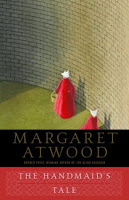
The Handmaid’s Tale by Margaret Atwood: In this dystopia, a theocratic military dictatorship overthrows the United States and begins stripping women of their rights, including preventing them from reading. All members of the society wear colour-coded clothing, and like in Shades of Grey, the lowest caste are essentially considered subhuman, doing the dirtiest and most dangerous jobs, and wearing the colour grey.

http://discover.halifaxpubliclibraries.ca/?q=title:1984%20author:orwell http://discover.halifaxpubliclibraries.ca/?q=title:brave%20new%20world%20author:huxley http://discover.halifaxpubliclibraries.ca/?q=title:handmaid%27s%20tale

Friday, December 12, 2014

Staff Pick: The Bees by Laline Paull


Laline Paull's beautifully imagined and compelling first novel The Bees is an unusual variation on the dystopian theme: it takes place in a bee hive. When I tell people that part their eyes often glaze over and they stop listening-who wants to read a book about insects, right? How does someone even write fiction about insects? I felt the same way before I started The Bees; the book was in my house and I had nothing else to read so I picked it up as a last resort and began reading with much skepticism.

To my surprise I quickly found myself totally gripped by the story of Flora 717, a worker bee born into the lowest level of the highly complicated social structure of the bee hive. Flora doesn't conform to her class station; being unusually strong and adaptable she manages to move around within its ranks, eventually becoming an attendant to the colony's queen. She's kind of like Tris from the Divergent series -her survival depends upon keeping her unique nature a secret.

The pacing of The Bees is fast; new threats to the individual bee Flora and to her whole colony arise in every chapter, leading to some exciting battles with rival families of wasps and spiders. For me, the reading experience was very similar to reading the Hunger Games. At many points I just could not put the book down.

What I loved most about the book was the richly imagined world of the bee hive. It is at once very human and very true to the science of bee life. Flora inhabits a warm world where bees communicate by scent and dance, the hive is almost like a Renaissance palace with its intricate wax structures and courtly intrigue, and there are even some humorous moments with the foppish male bees (drones).

If you enjoyed The Bees try Barbara Gowdy's The White Bone for another gripping story of animals fighting to survive. For more imaginative dystopian worlds try Pure by Julianna Baggott, or Spark by John Twelve Hawks.


http://discover.halifaxpubliclibraries.ca/?q=title:white%20bone%20author:gowdy http://discover.halifaxpubliclibraries.ca/?q=title:pure%20author:baggott http://discover.halifaxpubliclibraries.ca/?q=title:spark%20author:twelve%20hawks

Tuesday, April 15, 2014

Hidden Gems - 3 top-notch Speculative Fiction novels

Three "hidden gems" of speculative fiction that have recieved critical acclaim and starred reviews.

The Dog Stars
by Peter Heller

Hig survived the flu that killed everyone he knows. His wife is gone, his friends are dead, he lives in the hangar of a small abandoned airport with his dog, his only neighbor a gun-toting misanthrope. In his 1956 Cessna, Hig flies the perimeter of the airfield or sneaks off to the mountains to fish and to pretend that things are the way they used to be. But when a random transmission somehow beams through his radio, the voice ignites a hope deep inside him that a better life--something like his old life--exists beyond the airport. Risking everything, he flies past his point of no return - not enough fuel to get him home - following the trail of the static-broken voice on the radio. But what he encounters and what he must face - in the people he meets, and in himself - is both better and worse than anything he could have hoped fo.

(C) Tory Read
"Hig takes long, risky, meditative walks; tends the garden; and stubbornly takes to the air in a 1956 Cessna, searching for some remnant of civilization. Heller's surprising and irresistible blend of suspense, romance, social insight, and humor creates a cunning form of cognitive dissonance neatly pegged by Hig as an apocalyptic parody of Norman Rockwell a novel, that is, of spiky pleasure and signal resonance." - Booklist

Dreams and Shadows
by C. Robert Cargill

There is another world than our own--one no closer than a kiss and one no further than our nightmares--where all the stuff of which dreams are made is real and magic is just a step away. But once you see that world, you will never be the same. Once bold explorers and youthful denizens of this magical realm, Ewan is now an Austin musician who just met his dream girl, and Colby, meanwhile, cannot escape the consequences of an innocent wish.

http://www.crobertcargill.com/blog/bio/"In this beautifully written debut, Ain't It Cool News Web site contributor Cargill chronicles the friendship and adventures of Ewan, stolen as a baby by the fairy-goblin crossbreeds called Bendith Y Mamau, and Colby, an eight-year-old who encounters a djinn, with an unhurried storyteller style that provides total immersion. ... Readers with delicate sensibilities should leave this one for those who enjoy a roller-coaster ride into the depths of strangeness and despair." - Publisher Weekly

Great North Road
by Peter F. Hamilton

Futuristic speculation combines with murder when a scientific expedition on a faraway planet searches for an alien species only to be stalked by a determined killer who may be a hostile alien or a member of their own team.

"The author's rapidly growing legion of fans will flock to this new title, and readers unfamiliar with Hamilton's brand of SF should be steered in its direction. It's a perfect introduction to his gifts for character design, dialogue, and sheer, big-idea-driven storytelling" - Booklist

"Hamilton excels at telling "big" stories, and his latest novel proves no exception." - Library Journal
http://www.peterfhamilton.co.uk/index.php?page=Biography


Thursday, October 24, 2013

Scary Reads - Staff Picks - (part 1)

Scary books come in all formats, both fiction and non fiction. Surprisingly some of the scariest ones are not even classified as horror fiction.

In anticipation of Hallowe’en I asked some of my co-worker what their favorite scary reads were. The statements in quotes are their own words on the book they selected . We hope you enjoy this list and maybe get goose-bumps from one or more of them.


Hell House (M)
by Richard Matheson

"When a co-worker listed this novel I went “Oh Yeah!” I read it many years ago and it literally still “haunts” me"

Heart Shaped Box (M)
by Joe Hill

“Which was a fantastic and unique ghost story. I stayed up wayyyy too late to finish reading it because I. Had. To. Know. How it turned out!’

The Collector (M)
by John Fowles

I read in high school. It is a terrifying tale of a man who collects women just like someone would collect butterflies. He kidnaps Miranda for her beauty and feels that it time she will come to love him. This reminds me a number of kidnapping cases that have happened in the U.S. lately.


Silence of the Lambs (M)
by Thomas Harris

The beginning of the genre where imprisonment and torture of women became popular fiction.

On the Beach (M)
by Nevil Shute

“I read this in about 1980 sometime and I was only 15. I had nightmares about the world ending for a year. I was so sure that the world was going to end in 1984…”

Kiss the Girls (M)
by James Patterson

This is one of his first novels featuring Alex Cross and I feel the best.


Harvest Home (M)
by Thomas Tryon

A couple move to a small isolated town in which not all is quite as it seems. Some have compared this to Stephen King’s Children of the Corn.

Whispers (M)
by Dean Koontz

Hilary becomes the target of a deranged psychopath, despite the fact there is a death certificate with his name of it.

Hanging Hill (M)
by Mo Hayder

“British mystery….took a very, very disturbing turn towards the end. While it isn’t really a “scary book”, I’ve never been able to get rid of that ending….I have nightmares about that one still.” Also recommended by the same author is the novel Birdman.

I, and I am sure fellow readers, would love to heard any suggestions you may have. So come one, Dear Readers, help us get into the moods with your favourite scare.

Saturday, February 16, 2013

Date Novels

When I was much younger the first 45 record I bought was called In the Year 2525 by Yager and Evans. Yeah, I know that some of our readers may not know what a 45 is...? Anyway, I guess that was my first time thinking about a date that was a year and not a day such as Christmas or someone's birthday.

Here are some date novels for you to contemplate.

1356 (M) is the latest of Bernard Cornwell's Grail Quest series, which is set around the Hundred Years' War. The cover is what attracted me to this novel as it states “ Go with God and fight like the devil.” The novel culminates at the Battle of Poitiers in 1356. Archer Thomas of Hookton, aka Le Batard, is under orders from Edward, Prince of Wales to find the lost sword of St. Peter. This weapon is said to grant victory to whoever has it. The Black Prince is hoping that this sword will win him victory against the French. George R.R. Martin has stated “The best battle scenes of any writer I've ever read past or present, Cornwell really makes history come alive”.

1634: the ram rebellion (M) is just one of the novels in the 1632 series (aka Ring of Fire series) by Eric Flint. This series is an alternative history book series. In 2000 the small fictional town of Grantville, West Virginia was sent to the past, specifically to central Germany during the Thirty Years' War. Flint has accomplished an amazing feat with this series. The whole town is the collective protagonist of the stories not just one or two individuals. He has also encouraged fans to contribute to the series through the on-line message board Baen's Bar. The Grantville Gazettes began as an experimental semi-professional online magazine.

1892 (M) by Paul Butler brings history closer to home. This critically acclaimed author drops the reader into 19th century St. John's Newfoundland. Irish servant Kathleen yearns for her home while being wooed by stable hand Tommy Fitzpatrick. Tommy has his own inner battles to fight. A mysterious scientist, Dr. Glenwood, tries to be the first to bring a photographic discovery to light. The struggles of these three erupt to change the fate of the entire city. 1892 can be enjoyed by those would read romance, historical fiction or gothic tales.

1929 (M) by Frederick Turner is based on the real life jazz legend Bix Beiderbecke, who came to symbolize the archetype of the Roaring Twenties. Bix started playing piano as the age of two, then the cornet by listening to his older brother's jazz records. This soft-spoken white kid went on to influence jazz music before his death at 28, even winning a posthumous Grammy Award. Turner has followed the facts of Bix's life closely. Starting in the present days it soon travels back to 1926. It presents the cross country tours of the jazz musicians, the stock market crash, and Bix as a victim of bootleg gin. Along the way Turner has Bix encounter some the eras most popular characters, such as Bing Crosby, Louis Armstrong, Clara Bow, Al Capone, Duke Ellington, etc. How much fact versus fiction is in this novel? I am not quite sure but it is an interesting read.

1984 (M) by George Orwell is one of those books that was written about the future but the specific date is now in the past. This fact can screw with your mind if you let it. I have always loved the line “ It was a bright cold day in April and the clocks were striking thirteen.” This immediately sets the tone that something is not quite what you expect. You might be surprised how right Orwell was! Published in 1949 this dystopian novel predicted a lot of what has come to pass. Words and phrases such as “Big Brother is watching you” and “doublespeak” and “thoughtcrime” have become part of our common language. There is a television series named after this. Even your movements in public can be monitored by the government, a company or even broadcast across the world, thanks to Google Earth.

2001 (M) by Arthur C Clarke is another of those “future” themed novels whose dates have come and gone. It is also different from other books as it was written after the release of the Stanley Kurbrick film version. They were based in part on various short stories, most notably The Sentinel, written in 1948. Like 1984, Clarke was able to predict some of the future, most notably space travel and the rise of computers that can control our fate! This classic science fiction novel has changed the way we look at the moon and stars and even evolution itself. I agree with the quote from Library Journal “...though it has thrilled fans for 31 years, still no one is really sure what it means.” That I think is part of its charm and mystery. And for those who wish to continue on its journey they can read the sequels 2010, 2061, 3001 the Final Odyssey.

So there you have it. Some “historical” fiction that took place in the past, the future and in alternative history. There are lots of books with years as their titles. So make yourself a date with one or two of them. You might be surprised how fast time can go!

Thursday, September 6, 2012

Summer of Series

This was the summer of series for me. So much so that when the request for a blog post about what I was going to read this summer, I even missed that request.! I have figured out that during this summer I have read over 6500 pages in series alone! (Don't worry, I did read in the sunshine for a lot of them). That does not include the 3 or 4 books I read that are not part of a series. I know that I read a lot but even I am amazed at the amount. But some series are like popcorn, no matter how big, once you have had one piece, you want to go on and on. So even though I have mentioned a few of these books in previous blogs, I feel they are worth repeating.

The series that consumed most my time and interest is Song of Ice and Fire (M) by George R R Martin. I have written about Martin in a previous blog so I won't re-explain here. Most people refer to this series as Game of Thrones, which is the title of the first novel and the television show.

For those who are unaware, there are also graphic novels based on this series; one of which is a prequel to the books. Usually I read a book and then it appears on television or at the movie theatres. In this case, it was the opposite. A friend recommended the new HBO series Game of Thrones to me. It was love at first watch. Reading the five existing books has occupied most of my summer, whether reading or listening to them (as I was so enraptured with them that I requested all formats available, so that I would not have to wait so long.) Reader beware, these are long books! But the story is so suspenseful and the characters so realistic, with all their wonders and flaw's, that the pages fly by. One moment you like a character and then they do something so horrible and unexpected, you hate them. And then the same character you can suddenly feel sorry for in the next book. Martin is known to kill off major characters and even bring some “back to life”. That is what has kept me reading and I am anxiously waiting for books six and seven, which still are not written.

The other books that I read all three books of this summer is the Fifty Shades Trilogy (M) by E.L. James. I have also written about in a previous blog. This is the breakout novel of the summer, with the library having over 900 holds on the first novel at one time. I read these novels out of curiosity's sake. And anyone who knows me would be surprised that I picked them up and continued to read all three. It is no secret that I am not a fan of romance novels. I like my novels to be more “realistic” or at least funny. In an informal pole of readers I have asked you either really love the novels or couldn't stand the “horrible writing and repetition of the author. There have been readers who have counted how many times the author use the words “biting her lower lips”, being told to eat and her inner goddess talking to her and “holy crap” is used 23 times in the first three chapters! I can't say I enjoyed the novels but they have over $145 million in sales of the U.S. alone.....

The Sookie Stackhouse Series (M) by Charmaine Harris was originally known as The Southern Vampire series. This is one of those series that I had read before it was picked up by HBO to make True Blood. Sookie Stackhouse was created by Harris when she decided to “shake up her writing style by trying something new”. Sookie is a telepathic waitress working at Merlott'e Bar andGrill in Bontemp, Louisiana. All her life she has been viewed as odd but it is not until later in the series that reader discovers how odd. Sookie is part fae. This is what attracts her to vampires. Harris does not just stop with fairies and vampires, she has included wereanimals (which include panthers,wolves and tigers), shapeshifters, maenads, witches and a host of other supernatural creatures.

The latest in this series is Deadlocked. Sookie has discovered a magical fairy love object that was given to her grandmother. The Cluviel Dor grants the possessor one wish. Sookie struggles to decide what to do with this gift. Should she wish her powers away and be “normal” . But there are other creatures who wish to have the item. And as usual when it comes to Sookie's life there are all sort of complications being created each of the supernatural communities.

The novel I Micheal Bennet is part of (what else) the Michael Bennett Suspense Series (M) by James Patterson. Truthfully I am getting a little tired of the Patterson formula writing. While reading about Michael Bennett, I found that except for a few scenes here and there, I could have been reading an Alex Cross novel. Just exchange the grandmother for Alex for the grandfather of Michael. Admittedly Alex has more children than Michael and they are in different cities. But there is definitely a formula in place for Patterson. How could there not be when he has written 71 novels in 33 years. He has had 19 #1 New York Times Best Sellers and has outsold Stephen King, John Grisham and Dan Brown combined!

The next books on my list for series are the All Souls Trilogy (M) by Deborah E A Harkness and The Hunger Games (M) by Suzanne Collins. When I read the The Discovery of Witches by Harkness I was blown away, immediately was looking for another book. I was thrilled to discover that it was part of a trilogy. Book two in the series was released this summer, Shadow of Night.

I recently watched the film adaptation of The Hunger Games with my son (who has read the novel). He pointed out all of what was missing from the original story. So I guess I will have to go back and read the series.

Even
though summer maybe coming to an end, my thirst for series reading will never be quenched!