Showing posts with label England. Show all posts

Wednesday, April 27, 2016

Staff Pick - The Ocean at the End of the Lane by Neil Gaiman


How well do you know your neighbours?

That very question was one of many sources of inspiration for Neil Gaiman’s eerie work of fantasy fiction The Ocean at the End of the Lane, the book chosen for April’s book club at Halifax Central Library. In one video interview, Gaiman recalls learning in his childhood that a neighbouring farm was noted in the Domesday Book, an 11th-century record of a survey of England. This discovery prompted Gaiman to muse: “Wouldn’t it be interesting if the people who lived on the farm had been there for a thousand years and nobody had noticed?”
Such is the case in this story with the enigmatic, unchanging women of the Hempstock farm—a grandmother, mother, and daughter who have existed since time immemorial. The anonymous narrator finds himself at the Hempstock farm after a funeral prompts him to revisit places from his childhood. Dark and distant memories come creeping in, sending the reader back to the narrator’s boyhood to a time when a traumatic experience stimulates the manifestation of a sinister force in the form a new lodger—Ursula Monkton—at the boy’s home. While his family becomes enchanted by her, Ursula’s evil doings put the boy’s very life in danger. Yet, on his own, he is powerless against her.

At the same time, this lonely boy befriends his neighbours, the mysterious Hempstocks, and is delighted to have found a new companion in the daughter, Lettie. The boy learns that he must rely on the Hempstock women if Ursula is to be defeated, yet their quest to do so does not come without cost.
Although I’ve sometimes shied away from fantasy fiction, I love books that leave me with lots to ponder after I’ve finished—and this book was definitely one of them. I was captivated by Gaiman’s lyrical writing style, his vivid descriptions, and how, in the world he creates, magic secretly lingers within ordinary settings and objects. The protagonist is highly sympathetic and fascinating for his rich inner life. Mystical, haunting, and sometimes downright scary, this tale is also a celebration of childhood and wonder and prompts reflection on such themes as memory, forgetting, loneliness, loss, and time.

Interested in other atmospheric fantasy fiction titles with child protagonists? Try Jo Walton’s Among Others for a tale that is both suspenseful and nostalgic. Ray Bradbury’s character-driven Something Wicked This Way Comes will give you the chills with its creepy tone, while John Connolly's action-packed The Book of Lost Things incorporates retellings of old fairy tales.

Wednesday, November 18, 2015

Staff Pick - Shades of Grey by Jasper Fforde


Imagine a society in which each person can only see a very limited range of colour, and then the society is ordered around a hierarchy relating to those colours—a Collective or “colourtocracy.” Those who can see mostly Purples are at the top of the chain with the most status and privilege, then Blues, Greens, Yellows, Oranges, Reds, and finally Greys, who are at the very bottom and are given the most dangerous and demeaning jobs. Everything, from a person’s name, position, clothing, and even postal code, is determined by this colour-based social hierarchy. Such is the case for the denizens of Jasper Fforde’s Shades of Grey, the book chosen for November’s book club at the Halifax Central Library—and not to be confused with E.L. James' 50 Shades of Grey.

To illustrate this world, Fforde employs a supremely clever naming scheme: each of the characters and towns have names that correspond with the colour they can predominantly see. For example, our protagonist is Eddie Russet (a Red), who lives in Jade-Under-Lime (a Green town) but temporarily moves to East Carmine (a Red town). Every character and city has a similarly creative colour-based name.

Although this is technically a dystopian novel, the tone is anything but grim. Instead, the writing is blithe and airy, a comedy of manners lifted from 1950s England with plenty of humour and politeness lathered on the top. It becomes a puzzle for the reader to try to work out the dark underpinnings of this society, with its rigid caste system headed by a faceless totalitarian regime that destroys all spirit of individuality and routinely erases the past in “leap backs.” It was a little amusing but also very unsettling to hear the narrator continue in his bright, pleasantly conversational tone even when discussing horrible things like people catching the Mildew, an unexplained disease that is inevitably painful and fatal, or being sent to Reboot, a secret re-education camp.

There were also many curiosities in the Collective, such as their chronic shortage of spoons, libraries with no reading material at all, abundance of man-eating trees, ability to heal injuries by applying different colour combinations to the area, fear of lightning, and inability to see in the dark. One of the most entertaining situations was the absurd way they treat things that their rules don’t address by deciding to collectively ignore them, like a certain “Apocryphal” man who wanders around naked and whom everyone pretends doesn’t exist, to the point of not being able to talk about him even when he is living in the same house and eating food from the same table.

While there is an effective satire at the edges of this novel, though, the extensive world-building often felt complicated for complication’s sake, unnecessarily muddling the point with each new situation or adding random details that were not explored. However, because the novel is the first in a series, perhaps the next will feature more of a plot now that the heavy world-building has been explained.

Author Jasper Fforde was influenced by several classic dystopias, including these:

1984 by George Orwell: set in a world where even thought is strictly controlled and monitored by Big Brother, the main character, Winston Smith, has the job of constantly rewriting history so that the historical record always supports the totalitarian political party in power. Shades of Grey has similar ideas in terms of history revision, language control, and all-powerful regimes.

Brave New World by Aldous Huxley: Both the dystopias in this novel and Shades of Grey have strict caste systems and have banned natural reproduction, critical thought, and initiative, while conditioning the members of each caste to accept their unequal lots.

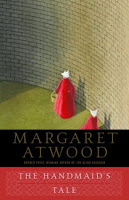
The Handmaid’s Tale by Margaret Atwood: In this dystopia, a theocratic military dictatorship overthrows the United States and begins stripping women of their rights, including preventing them from reading. All members of the society wear colour-coded clothing, and like in Shades of Grey, the lowest caste are essentially considered subhuman, doing the dirtiest and most dangerous jobs, and wearing the colour grey.

http://discover.halifaxpubliclibraries.ca/?q=title:1984%20author:orwell http://discover.halifaxpubliclibraries.ca/?q=title:brave%20new%20world%20author:huxley http://discover.halifaxpubliclibraries.ca/?q=title:handmaid%27s%20tale

Friday, September 25, 2015

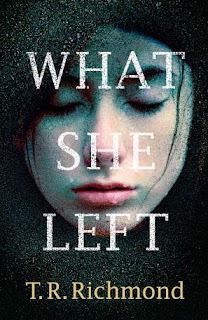
Staff Pick: "What She Left" by T.R. Richmond


http://discover.halifaxpubliclibraries.ca/?itemid=|library/m/halifax-horizon|1879593 Unlike footprints in the sand which disappear at the first high tide, our digital footprints remain long after we are gone...

What She left tells the tragic story of the death of twenty-five year old Alice Salmon. The story is told in snippets of emails, Twitter messages, texts, diary entries, and letters (our collective modern memory). Years ago, when someone died all that was left was a few paper records, birth and marriage certificates, photos etc. Now, the internet generation leaves a more prominent mark on our psyche via their digital footprint.
digital-footprint
Digital footprint

Alice Salmon, a budding journalist, went clubbing with three friends one cold February night and died alone by drowning in the River Dane in Southampton. Her demise went unseen by anyone who would admit to it, and ironically unobserved by close circuit cameras.
 
Alice was someone I would have liked to have met. Obsessed with truth, quotations, literature, and love. She drank to excess and loved to excess. She suffered from episodes of depression. She was over-analytical, loved Jane Austen, had great empathy for her fellow man, and had a deep affection and respect for the written word.

After her death, the internet generation have the wherewithal to make Alice whoever they want her to be. It all depends on interpretation. Why let the facts get in the way of a good story? In attempting to capture the legacy of her life, even the good stuff they say is tainted by opinion and biased interpretation. Everyone has an opinion. Those who loved her and knew her well. Those who were mere acquaintances but wanted others to think they were more…  With the power fueled by social media, speculation can be interpreted as fact.

One of Alice’s former university professors, Jeremy Cooke spent hundreds of hours trawling through the minutiae of Alice’s life for a book he is writing entitled “What she left”. He considers himself to be the guardian of Alice’s memory and writing a book about her was to be his ‘swansong’. He is terminally ill. He wants Alice to be her own story, so he utilizes our collective modern memory in the writing of his book. He maintains that ‘Love’ is what remains after everything else. It’s what Alice gave out every day and now she’s gone it’s what she left.

An award-winning academic, he is called “Old Cookie” by students and faculty alike. He is viewed by others as pompous, patronizing and superior. His opinion of himself is much different. He uses the moniker ‘Silver Surfer’ when online. He loves two women, his wife Fliss – and Alice’s mother, Elizabeth. Thirty years ago, Elizabeth was a student of his, and they had a brief affair. He and Fliss never had children and since his diagnosis he is now obsessed with recognition and legacy.

Jeremy Cooke has no male friends with the exception of Larry, a pen-friend he’s had since childhood, but never met. He and Larry still correspond, always with utmost truthfulness. Larry is the only person he can really vent with. Now however, Larry has died…

The novel has myriad characters, and we catch glimpses of their relationships with Alice. We wonder, did she slip in an alcohol fueled accident? Did she commit suicide? Or, did one of these fine characters ‘do her in’?

We meet Gavin (Mocksy) a blogger and former housemate who was obsessed with Alice. He stalked Alice and pilfered her possessions. He contacted one of Cooke’s former co-workers and got the dirt on “Cookie”. He then proceeded to spread vicious innuendo via his blog. Gavin’s character leads the reader to believe that Cooke might have murdered her.

Then there is Luke Addison, Alice’s boyfriend. Alice loved him despite an earlier betrayal. If she had lived they would have had a happy life together… Luke is feeling guilty after her death. The police went so far as to arrest him for her murder, then they released him due to lack of evidence. Could he have done it?

We come to know and empathize with her grieving mother, Elizabeth – and her best friend from childhood, Megan. We briefly meet the three friends who were with her the night she died.
We meet Ben Finch, a former boyfriend whom she jilted. Could he have anything to do with her death?

“What she left” is a treatise on modern communication, the fragility of human life and how people handle bereavement. A murder mystery as well as a story about love unrequited and reciprocated. Written with intelligence and empathy, the novel depicts loss in a unique way. T.R. Richmond certainly utilized a different approach in telling this story. However, in this case it was the only way to do it well. I took longer than usual to read this book as I found the epistolary format off-putting and a tad distracting. However, that being said, I find I cannot fault anything else about it. A literary mystery with uniquely divulged red-herrings and twists, “What she left” will appeal to lovers of psychological thrillers and literary fiction alike.

Wednesday, August 13, 2014

Staff Pick – The Silkworm by Robert Galbraith


The Silkworm is now out! The Silkworm is the highly-anticipated sequel to 2013’s The Cuckoo’s Calling (which I reviewed here).

Writing under the pseudonym Robert Galbraith, J.K. Rowling’s mystery novel introduces private detective Cormoran Strike (a disheveled war vet with an amputated leg) and his clever secretary/detective-in-training, Robin Ellacott.

This time, Strike and Robin are hired by the wife of a controversial writer who has mysteriously disappeared. Unlike Lula Landry, the victim of The Cuckoo’s Calling, who by all accounts was a beautiful person universally adored, the missing writer Owen Quine is described as ugly inside and out, hated by almost everyone in his life (Strike included) who has penned a depraved new novel that viciously insults everyone close to him. It’s Quine’s straightforward and stubborn wife, Leonora, who provides the novel’s sympathetic driving force when Strike agrees to take her on as a client and find out what happened to her husband.

As always, Rowling is a master of world-building and dialogue. From Strike’s “farting leather sofa” to publishing parties at exclusive clubs, every detail is presented to transport readers into the middle of literary London (and an opportunity for Rowling to tease and divulge information about the seedy underside of the publishing world). This installment introduces welcome new additions in the form of characters from Strike’s past, such as his privileged younger half-brother, childhood friends, and army mates. It also reminds us of the fallout from the previous novel, showing details like how Strike’s leg continues to pain him as he limps around London and how their business and even fellow tenants have been affected by the publicity from their success in the Lula Landry case.

Robin and Strike’s relationship continues to develop, as they finally come together to form a real investigative team: wordlessly communicating while questioning witnesses, Robin taking more initiative in her work and her personal life while trusting her own instincts, and Strike beginning to follow her lead more and more, particularly with witnesses who need a softer touch.

While Rowling does introduce characters with developmental disabilities, characters with AIDS, transgender characters, etc., and issues such as mental illness, animal testing, and the conditions in women’s prisons, one wishes a writer of her caliber would delve more deeply in their lives instead of just touching upon them but not exploring them in much detail. The writing is more powerful when discussing relationships and when showing female characters who exert a kind of quiet dignity to take control of their lives.

Ultimately, although it breaks no new ground, The Silkworm remains a solid British detective mystery. Let’s hope the rumors that Rowling has planned at least six more novels in the series are true!

Tuesday, April 16, 2013

The Spy Who Loved Me (or is it vice versa?)


Another birthday party is in order. I recently wrote about the Little Prince turning 70 this past week. Someone pointed out to me that James Bond also has a birthday this month. It was 13th April, 1953 that Ian Fleming’s famous Agent 007 first arrived in the novel Casino Royale. (M) This was the first of many Bond tales by Fleming. Countless stories continue to arrive at the hands of other writers, both for the page and screen.

The first author to continue the Bond adventures was Kingsley Amis under the pseudonym of Robert Markham. He was followed by John Pearson, Christopher Wood, John Gardner, Raymond Benson and Sebastian Faulks. The latest (and probably not the last) author is American author Jeffrey Deaver.

There even have been spin-off series of book entitled Young Bond, (M) based on Bond’s schoolboy days at Eton College.

Ian Lancaster Fleming was born in 1908 to a wealthy merchant banking family and his father, Valentine Fleming, was a Member of Parliament. Perhaps some of the government secret plotting in the Bond books may have been inspired by the senior Fleming’s shop talk. Ian Fleming was a naval intelligence officer during WWII and later a journalist. His wartime service and the news he covered provided much of the background, detail and depth of the Bond novels. After WWII he worked as Foreign Manager for the Kemsley newspaper group. His contract allowed him to take three months holiday every winter in Jamaica. One of the many sights in Jamaica that you can visit is Fleming’s House, Goldeneye (named after a military operation he was involved with). It was here that he wrote Casino Royale over a period of two months.


James Bond is an intelligence officer in the 00 section of the Secret Intelligence service, which is commonly known as MI6. Fleming stated that Bond is a compound of all the secret agents and commandos that he met during the war. He also gave Bond some of his own personal traits and behaviors. Bond is a classic adventure story he-man hero, but he also is very human in his self-doubt and makes mistakes. Bond was assigned the 007 in reference to one of the British naval intelligence achievements in WWI, the breaking of the German Diplomatic code.

Fleming took the name for his character from an American ornithologist, James Bond. He explained to the ornithologist’s wife that “It struck me that this brief, unromantic, Anglo-Saxon and yet very masculine name was just what I needed, and so a second James Bond was born”. He is quoted as saying”…I wanted Bond to be an extremely dull, uninteresting man…..I thought by god (James Bond) is the dullest name I ever heard.” After the publication of Casino Royale, Fleming used his annual holiday in Jamaica to write other Bond stories. Even after Fleming’s death in 1964, James Bond refused to die. His literary executors hired other authors to continue the series, as I have mentioned above.

So raise your martini glass (a deep champagne goblet) full of three measures of Gordon’s, one of vodka and half a measure of Kina Lillet (shaken not stirred) to the great James Bond!

Wednesday, January 23, 2013

All Hail the Queen

“What if God was one of us, just a slob like one of us, just a stranger on the bus, trying to make his way home”(Joan Osbourne). I have been singing this song in my head ever since starting to read the first title in this list. There has been a few really interesting novels written about Queen Elizabeth that makes her “human.” Most people just think of the figure head and about what they read Majesty magazine. Very few think of the hard work it takes to be a monarch, especially for a woman of advanced years with a family that brings her challenges. While I do picture the Queen as stoic and no nonsense, I also believe that she does have a sense of humour, unlike Queen Victoria's “we are not amused”. After all, for her 60th anniversary she had fun with James Bond at the opening of the London Olympics. The following novels may help you see her in a new light.

The Uncommon Reader (M) by Alan Bennett is the first novel I read about Queen Elizabeth. Truthfully, I had no idea of the subject matter when I first picked it up. I chose it because it was about a reader. This novella was first published in London Review of Books in 2007 before it published in book form by Faber and Faber. When trying to find her dogs one day the Queen stumbles across the Royal Mobile Library. Early on the Queen states that she reads because “one has a duty to find out what people are like”. Discovering this library the Queen develops a bit of an addiction. A young member of the kitchen staff helps select her reading materials. This is an eye opener and causes her to change her opinion of reading.“ One reads for pleasure. It is not a public duty” Her duties get in the way of her reading (I often feel that way). This result in an ending that I did not expect and perhaps you won't either!

Mrs. Queen Takes the Train (M) by William Kuhn is another novel that gives the reader glimpses into the life of the Queen. Kuhn even jokes about The Uncommon Reader by having the Queen state “Didn't read it. Fancy making me out to be a reader" Kuhn has her going on a light, fluffy royal romp by going on a walkabout. One of the major themes involves aging, both for the Queen and members of her staff. Even her possessions are taken away from her as they age. First it was her airplane, then her ship Britannica and now there is talk of discontinuing the royal train. This along with the fallout of the Diana years puts the Queen in a funk. A series of events involving cheese, a horse and a hoodie stenciled with skulls has her wandering unrecognized on the street on London. She then hops on the train heading north to her beloved ship. This puts her staff and a number of interesting characters in action, trying to find her before MI5 and the media expose yet another royal scandal. I found the novel charming, witty and very sympathetic. I highly recommend it.

The Autobiography of the Queen (M) by Emma Tennant is another fish out of water tale. In this case the Queen is across the water literally. She has decided to run away to St. Lucia under the guise of Gloria Smith. She has secretly purchased a villa but doesn't realize until she arrives that it has not been built! It is no more that a muddy hole in the ground. Tennant’s queen is a bit of a simpleton (which I don't believe she is). Even being faced with a suitcase with wheels presents a dilemma for her. “Does one simply pull it down the stairs?” she asked – but for once, there was no one there to reply.” Tennant quickly reduces the Queen to a batty old fool in flip-flops relying on her St. Lucia friend Austin Ford. Some readers may enjoy this, others may not. I will leave that up to them to decide.

Sue Townsend has written two books on this subject. The Queen and I (available via interlibrary loan) takes place in 1992. The newly elected Republican Party decide that the entire Royal family must learn to live like other Britons. So they boot them out of the castle and to a hideous housing estate (nicknamed Hell Close) The Queen reacts like I always imagine she would, with a stiff-upper lip and let's get on with it manner. Prince Phillip goes to pieces; Margaret still acts like a royal pain; Diana haunts thrift shops for designer clothes; Charles gets put in jail; the Queen Mother continues to bet on the horses and the corgi runs wild with a pack of mongrels. This was a huge best seller in Britain and I am sure you will enjoy it too dear reader.

And I couldn't help myself in adding one novel of the future queen. Queen Camilla (M) is a sequel to The Queen and I set 10 years later. I know that you are not suppose to judge a book by its cover but I did love this one. This novel features talking dogs which include Harris and Susan the deposed monarch's dorgies (a corgi-dachshund hybrids) and other odd comments from various hounds from the community. Boy English has seize political power and wants to restore the monarchy. The Queen does not want anything to do with that. Charles refuses to become monarch unless Camilla is guaranteed to be his queen. Just as William offers himself, up pops Graham Cracknall. Graham claims to be Charles and Camilla's secret love child. So will it be Long Live King Graham, or King William? Read this funny novel to find out.

Friday, July 27, 2012

Staff Pick - The American Heiress by Daisy Goodwin


Have you ever read a book that consumes you so much that it’s all you can think about? Whatever you're doing, you're wondering what's going to happen next? I hope you as readers have felt this way. This was my experience with The American Heiress (M) by Daisy Goodwin.

Goodwin tells the tale of Cora Cash a rich American whose overbearing social-climbing mother takes her to Europe to find the one thing all her American dollars won’t buy - an aristocratic title. Once they arrive in England, an unfortunate accident on the fox hunt causes Cora to meet the Duke who will eventually become her fiance. Cora has her title but is plunged into a foreign world. With a caustic mother-in-law, Princes and aristocrats, fans of the television series Downton Abbey (M) are sure to enjoy The American Heiress.

Once I finished The American Heiress I knew it would be difficult to find something that would rank as high in my estimation but I pulled some read-a-likes together all the same.

Wideacre (M), the first book in the Wideacre trilogy by Phillipa Gregory, is a good place to start. Wideacre concerns Beatrice's love for the estate she can never inherit since she is a woman. The first in the trilogy is a character-driven story of obsession with inheritance and legacy. This moody story may be gruesome at times so proceed with caution.


Coral Glynn (M) by Peter Cameron brings us to more modern times than either The American Heiress or Wideacre being set in the 1950s. This character-driven tale shows Coral nursing the mother of a WWII veteran who is grappling with coming to terms with his war experience and sexuality. Fans of the romantic side of The American Heiress are sure to enjoy Coral Glynn.


Mistress Shakespeare (M) by Karen Harper tells a moody story of William Shakespeare's broken engagement to Anne Whateley. Shakespeare is forced into marriage when Anne Hathaway becomes pregnant. Shakespeare continues a clandestine affair with Anne Whateley when he goes to London to work. This novel of historical fiction illuminates one of the mysteries of the Bard's life.


The Dream of Scipio (M) by Iain Pears is a character-driven tale set in three different historical periods. Characters from the fourth, fourteenth and the twentieth centuries are all studying a neo-Platonic document called The Dream of Scipio written by Manilus Hippomanes. The novel presents each character's interpretation of the document and the influence it has on their lives and romantic relationships.

Saturday, November 12, 2011

Great News for Mystery Fans and Those Who Love the Classics!

In a marvelous, thrilling re-creation of the world of Pride and Prejudice, P.D. James fuses her lifelong passion for the work of Jane Austen with her own great talent for writing crime fiction.

Yes... P.D. James! She explains her decision to write the novel in this Telegraph interview. For the 91-year-old crime novelist, best known for her police procedural mystery series featuring British policeman Adam Dalgliesh, Death Comes to Pemberley (M) combines two personal passions.

"I have to apologize to Jane Austen for involving her beloved Elizabeth in a murder investigation, but this fusion of my two enthusiasms — for the novels of Jane Austen and for writing detective stories — has given me great pleasure which I hope will be shared by my readers," James said in a recent statement.

Death comes to Pemberley is coming soon to our fiction shelves and is now available in ebook format.

As a life-long fan of P.D. James and Jane Austin, this news comes like a wonderful gift wrapped in festive paper.

The novel takes place roughly six years after the marriage of Darcy and Elizabeth. They are now the parents of two boys. In the process of hosting an autumn ball, an uninvited guest arrives and proclaims that her husband has been murdered. The result is that Pemberley's peaceful tranquility is threatened by past sins and old misunderstandings...

Intrigued? Checkout The London Evening Standard's review of the novel.

I haven't had the pleasure of reading it yet, but just know that I'm sure to enjoy it. What a wonderful early Christmas gift.

Tuesday, June 21, 2011

What’s the Buzz.


Besides watching the bees drifting from flower to flower, some of our readers may enjoy flitting from book to book for their summer reading enjoyment:


Little Bee by Chris Cleave (originally called The Other Hand in the U.K.) is a compelling book. While on a Nigerian Beach, British couple Andrew and Sarah encounter Little Bee and her sister Nkiruka. A brief and horrible moment of crisis changes life for all of them. Years later, Little Bee finds the couple again by way of Andrew’s wallet, which was left behind on the beach. What will happen to this illegal immigrant to England? What effect does it have on Sarah and her family? The novel will have readers pondering the mysteries of globalization, wealth of the "first" world and the emotional/courageous wealth of the third world. To quote the author "It’s an uplifting, thrilling, universal human story, and I just worked to keep it simple. One brave African girl; one brave Western woman. What if one just turned up on the other’s doorstep one misty morning and asked "Can I help?" And what if that help wasn’t just a one-way street?"

The Secret Life of Bees by Sue Monk Kidd. This is one of those books that is perfect to read for your book club selection or enjoy yourself. I was totally engrossed with the story. While the main character is just a young girl, it is the women in her life that make the story. In 1964 South Carolina, 14 year old Lily Owens is coming of age. Lily runs away from home to a place she only knows from her mother’s honey bottles. I find it interesting that the honey-makers names are April, May, June and August. I couldn’t help wondering why not one called July? These women’s adventures became very popular, selling more than 35 million copies in more than 35 countries, and was on the New York Times bestseller list for 2 ½ years.

A Recipe for Bees By Gail Anderson-Dargatz. I know you are not suppose to judge a book by its cover but I fell in love with this cover the same way I did for Eat, Pray, Love. This novel is an international bestseller, a Globe and Mail Notable book for 1998 and has over 40,000 copies sold in hardcover. This is quite an accomplishment. Just like the authors other book I recently reviewed (The Cure for Death by Lightning) this one includes recipes and remedies. After 48 years of marriage Augusta reflects on her life and her marriage to farmer Karl. As author Chris Bohjalin states :" A Recipe for Bees reminds us all it’s never too late to fall in love".

One of the last things I would think about in connection with Sherlock Holmes is bees, unless that was the method of death. Well, in Laurie R. King’s Mary Russell Series, bees are presented in a number of the titles : The Beekeeper’s Apprentice, The Language of Bees, The God of the Hive and Beekeeping for Beginners. The series take place between 1915 and 1925 mainly in England but also travels to Scotland, Wales, Palestine, India and California. The books begin when 15 year old Mary encounters Sherlock Holmes, now middle-aged and retired. He moved to Sussex and raises bees. Holmes is impressed with Russell’s power of deduction and makes her his apprentice, both with the bees and detective work. Seven years after their meeting Mary and Sherlock marry and their adventures continue.

Bee Season by Myla Goldberg and Akeelah & the Bee by James Whitfield Ellison are two books that I admit that I have gotten confused. Both novels involve young girls competing in spelling bees and the repercussions of each success on each family. It is interesting to compare the two books to see the similarities and differences.

I love the "Publishers Weekly" product description for Queen Bee of Mimosa Branch by Haywood Smith. "The only degree I have is a PhD in Southern Bitch, " proclaims Linwood Breedlove Scott, the feisty Prozac-popping, menopausal heroine of Smith’s hardcover debut". I know a few women whom this description could apply. The rest of the book goes like a country song. Her husband leaves her for a stripper and she retreats to her home-town to lick her wounds. There is a little bit of romance, a little bit of scandal and all sorts of southern charm. This is the perfect book to read in the sun (if it ever comes).

So whether you are enjoying these books outside or inside I hope that they bring some sunshine to your life.