Showing posts with label Kristine L. Show all posts

Saturday, March 12, 2016

Staff Pick: Do you know the muffin pan?


It's easy to get lost in the cookbook section on the fourth floor of the Halifax Central Library. I try to avoid walking through it unless I'm specifically looking for cookbooks, because I always leave the area feeling ravenous and with a heavy armful of beautifully photographed recipe books I simply must take home.

On my last trip to where the cookbooks live I was looking for some inspiration on appetizers to serve at an upcoming book club night at my home. The punny title of Amy Fazio's Do you know the muffin pan?: 100 fun, easy-to-make muffin pan meals happened to catch my eye. When I pulled it off the shelf and leafed through it I was immediately hooked by the scrumptious pictures of various goodies all made in tidy little muffin-size portions. It looked so promising I was able to restrain myself from my usual habit of taking out 3 other cookbooks at the same time, just in case the first one didn't work out. I wasn't disappointed.

The book is divided into different sections: breakfast, appetizers, side dishes, main dishes, and dessert. It was difficult to choose which ones we wanted to make, everything looked so tempting.

For book club night we settled on two different recipes, on sweet and one savoury. French onion soup dumplings were very easy to make with some grocery store puff pastry for the crust, gruyere cheese and carmelized onions all baked in the oven for 10 minutes. The sweet was a twist on one of my favourite treats: home made peanut butter cups with dark chocolate and caramel sauce, topped with sea salt. They elicited "wow"s from all who tried them!

Some other recipes I want to try from this book include: Salami boats with antipasto salad, Eggs Benedict casserole cups, and all of the items involving pretzels. At breakfast the day of our book club my three little boys noticed the book and inspected every single page, making their own list of recipes to try. They were especially interested in the Pretzel Dog dippers with beer cheese dip. My middle son was so impressed by the book he declared that he would buy it when he grows up and moves out, because he could live on just these recipes. He really loves food, so I consider that high praise indeed.

If you'd like to try out some of Amy Fazio's recipes you can also find many of them on her Do you know the muffin pan blog. For other muffin pan ideas try: The muffin tin cookbook by Brette Sember with Melinda Boyd.

Thursday, December 10, 2015

December 10: World Human Rights Day


"All human beings are born free and equal in dignity and rights. They are endowed with reason and conscience and should act towards one another in a spirit of brotherhood".

December 10th is designated by the United Nations as World Human Rights Day. The date commemorates the 1948 signing of the Declaration in response to the many atrocities of the Second World War. It's been a while since I last looked at this Declaration. Re-visiting it I both admire the hopeful spirit in which it was written and also feel sad about how far short most of the world has fallen from this beautiful ideal. The current crisis of refugees especially can make one pause and wonder if we are about to repeat the mistakes of seventy years ago.

Here are some recent books from the library collection to inspire us to act for human rights in honour of this day:

Nothing to Lose but Our Fear by Fiona Jeffries "brings together an international group of scholars and activists and asks them how can we think critically and act productively in a world awash in fear. Their conversations with Fiona Jeffries provoke consideration of the often hidden histories of people's emancipatory practices and offer reflections that can help us understand the current global uprising against fear in new ways."--From publisher.

Dreams of Freedom  is a beautifully illustrated book for children.  Quotes from inspirational figures like Harriet Tubman, Nelson Mandela, Anne Frank, and more, have been chosen especially to appeal to kids and help them understand the basic concepts of freedom and human rights.

The Radical Imagination: social movement research in the age of austerity "The idea of the imagination is as evocative as it is elusive. Not only does the imagination allow us to project ourselves beyond our physical and temporal limits, it also allows us to envision the future, individually and collectively. The radical imagination, then, is that spark of difference, desire, and discontent that can be fanned into the flames of social change. Yet what precisely is the imagination and what might make it 'radical'? How can it be fostered and cultivated? How can it be studied and what are the possibilities and risks of doing so? This book seeks to answer these questions at a crucial time. As we enter into a new cycle of struggles scholar-activists Khasnabish and Haiven explore the processes and possibilities for cultivating the radical imagination in dark times. A lively, accessible and timely intervention that breaks new ground in speaking to radical politics, social research, social change, and the collective visions that inspire them" - Discover Catalogue
This book is a collaborative work by two local academics/activists, Dr. Max Haiven and Dr. Alex Khasnabish (their Radical Imagination Project also runs a very interesting film series at the Halifax  Central Library).

Exiled for Love by Arsham Parsi "explores the reality for LGBT people in Iran through the deeply personal and inspiring story of his life, escape and continuing work. Arsham Parsi is the founder and executive director of the Iranian Railroad for Queer Refugees"--Provided by publisher.

I've been slowly working my way through a fascinating book by Dr. Yuval Noah Harari which addresses some of the reasons why there has been such a great disparity between the ideal of human rights and reality of human existence: Sapiens: a brief history of humankind. It's a big subject to cover in one volume; Dr. Harari is one of those thinkers who can synthesize ideas from science, history, anthropology, and philosophy and then explain them in engaging everyday language. In this book he creates an encompassing account of how human beings have grown from small bands of foragers into complicated and highly cooperative beings. What sets humans apart from other creatures on the planet is our ability to tell stories and believe in ideas we can't see or experience directly. It's often things that don't exist at all except for our belief in them that motivate large groups of people to act together: money, nations, corporations -they all exist only because we agree that they have meaning.

I found it interesting -and a little difficult to accept- that Dr. Harari argues that human rights also exist only because we agree to believe in them. His historical examples are pretty persuasive though -our definitions of rights and of who is even human, have changed greatly across place and time. Harari has a pretty bleak outlook for the future, envisioning further inequality as humans begin to engineer our own biology, but in the end if it is our imagination and ideas which shape our existence we still have the power to create and protect our ideas of human rights, no matter what their origin.

Thursday, November 26, 2015

Staff Pick: Purity by Jonathan Franzen


The characters in Jonathan Franzen's latest novel Purity are all connected by one person, Purity Tyler, who goes by the nickname "Pip". Like her namesake in Charles Dickens' novel Great Expectations, Pip Tyler is a young person whose life is shaped by past events she does not understand.

We meet Pip when she is 23, saddled with a huge student debt and an emotionally needy mother. She's smart, funny in an offhand way, unhappy in her job, and fairly unsuccessful in romantic relationships. A seemingly chance encounter with Annagret, a beautiful German visitor, leads to an invitation to join the Wikileaks-like "Sunshine Project" as an intern. Pip is skeptical of the group's founder, Andreas Wolfe, but is eventually drawn in by a promise that the Sunshine Project can help her find out who her father is (her mother will not divulge this information but Pip hopes she can find him and get him to pay off some of her student debt). The story moves around in time and place, between 1960s-1990s East Berlin, 1990s New York, and present day at the Sunshine Project's Bolivian compound.

Purity is divided into seven sections, each relating parts of the story from a different character's perspective: Pip begins, centres, and ends the book, two sections are devoted to the magnetic and strange Andreas Wolfe, and one sections each from the point of view of journalists Tom Aberant, and Leila Helou. Through the narrative another important character emerges: Annabel Laird, an artist who has rejected her large inheritance and creates chaos for those who love her. This is where Jonathan Franzen really excels: creating diverse voices and vivid characters. What first attracted me to Franzen as a writer was his ability to write women characters who were complex and struggled with the social expectations put upon them to be "nice". Reading Purity, as well as his previous novel Freedom, I found many moments of recognition and sometimes unflattering truth. In this novel even though Pip as a character may represent the ideal of Purity pursued by several other characters, she is still very human and imperfect.

The story of Purity is complex and sometimes suspenseful -part of the suspense is created by the reader trying to guess exactly how the characters fit together. There's also a murder, the dread of living in Communist Germany, and the excitement and disillusionment of the Sunshine Project's truth-telling mission. Purity is also about ideas: feminism, the far reaching effects of the internet on our culture, fame, privilege, class, education, love; there is a lot to think about and talk about in this book, but none of it comes at the expense of character and story. I think it would be a great choice for literary minded book clubs.

If you read and liked Purity and haven't read Franzen's other acclaimed novels yet his most notable works are
The Corrections and Freedom.

Purity has also made me want to re-visit Great Expectations "In these literary novels, characters idealistically seeking fame and fortune find instead a rocky, dangerous coming-of-age journey through unforeseen situations while confronting unpredictable people. Both are darkly witty and psychologically rich stories filled with unforgettable, complex characters". -- Jen Baker, Novelist

Monday, October 26, 2015

#CrazyForCanLit: Canadian Historical Fiction


I love historical fiction, and I love Canadian authors; these are ten of my favourite historical novels written by Canadians.

The Many Lives and Secret Sorrows of Josephine B.  by Sandra Gulland
This is the first in a trilogy of fictional diaries written in the voice of Josephine Bonaparte. This first book is especially fascinating as it covers her life in Martinique as a child, and her marriage to the aristocratic revolutionary Alexandre de Beauharnais. Seeing the French revolution from the perspective of the aristocracy is really different

The Orenda  by Joseph Boyden
The Orenda won CBC's 2014 Canada Reads competition, and rightly so. Told in three different voices, the Orenda is a compassionate, honest, and devastating account of the the relations among the Huron, Iroquois, and French Jesuits more or less following the events at Sainte Marie among the Hurons in 1648.

The Book of Negroes by Lawrence Hill
Follows the sometimes harrowing story of Aminata, a young woman who is abducted from her home in Niger and sold into slavery in 18th century America. Meticulously researched and well written, this book was recently adapted as a miniseries on CBC and BET.

Clara Callan by Richard B. Wright
Letters and journal entries tell the story of two sisters and the challenges of life in 1930s Ontario and New York city. Won the Giller prize for 2001.

Alias Grace by Margaret Atwood
Atwood takes on the real life story of Grace Marks who was convicted for the murder of her employer and his housekeeper in 1843. Shifting points of view leave readers to draw their own conclusions as to what really happened.

Three Day Road by Joseph Boyden
The first novel by Joseph Boyden, Three Day Road was a Canada Reads finalist in 2006 and won the Roger's Writer's Trust Fiction Award. Two Cree men leave Ontario and become snipers in the first world war.

In the Skin of a Lion by Michael Ondaatje
Ondaatje uses his poetic style to document the contributions of immigrants in early twentieth century Toronto during the construction of the Bloor Viaduct.

The Golden Mean by Annabel Lyon
For a novel about a philosopher this book is very accessible and rooted in the physical world. Aristotle tutors young Alexander the great and struggles to help him find a path between the extremes of abstract thought and physical violence.

The Mistress of Nothing by Kate Pullinger
The Mistress of Nothing is based on the journey of Lady Duff Gordon and her maid Sally as they travel to Egypt in the 1860s. The book is written from Sally's point of view as she scandalously falls in love with a local man; beautiful writing and a vivid sense of place make this book a great escape from a dreary Canadian winter day. Based on the real lives of Lady Duff Gordon and her maid, The Mistress of Nothing is a lush, erotic, and compelling story about the power of race, class, and love Based on the real lives of Lady Duff Gordon and her maid, The Mistress of Nothing is a lush, erotic, and compelling story about the power of race, class, and love.

Away by Jane Urquhart
Lyrical, magical, and romantic, Away traces the history of a 19th century Canadian family with roots in Ireland.

Wednesday, October 14, 2015

October is ADHD Awareness Month


Before I worked for the library I was a youth worker; I can't give you a precise number, but I would estimate that nearly half of the young people I met living in shelters and group homes had been diagnosed with attention deficit hyperactivity disorder (ADHD). Most of the youth I worked with fit the classic stereotype: high energy, fidgety, exuberant, big personalities; they were people who were easily distracted and sometimes possessed of explosive tempers. I knew that their minds had a hard time slowing down at the end of the night, they enjoyed taking risks, and they needed to move around a lot in order not to feel trapped. I knew they needed lots of reminders, clear directions, and that they responded well to structure and routine. I thought I had a pretty good handle on what ADHD was and I was pretty confident that I could spot it a mile away.

My understanding of ADHD was challenged two years ago when someone in my immediate family was diagnosed with this disorder. How was it that this quiet, day-dreamy, and extremely focused person had the same thing going in his brain as those outgoing live-wire youth I used to encounter in my work? The only thing they seemed to share was an extreme frustration with the world and themselves. What I didn't fully understand about ADHD is that it's not only the stereotypical "hyperactive" behaviour we see depicted in popular culture; ADHD manifests through a whole spectrum of symptoms, some of which seem to be the polar opposite of what we generally expect.

ADHD is pretty frustrating both for those who have it and those around them. Life can become pretty disorganised and overwhelming for someone with ADHD. People in their lives (even those trying to be supportive) can get frustrated when the person with ADHD is not able to do things that come easily for everyone else. I've spent many, many hours hunting for somebody's glasses/toys/keys that they've somehow lost in our house. I've lost my patience more times than I can count, even when I know it's not within my loved one's control to manage their stuff as well as I would like. At the same time the people I know who have ADHD are among the very brightest and creative people I have ever met. You want someone who can think outside the box? They've got it in spades.

In honour of ADHD Awareness month here are some resources I have found especially helpful in learning to better support the people in my life with ADHD.

School success for kids with ADHD is a very thorough and detailed overview of the history of ADHD, the current research, and various treatment methods. It provides chapters with specific information for parents, teachers, and students. The information is presented in a matter-of-fact, non-judgmental way and presents chapters on alternative/natural treatments as well as conventional medication and behaviour therapies. The book is from the U.S. so there are some chapters which weren't entirely relevant to us, but I found reading this book made me feel like I understand as much as there is to know at this point (there is still a lot of research going on to pinpoint what exactly causes ADHD and new treatments are always under evaluation).

The survival guide for kids with ADD or ADHD is a great resource aimed at school age children; it helps explain to the child what ADHD is and how it makes their brains work differently. There are practical tips for keeping organised, how to eat well, how to manage social difficulties, and what to expect if they begin taking medication. Children are also encouraged work with their school to let teachers know what they need. The book uses fun cartoons to keep young readers interested; I liked it so much I bought a copy for my own family.

Canadian comedians Rick Green and Patrick McKenna (both formerly of the Red Green show) were diagnosed with ADHD as adults. They joined forces to create Totally ADD where they offer webinars, videos, and other resources for adults who, like them, may have experienced fear, shame, and stigma surrounding the disorder. Their films are specially produced to appeal to the ADHD brain, providing information in stimulating short segments. Halifax Public Libraries owns a copy of their DVD Totally ADD: tips for an organised life, as well as Rick Green's book ADD stole my car keys.

http://discover.halifaxpubliclibraries.ca/?q=title:totally%20ADD%20author:green http://discover.halifaxpubliclibraries.ca/?q=title:add%20stole%20my%20car%20keys

ADHD is often in the news for controversy; some experts believe it is over-diagnosed and medications are being over-used for its treatment.

ADHD does not exist caught my eye with its bold pronouncement. I expected something of a conspiracy rant about how the pharmaceutical industry is constantly pushing medication on children but I was surprised to find a carefully thought out case for the idea that many other disorders produce ADHD-like symptoms and must also be investigated to avoid providing the wrong treatment. The author, physician Richard Saul, does in fact recognise a neurological disorder which should be treated with stimulant medication, as is recommended for ADHD, but he believes the ADHD label is being used too often when practitioners should be taking the time to investigate things like learning disabilities, sensory processing disorders, eye problems and other possible causes which require different treatment than ADHD. I think his book is worth a look for anyone who is in the process of diagnosis, or finding that they or their loved one is not responding well to the usual treatments.

Some excellent web resources for Canadians include the Canadian ADHD Resource Alliance and the Centre for ADHD Awareness, Canada. ADDitude magazine also has many excellent articles broken down into small bites for the busy brain. If you live in Halifax there is a free ADHD Awareness Expo on Wed. Oct. 14 which brings together different community agencies who can help people living with ADHD.

ADHD is sometimes called the "Invisible Disability" -you can't tell from the outside whether someone has it. If they do then coping in school, work, and social settings is often a mighty struggle for them. It is estimated that around 11% of children in North America meet the diagnostic criteria of ADHD -that's a huge percentage of our population; its prevalence has many implications for schools, workplaces, and everyday social settings. It may be your friends, family, co-workers, or yourself whose brain is wired differently from the "norm"; support them by taking some time to deepen your understanding of ADHD.

Friday, September 4, 2015

Staff Pick: The Paying Guests by Sarah Waters


I came across Sarah Waters' novel The Paying Guests a few months ago when browsing the Kirkus Reviews list of the best literary fiction published in 2014; I was a little disappointed in myself that I hadn't read any of the books on the list so I immediately put three or four of them on hold. The Paying Guests was the first one to arrive (and the only one from the list that I've read so far). It was a bit slow paced to begin with, but I immediately loved it for its rich characterizations and well drawn historical details.

The setting is London, in 1922. Frances Wray and her mother are upper class women struggling to maintain a large household after having been left with no men to support them. Frances's two brothers have died in the First World War and her father has also recently died of disease, leaving behind an unexpected number of debts. They have already let go all their servants and Frances has taken over all the day-to-day chores; in order to keep their home they resort to renting out part of the house. The book begins as their new "paying guests" are moving into the upper rooms of the house. The tenants are Leonard and Lillian Barber, a respectable but lower class young couple who Frances finds at once repellent and fascinating.

Lillian is very kind but definitely not the sort of person Frances would normally associate with, yet in spite of their differences they form first a friendship, then a clandestine romantic relationship. Near the mid point of the book a crime takes place, and the remainder of the book is filled with a great deal of dread and suspense as the two women attempt to keep their new relationship alive under difficult circumstances.

Frances is initially presented as a somewhat prim character, living the life of a dutiful caretaker and looking disapprovingly at others. She is slowly revealed to be someone who is intrinsically unconventional but who has allowed herself to be boxed in by family obligations and societal expectations. Her friendship with Lillian becomes for her a last chance to escape the prison of her expected role.

The shadow of the first world war looms large in this book, and Waters manages to capture both the lingering pain of wartime loss and the beginnings of change in women's roles that the war brings about. The Paying Guests is beautiful, challenging, and sensual, a great read for those who enjoy literary fiction and historical settings.

I haven't read any of Sarah Waters other books yet but she is know for her high quality writing and challenging of genre and structural boundaries.

Fingersmith, a twisting suspense story set in Victorian London, is her most well known work, and was adapted into an acclaimed BBC film in 2005.

For more thought provoking historical fiction about female friendship try

Emma Donoghue's Life Mask.

Wednesday, August 19, 2015

Take this to the beach: Best American Nonrequired Reading


I am working at the information desk on the fifth floor of Halifax Central Library; it is hot and sunny outside and the rest of my family is off having a lovely day at the beach. It's nice and cool where I am and I certainly love hanging out on the the fifth floor, but I'd be lying if I told you that I wouldn't rather be stretched out on the the sand right now, reading something good.

When I'm on holiday I enjoy browsing short stories, essays, and humorous memoirs -stuff that I can read in spurts without committing too much of my attention to it. There are a few very attractive looking literary anthologies I always notice when looking for items to put on display at the library, so before my last trip to the beach I picked up one of them, The Best American Nonrequired Reading 2014 (BANR for short) and had a look through the poetry, short stories, non-fiction, and cartoons contained within.

My attention was immediately captured by a transcribed episode of the podcast "Cecil Speaks" entitled Street Cleaning Day, a comical radio newscast in the style of War of the Worlds which depicts the panic which breaks out in the fictional desert town of Night Vale when it is announced the street cleaners are coming. It's weird but good (and on a side note: I just discovered that the upcoming novel based on the podcast, Welcome to Night Vale , is available for requests in the library catalogue now).

The next piece I read after I took BANR home with me had me laughing out loud: On the study of physics in preschool classrooms is Matthew Schultz's deadpan curriculum to introduce toddlers to quantum physics by doing all kinds of impossible activities with them including field trips to the the moon and growing a star in the preschool classrom (beware with this activity -if the star collapses into a black hole there is a risk of students being sucked into the vaccum).

BANR is not all fun and laughter; I jumped ahead to Janine di Giovanni's Seven days in Syria and was immersed in grim account of the war correspondant's experiences there as the fabric of the country unravelled around her.

The Best American Nonrequired Reading selections are chosen by two groups of high school students located in Califronia and Michigan, in collaboration with the editor (until 2013 this was Dave Eggers, but in 2014 the journal was edited by Daniel Handler, a.k.a. Lemony Snicket). The result is a collection of funny, profound, and thought provoking works of quality writing that will keep you engaged through your entire beach visit.

The library catalogue carries back issues of BANR dating to 2002. Check out the other Best American titles for anthologies in various genres including: comics, noir, science fiction, and more. Next on my list is the very cool looking:  Best American Infographics. See you at the beach!

Thursday, August 6, 2015

What's new for the barbecue?


We're a couple of months into barbecue season; maybe you're getting a little tired of the same old burgers, hotdogs, and steak and want to try something different. Here's a selection of our newest barbecue cookbooks to keep things lively on your grill.

Feeding the fire : recipes & strategies for better barbecue & grilling by Joe Carroll and Nick Fauchald

"Joe Carroll makes stellar barbecue and grilled meats in Brooklyn, New York, at his restaurants Fette Sau and St. Anselm. He gives us his top lessons and recipes to make incredible fire-cooked foods at home, proving that you don't need to have fancy equipment or long-held regional traditions to make succulent barbecue and grilled meats... Recipes include Pulled Pork Shoulder, Beef Short Ribs, Bourbon-Brined Center-Cut Pork Chops, Grilled Clams with Garlic Butter, and Charred Long Beans. Anyone can follow these simple and straightforward lessons to become an expert"--Provided by publisher.


Grill nation : 200 surefire recipes, tips, and techniques to grill like a pro by David Guas

Written by the host of the Travel Channel's "American Grilled" this book provides mouthwatering photos and comprehensive instructions on  all aspects of cooking on a grill. Guas outlines the various merits of gas and charcoal barbecues, types of wood to use in smoking food, and a great selection of recipes which include many non-meat dishes. I can't wait to try the Grilled Peach BBQ sauce -yum!

Ultimate book of BBQ : the complete year-round guide to grilling & smoke  with Pitmaster Christopher Prieto, text by Ashley Strickland Freeman

"The definitive barbecue and outdoor grilling guide, featuring more than 200 of the highest-rated Southern Living magazine recipes for barbecued meats and sides, plus pit-proven tips, techniques, and secrets for year-round smoking, grilling and barbecuing. With full color, step-by-step photos and mouthwatering recipes, this book includes everything the home cook needs to achieve first-rate backyard barbecue. Proven cooking techniques and equipment, expert advice from award-winning pitmasters, and a Rainy Day BBQ chapter with stovetop, oven, and slow-cooker options" -Discover


BBQ bistro : simple, sophisticated French recipes for your grill by Karen Adler and Judith Fertig

A focus on fresh ingredients, sauces, and slow cooking brings a french flair to your backyard. The authors have written several books on barbecue and grilling and have appeared on the Food Network and the DIY Network. Recipes to try include: Grilled Salmon Benedict, French Feta and Charentais Melon, & Grilled Rib-Eye Steak with Onion Straws. Bon appetit!

Tuesday, May 12, 2015

Staff pick: Confessions by Kanae Minato


Lately I've been on a psychological thriller kick; all I want to read are books which have deceptive, flawed characters and a suspenseful story hook -books which I can't put down. When I received Kanae Minato's Confessions as a gift a few months ago I found it fit this reading mood perfectly.

At the beginning of Confessions a middle school teacher addresses her class, explaining why she has chosen to leave her job. We quickly find out that she believes her four year old daughter has been murdered by two of the students in the class. Rather than reporting them to the police she informs them of the unique act of revenge she has decided to take against them. We follow the after-effects of this "confession" through the diaries and letters of those whose lives have been touched both by the original crime and the threat the teacher has made toward the young murderers.

The suspense of Confessions lies in discovering the motives of the two murderers; each chapter gives us a little piece of the dark story of how and why four year old Manami was killed. Along the way we encounter some disturbing twists involving bullying, parental failure, and child abuse which culminate in a distubing but narratively satisfying climax.

Confessions is Minato's first novel and was originally published in Japan in 2008 where it quickly became a best seller; it's often referred to in reviews as the "Gone Girl of Japan". Like Gillian Flynn's Gone Girl, Confessions features alternating viewpoints, unreliable narrators, and themes of revenge.

Readers who enjoy psychological suspense set in Japan might want to try Out by Natsuo Kirino. For more thought provoking suspense about youth violence and bullying try Lionel Shriver's We Need to Talk about Kevin orAmber Dermont's The Starboard Sea.

http://discover.halifaxpubliclibraries.ca/?q=title:out%20author:Kirino http://discover.halifaxpubliclibraries.ca/?q=title:we%20need%20to%20talk%20about%20kevin http://discover.halifaxpubliclibraries.ca/?q=title:starboard%20sea

Tuesday, April 7, 2015

Bad Parenting Advice


Just for fun, try searching the term "parenting" in the library catalogue sometime. You'll come up with a concise list of 3000 non-fiction adult titles. There are books to reflect every possible philosophy, from attachment parenting, to parenting for dummies, to many books on why the French are better at everything to do with raising children. How to make your child sleep, eat, behave, and succeed -there's books for all of it.

When you're a new parent all this conflicting advice can be overwhelming, and it can also undermine any confidence you have in your own ability to take care of the little people in your life. One thing I have found consoling in the many times of doubt I've experienced over my years of parenting is to read stories about people who are even worse at the job than I am.

A co-worker recently recommended a little graphic novel which I found both hilarious and reassuring, Guy Delisle's A user's guide to neglectful parenting. This book pokes fun at the author's own parenting style as he faces challenges that many parents will recognize. Whether he is finding it impossible to take his eyes off his phone to answer a child's question, helping children cope with bullying at school by taking revenge at a birthday party, or giving his children way too much information when they ask him a simple question, the simply drawn vignettes express an amazing sense of comedic timing. I found the sequel, More bad parenting advice, even funnier; several of the conversations Delisle has with his children I have had almost word for word with my own kids.

I just want to pee alone is a collection  of brutally honest and funny essays by "37 kick ass mom bloggers" which will make the reader feel they are not alone in finding it hard to make things work as a 21st century parent. Chapters include: Embarrassment, thy name is motherhood, A Pinterest-perfect Mom, I am not, And then there was that time a priest called me a terrible Mother. Read more from the blog based on the book here: www.ijustwanttopeealone.com

Parenting: illustrated with crappy pictures, another book based on a blog, features Amber Dusick's simple drawings illustrating wry and unique perspectives on parenting and her attempts to understand the logic of toddlers. For a sample of her work see her  crappypictures.com.

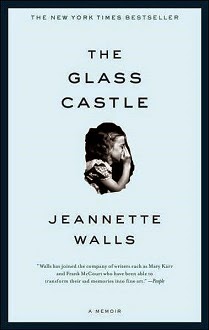
When things seem really bad and I feel like the Worst Mom in the World, I've found consolation in reading the memoir of someone who has experienced a really difficult childhood. Alexandra Fuller's Don't let's go to the dogs tonight is harrowing but also fascinating account of her childhood in Rhodesia and Malawi growing with erratic, eccentric, and sometimes neglectful parents. And then there's The Glass Castle, Jeannette Wall's memoir about growing up in grinding poverty with parents who are creative and charismatic but also extremely dysfunctional. I only have to remember Walls' parents throwing their young children (including an infant) in the back of a cube van with all their furniture for seven hours when they moved to another city and then I think: hey maybe I'm not doing such a bad job after all.


http://discover.halifaxpubliclibraries.ca/?q=title:don%27t%20let%27s%20go%20to%20the%20dogs%20tonight http://discover.halifaxpubliclibraries.ca/?q=title:glass%20castle%20author:walls

Sunday, April 5, 2015

That Girl


Without planning to do so I've happened to read five books which had the word "girl" in their titles over the past three months. What is it about that word "girl" that makes it so attractive in the name of a book? Partly it's the sound of the word: "Gone Woman" just doesn't have the same ring to it as "Gone Girl"; but for some titles the word "woman" might do just as well. A book called "The Woman with the Dragon Tattoo" could sound pretty interesting too.

By calling a book's heroine a girl what is the author saying? Is the character not quite mature yet, maybe a little less deserving of our respect than a grown woman? Or is the author letting us know she's someone people tend to underestimate? Think of  Lisbeth Salander from The Girl with the Dragon Tattoo, or the twistedly deceptive Amazing Amy of Gone Girl. Neither is a little girl, but both are women who have a lot going on behind the girlish face that others see. The protagonists of my recent "girl" books all share this quality -they are much more than they seem.

The Girl on the Train is a gripping psychological thriller which cleverly reveals the events of a young woman's disappearance through the voices of three women. Rachel, the "girl" of the title, rides the train into London every day and imagines the happy lives of the people living in the houses she passes, especially the ones on the street where she used to live and where her ex-husband still lives with his new family. One day one of those seemingly happy women disappears and Rachel becomes obsessed with finding out what happened to her. She thinks she may have seen something connected with the disappearance but was she was so intoxicated she can't remember. We follow Rachel's bumbling attempts to insert herself into the drama alternating with chapters told from the victim Megan's perspective from several months earlier, and then later we also hear the voice of the woman who has replaced Rachel in her husband's life, Anna. Author Paula Hawkins keeps the reader guessing and on edge because we're never sure which character's version of events to trust. Rachel emerges as not particularly likeable but very real, and certainly one of those girls who has been underestimated. If you liked Gone Girl, you'll enjoy this book a lot.

I'm generally a little scared of stories about zombies, but when a few people recommended M.R. Carey's The Girl with all the Gifts I thought I'd try it. It ended up as one of my favourite books of 2014. The story is original, highly suspenseful, and smart; it is peopled with vibrant and authentic characters. In a post-apocalyptic near future most of humanity has been wiped out by a deadly disease. Melanie is a highly intelligent ten year old girl who has spent most of her life in a small underground military base. She and several other children are kept there under physical restraint as if they were dangerous criminals. All she knows about the world is what she's learned from her teachers; occasionally one of her classmates is taken away by the base scientist never to return. When a series of catastrophic events happen and Melanie is propelled into the world above we slowly learn the truth about who she is as she and a small group of survivors attempt to escape threats from both outside and inside their group. The results are absolutely riveting.


Maybe you don't like suspense so much -that's okay, there's a girl book out there for you too. Try Anita Diamant's 2014 book The Boston Girl . In this novel eighty-five year old Addie Baum recalls her youth as the daughter of Jewish Russian immigrants who settled in Boston in the early twentieth century. Diamant's style allows for lots of humour as well as heartache as Addie struggles to find her identity through the tumultuous era of the first world war, the influenza epidemic of 1918, and the 1920s when a girl had to fight for an education and the right to work.

For more "That Girl" titles drop by our display this week on the fifth floor of the Halifax Central Library.