Showing posts with label Canadian reads. Show all posts

Thursday, March 24, 2016

It Happened in Canada - Historic True Crime

What Happened to Mickey?: the life and death of Donald "Mickey" McDonald, public enemy no. 1 (M)
by Peter McSherry

http://discover.halifaxpubliclibraries.ca/?q=title:%22what%20happened%20to%20mickey%22%22Until the age of 31, Donald McDonald was only "dirty little Mickey from The Corner," the notorious intersection of Toronto's Jarvis and Dundas Streets in a neighbourhood known in the 1930s as "Gangland." After Mickey was charged with the January 1939 murder of bookmaker Jimmy Windsor, he became a national crime figure. What followed were two murder trials, a liquor-truck hijacking, a sensational three-man escape in 1947 from Kingston Penitentiary, and a $50,000 bank robbery. According to police, as gleaned from underworld informants, Mickey was killed in the 1950s in the United States "by his own criminal associates." Author Peter McSherry presents several versions of McDonald's demise, one of which he endorses, and tells why it happened, delivering a compelling denouement to the chronicle of a criminal readers will never forget" - publisher

The Massey Murder: a maid, her master, and the trial that shocked a country (M)
by Charlotte Gray
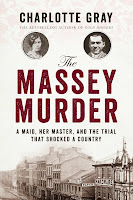
http://discover.halifaxpubliclibraries.ca/?q=title:%22massey%20murder%22gray%22"In February 1915, a member of one of Canada’s wealthiest families was shot and killed on the front porch of his home in Toronto as he was returning from work. Carrie Davies, an 18-year-old domestic servant, quickly confessed. But who was the victim here? Charles “Bert” Massey, a scion of a famous family, or the frightened, perhaps mentally unstable Carrie, a penniless British immigrant? When the brilliant lawyer Hartley Dewart, QC, took on her case, his grudge against the powerful Masseys would fuel a dramatic trial that pitted the old order against the new, wealth and privilege against virtue and honest hard work. Set against a backdrop of the Great War in Europe and the changing faceof a nation, this sensational crime is brought to vivid life for the first time." - publisher

Snatched!: the peculiar kidnapping of beer tycoon John Labatt (M)
by Susan Goldenberg

http://discover.halifaxpubliclibraries.ca/?q=title:%22snatched%22goldenberg%22
"In 1934, fifty-three-year-old beer tycoon John Sackville Labatt was kidnapped from his Lake Huron summer home and held ransom for three days. His captors, a group of ex-rum runners, desperate in the days following prohibition and the Great Depression, were hoping for a big pay day. This bizarre true crime story traces the abduction through to the trials of the abductors. From a heavily populated hideout to a case of mistaken identity, follow the story of Labatt, the first person in Canada to be kidnapped for high ransom"" - publisher

Arctic Justice: on trial for murder, Pond Inlet, 1923 (M)
by Shelagh D. Grant

http://discover.halifaxpubliclibraries.ca/?q=title:%22arctic%20justice%22grant"Arctic Justice recounts a critical episode in how Canada came to control its High Arctic. In 1922 a mad trapper threatened to kill the sled dogs of a group of Baffin Island Inuit and, following the Inuit customary law that individuals who endanger the community must be killed, he was executed. Nuqallaq, an Inuk, killed Robert Janes, a white man, and Canadian authorities made the unprecedented decision to put him and two accomplices on trial for murder, leading to the establishment of Canadian law enforcement in the North. Shelagh Grant shows that Canada's action was motivated more by international political concerns for establishing sovereignty over the Arctic than by the pursuit of justice." - publisher


Monday, February 22, 2016

Staff Picks! A World Elsewhere by Wayne Johnston

A World Elsewhere by Wayne Johnston.

Landish Druken, son a renowned sealing captain, convinces his father to send him to Princeton, with the understanding that he will return to Newfoundland and take his place on his father's ship. While at Princeton he meets astonishingly wealthy Padgett "Van" Vanderluyden and the course of his life changes. Academic dishonesty and Van's betrayal sees Landish expelled from both Princeton and his father's good graces. Back in Newfoundland Landish's father Abram Druken (reminiscent of Abram Kean of the 1914 Newfoundland Sealing Disaster) is held by some to be morally responsible for Francis Carson's death while on a sealing exhibition. Carson's posthumous son, Deacon, is orphaned and adopted by Landish. They find themselves in dire circumstances; the Druken name too feared for Landish to find employment. Landish throws himself on Van's mercy and like Coriolanus seeks out "a world elsewhere".

A World Elswhere is gothic and melodramatic. Landish and Deacon find themselves virtual prisoners is Van's mansion - called Vanderland - modeled on Biltmore created by George Washington Vanderbilt in North Carolina. Vanderluyden, due to his extreme wealth and warped mind, is solitary and has no equal. Their early friendship makes Landish a sort of equal and he fulfills Van's need to have a witness to his life. Landish can still be controlled, however, and is powerless because of his love for Deacon. The plot revolves around a murder which may or may not have happened. As the final of many versions of the tragic event is revealed you are still left wondering if it is indeed truthful.

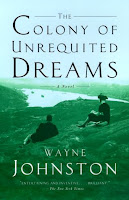
I found this novel to be so compelling that I was not bothered by my bus being delayed 45 minutes on the Bedford Highway. Johnston has created in Landish Druken another character which just propels you through the story, much like his Joey Smallwood in The Colony of Unrequited Dreams and, my favourite, Draper Doyle of The Divine Ryans. Again, characteristic of a Johnston novel is playful language and word play. Landish, who was fond of a drink, would sing "what shall we do with a Druken sailor" and Van's daughter Goddie, who seems out of step with the rest of the world, has some of the best lines including, " he sent his son to die on the cruise of fiction." Again it reminds me of The Divine Ryans. Uncle Reg is helping young Draper deal with his father's death calling it psycho-oralysis, meaning the patient has to do all the talking. "But for God's sake, he said, don't tell anyone you're being oralized by your uncle. If you do I'll be arrested." This word play is sprinkled throughout the book and is reminiscent of P.D. Wodehouse, James Joyce and G.K. Chesterton.


Thursday, February 18, 2016

Staff Pick - Irma Voth by Miriam Toews

Dark family secrets brought Irma Voth, an eighteen year old, and her family from Canada to live in a Mennonite community in Chihuahua Mexico. They appear to live in another place and time, living simply and tending to cattle. As an eighteen year old Irma's first experiences include using a pay phone and going to a movie. I began reading with the assumption that the book was set in an earlier part of the twentieth century until one of the characters mentioned googling something.

Irma's relationship with her family has broken down with her decision to marry a Mexican boy. Not only has she been shunned by her family, but her young and unpredictable husband has abandoned her as well. Irma is not an untypical teen with the desires for personal freedom and self-determination conflicting with a remaining degree of childish dependence. A movie company comes to town to make a film about the Mennonite way of life. Trilingual Irma finds herself employed as a translator and companion. Irma's father is violently opposed to the film project, and for her own safety and the safety of her younger teenage sister and her infant sister, the three girls flee to Mexico City to begin a new life.

Irma Voth (M) by Miriam Toews begins quite slowly with a somewhat bleak and moody atmosphere. It was a bit distressing to see this young girl abandoned by everyone in her life. I was just about to give up and move on when the action suddenly began to pick up pace. When the girls made the move to Mexico City, Irma, out of necessity, took charge of her young sisters and proved herself resourceful enough to secure them shelter and employment. The story seemed to become easier to read once the girls had something approaching a normal life. The characters which seemed lost and blurry in the first half of the book became clear and defined. Irma Voth is a thought provoking coming of age story which explores the effect of childhood trauma on subsequent generations, family violence and forgiveness.

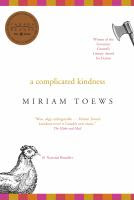
Miriam Toews won the 2004 Governor General's Literary Award for Fiction and the 2006 Canada Reads Competition for A Complicated Kindness (M).

If you are interested in reading more about the Mennonite community, you might like to try Children of the Day (M) by Sandra Birdsell. "In Children of the Day, the Giller-nominated author Sandra Birdsell has created an indelible, life-affirming portrait of a marriage on the knife-edge of disaster, in the tiny mythical town of Union Plains, Manitoba. She not only captures the unruly hearts of Sara and Oliver Vandal, but also all the sticking points, strengths and traumas of their Mennonite and Metis cultures. Their meeting was a near-fatal accident, but from the moment that Oliver Vandal, driving cab in Winnipeg, almost ran Sara Vogt down, the lives of these unlikely lovers have been rudely, sometimes bruisingly, sometimes gloriously, intertwined. Sara, a Mennonite immigrant stifled by a bloody family history and the secrets and propriety of her people, took one look at the darkly handsome Oliver and made a flying leap into his arms. Through twenty years of marriage and ten children, she has hung on for dear life, using her considerable willpower to create a home that can harbour a dozen Vandals in a tiny house on the outskirts of Union Plains." Discover

Alone in the Classroom (M) by Elizabeth Hay is another example of Canadian literary fiction dealing with secrets in a small community. "In a small prairie school in 1929, Connie Flood helps a backward student, Michael Graves, learn how to read. Observing them and darkening their lives is the principal, Parley Burns, whose strange behaviour culminates in an attack so disturbing its repercussions continue to the present day. Connie’s niece, Anne, tells the story. Impelled by curiosity about her dynamic, adventurous aunt and her more conventional mother, she revisits Connie’s past and her mother’s broken childhood. In the process, she unravels the enigma of Parley Burns and the mysterious (and unrelated) deaths of two young girls. As the novel moves deeper into their lives, the triangle of principal, teacher, student opens out into other emotional triangles – aunt, niece, lover; mother, daughter, granddaughter – until a sudden, capsizing love thrusts Anne herself into a newly independent life. publisher

Thursday, February 4, 2016

African Heritage Month 2016 at Halifax Public Libraries


African Heritage Month is celebrated at Halifax Public Libraries with an incredible array of programs and events - you can enjoy drumming, dance, fashion, films, panel discussions, story telling, poetry, and the much anticipated reading by George Elliott Clarke from his new novel The Motocyclist.

Enjoy as well some new African Canadian writing, including:

'Membering by Austin Clarke

"Austin Clarke is a distinguished and celebrated novelist and short-story writer. His works often centre around the immigrant experience, of which he writes with humour and compassion, happiness and sorrow. In 'Membering, Clarke shares his own experiences growing up in Barbados and moving to Toronto to attend university in 1955 before becoming a journalist. With vivid realism he describes Harlem of the '60s, meeting and interviewing Malcolm X and writers Chinua Achebe and LeRoi Jones. Clarke went on to become a pioneering instructor of Afro-American Literature at Yale University and inspired a new generation of Afro-American writers." publisher

The Illegal: a novel by Lawrence Hill

"A literary thriller that addresses the fate of undocumented refugees who struggle to survive in nations that do not want them. Keita Ali is on the run. He is desperate to flee Zantoroland, a mountainous black island that produces the fastest marathoners in the world. Keita signs on with notorious marathon agent, Anton Hamm, who provides Keita with a chance to run the Boston marathon. But when Keita fails to place among the top finishers, rather than being sent back to his own country, he goes into hiding." discover

Pain Tree by Olive Senior

"The stories range over almost a hundred years, from around the time of the second world war to the present. Like her earlier stories, Jamaica is the setting but the range of characters presented are universally recognizable as people in crisis or on the cusp of transformation." discover

Falling in Love with Hominids by Nalo Hopkinson

"In this long-awaited collection, Hopkinson continues to expand the boundaries of culture and imagination. Whether she is retelling The Tempest as a new Caribbean myth, filling a shopping mall with unfulfilled ghosts, or herding chickens that occasionally breathe fire, Hopkinson continues to create bold fiction that transcends boundaries and borders." publisher

What's Done in Darkness by Kayla Perrin

"Jade Blackwin feels like she's losing her mind. After burying both her parents--and being left by her boyfriend for her scheming best friend--she totally loses it. At college graduation, she confronts her man, slaps her BFF, then crashes her car. Now everyone thinks she's crazy. Even her sister, who convinces Jade to take a job in beautiful, restful Key West. At first, Key West is everything Jade could hope for. The lime margaritas are heaven on earth. Her boss at the coffee shop, Katrina, is friendly as can be. And a gorgeous stranger named Brian is just the thing to help Jade forget her ex. But why is a crime writer asking so many questions? Why does Katrina explode into fits of rage? And why is a killer lurking in the shadows, ready to kill again? No one knows what's done in darkness. But Jade knows she's not crazy. She's next..." discover

For lots more reading suggestions and activities, go to our African Heritage Month resource page.

Sunday, December 6, 2015

Staff pick: Atmospheric historical mystery set in Halifax


Published by Nimbus Publishing, What Kills Good Men is a historical police procedural mystery set in Halifax, Nova Scotia in 1899.

The setting was of special interest to me as Halifax is where I grew up and is very near where I live today.  Reading a novel in a locale with which you are very familiar sheds a different light on the reading experience.

The story follows one week of a murder investigation.  The victim was a prominent member of society, a city alderman, who was living a double life.  The policemen in charge of the murder investigation were a duo of high integrity and morals.  The elder, Culligan Baxter, was a married man and a Catholic who was burnt out, embittered, and highly judgmental.  The younger,  Kenny Squire, was just learning the ropes and was applying his keen intellect to his very first murder inquiry.  There was obviously a lot of respect between the two policemen and their rapport was a pleasure to read.


The vivid descriptions of the historic city of Halifax transported the reader to both the time and place of the book’s setting.  The characters were so well developed that the reader knows what they are thinking as well as what they are doing.  Written with thoughtful prose, the language of the novel also serves to transport the reader to the turn of the century.  You can appreciate the societal confines and almost feel the dampness of the fog and the coldness of the wind off the harbour.

The author has previously written a non-fiction work about poverty in 19th century Halifax.  The research for that work has stood him in good stead with this novel.  The historical data was accurately and skillfully portrayed with a sound rendering of class distinction, religious polarity, and the differences between the well-educated and those less so.

The chapters were quite long with each covering a day in the investigation.  The reader was reminded of the impediments faced by police during this time period and of the more tedious aspects of police work.

Halifax City Police on the Grand Parade steps, Halifax, Nova Scotia 1914
 Halifax City Police on the Grand Parade steps, Halifax, Nova Scotia 1914
Rich in character and description, this atmospheric novel will appeal to anyone who enjoys having a little history lesson with their murder mystery.  The message of the novel was that power corrupts and nothing is black or white.  The ending was realistic in that justice does not always prevail.  My rating:
4.5 stars
Though I know the area well, I feel the book could have benefited from a map for those less acquainted with the locale.

My bookclub read the novel for the month of November and we discussed the title’s significance.  We determined that the ‘good man‘ of the title was not the murder victim, but rather the policeman, Culligan Baxter.  What ‘kills‘ him is the fact that justice is often denied, and that the world is not black or white, but a shade of gray as murky as the Halifax fog.

1899 Halifax
Halifax in 1899


Halifax in 2015

David Hood grew up just outside of Halifax, Nova Scotia, and has lived in the city for many years. His previous publications include Down but Not Out, an examination of nineteenth-century poverty in Halifax. For much of the past fifteen years he has been teaching at the secondary and post-secondary levels. He is currently teaching in Singapore.   Hood said he has talked to Nimbus Publishing about a possible series. He’s started working on a second book, one that may involve an assassination attempt on the city’s archbishop.


This post was originally published on the blog: Fictionophile

Friday, October 30, 2015

#CrazyforCanLit: These are OUR stories


In the spirit of #CrazyForCanLit, as well as Women’s History Month, I had a plan to write a blog post about my top five CanLit heroines. However, when I went through my short list of personal favourites, I realized that many of my favourite female characters in Canadian literature were personally connected to me in some way through geography or ethnic background. Here are a couple of my very personal favourites:

Sandra Birdsell’s 2001 Giller-nominated novel, The Russländer, is a very personal read for me. The story follows the life of Katya Vogt, an elderly Mennonite woman living in Winnipeg who remembers her life as a young girl living in Russia at the time of World War I and the Russian Revolution. Katya's life as a child is mostly happy, but her family eventually becomes caught in the violence that erupts between the wealthy landowners and the impoverished Russian workers. We see the horrifying results of these tensions through Katya's eyes, and watch her attempt to come to terms with this tragedy even as an elderly woman now living safely in Canada. 

This book echoes my own grandmother's experiences about living in Russia as a teenager in the same time period, and gave me a richer understanding of the stoic but unwavering religious faith of my Mennonite ancestors. In recent days, I have thought a lot about these refugee ancestors of mine, who were actually banned from immigrating to Canada between 1919 and 1922, along with Doukhobors and Hutterites, due to their alarming religious views and tendency to not assimilate to the greater Canadian culture. The parallels with current political situations are impossible to ignore, and I credit books like The Russländer with strengthening my empathy towards our modern day refugees of war, because it reminds me that this too is my own history. 

http://discover.halifaxpubliclibraries.ca/?q=Title:a%20complicated%20kindness
While Sandra Birdsell's books have helped me understand how my past helps to mold my present political views, many of Miriam Toews' books relate to me on a more direct level. Toews grew up in the same southern Manitoba town that I did, and her description of East Village in the Giller-nominated and Governor General’s Literary Award-winning book, A Complicated Kindness, describes the Steinbach of my childhood to a T. While my own family wasn't as repressive as Nomi's, I still feel a kinship to a character who is stuck in her small home town, stuck in a religious ethnic identity that she doesn't identify with, and stuck in her own rebellious adolescent mind. I feel like I could have easily written this quote when I was a snarky and self-absorbed teenager:
We’re Mennonites. After Dukhobors who show up naked in court we are the most embarrassing sub-sect of people to belong to if you’re a teenager.... Imagine the least well-adjusted kid in your school starting a breakaway clique of people whose manifesto includes a ban on the media, dancing, smoking , temperate climates, movies, drinking, rock’n’roll, having sex for fun, swimming, makeup, jewellery, playing pool, going to cities, or staying up past nine o’clock. That was Menno all over. Thanks a lot, Menno.
Much has been written about Toews' ability to inject sarcasm or humour into tragic circumstances, which is an aspect of her writing that I didn't notice until other people mentioned it. To me, the black humour in the dialogue and internal narration in A Complicated Kindness and her more recent Giller-nominated book, All My Puny Sorrows, felt familiar and completely expected in the context.

Canadian literature provides readers with a wonderful range of characters with wildly diverse experiences, but when it comes down to it – I love CanLit because I see myself reflected in some of these stories.


Thursday, October 29, 2015

#CrazyForCanLit - More Canadian Graphic Novels


As someone who has only recently begun enjoying the graphic novel section of my local library, I have been really impressed with the fantastic Canadian content that I have been able to find. We have many awesome graphic novelists here in Canada. I have compiled a small selection of titles to hopefully give readers a taste of the diverse range of work being published by Canadian authors. Personally, I find graphic novels to be a fun, visual way to explore Canadian settings or topics.

Northwest Passage by Scott Chantler is set in Rupert’s Land in 1755, just before the Seven Years War breaks out. An historical adventure, you are right in the middle of the action as the French and the British compete to control the fur trade. As a reader, I enjoyed the feeling of being transported back to another time.

Through the Woods by Emily Carroll features five horror stories told using beautiful, colour illustrations that have a gothic feel to them. The publisher describes the stories as “fairy tales gone seriously wrong.” A New York Times Bestseller, this is a fun read with fantastic artwork throughout.


The Outside Circle by Patti LaBoucane-Benson with art by Kelly Mellings is a graphic novel with an incredible amount of depth. Centred around a troubled Aboriginal man, the story follows him as he goes through a specialized rehabilitation program. The author draws on 20 years of work and research on the healing and reconciliation of gang-affiliated or incarcerated Aboriginal men. The result is a touching story told alongside fantastic artwork that offers insight into the continued impact of residential schools and traditional Aboriginal healing circles and ceremonies.

Hark! a Vagrant by Kate Beaton is a fantastic collection of comics from the author’s personal website. The comics feature such diverse topics as Canadian stereotypes, Victorian style sitcoms, and adventures with Nancy Drew (my personal favourite). This is another title that was on the New York Times Bestseller list for quite some time. It is also worth noting that Kate Beaton grew up in Cape Breton, Nova Scotia.

Essex County by Jeff Lemire
Louis Riel: a comic strip biography by Chester Brown
Paul Has a Summer Job by Michel Rabagliati

http://discover.halifaxpubliclibraries.ca/?q=title:essex%20county http://discover.halifaxpubliclibraries.ca/?q=title:louis%20riel%20author:brown http://discover.halifaxpubliclibraries.ca/?q=title:paul%20has%20a%20summer%20job


by SarahW.

Wednesday, October 28, 2015

#CrazyForCanLit: Canadian Children's Books


CanCon for kids of all ages

Whether you’re feeling nostalgic or you feel like you need to improve on your kid’s CanCon, here are 10 great children’s authors Canada has produced.

L.M. Montgomery: Born and raised on Prince Edward Island, Montgomery’s works are a treasure trove of memorable characters, from Anne of Green Gables to Emily of New Moon.

Gordon Korman: Born in Montreal and raised in Quebec and Ontario, Korman’s books range from humourous antics to adventurous thrills. Top choices include I Want to Go Home! and the Macdonald Hall series, which he started writing when he was only 14.

Jan Truss: Born in England and living in Alberta, Truss wrote the Canadian historical novel A Very Small Rebellion, and her novel Jasmin won the Ruth Schwartz Children's Book Award in 1983.

Kit Pearson: Born in Edmonton and raised in Alberta and British Columbia, Pearson’s most famous book is The Sky is Falling. She also won the Governor General's Award for Children's Literature for Awake and Dreaming.

Farley Mowat: Born and raised in Ontario, Mowat is a well-known Canadian writer. Read his award-winning adventure Lost in the Barrens or his semi-autobiographical novel Owls in the Family.

Margaret Buffie: Born and raised in Manitoba, Buffie has written multiple books for youth, but it’s her first book that is most recognized. Who is Frances Rain? won the Young Adult Canadian Book Award in 1988.

Jean Little: Born in Taiwan and raised in Taiwan and Ontario, Little has been visually impaired from birth and wrote several works that featured children with disabilities. Mine for Keeps and From Anna are two classics.

Cora Taylor: Born in Saskatchewan, living in Alberta, Taylor has written several awarding winning books, including Julie. She also writes for the Our Canadian Girl book series.

Janet Lunn: Born in Texas, raised in Vermont and New York, and living in Ontario, Lunn was given the Order of Canada in 1997. Check out her works The Root Cellar and Shadow in Hawthorn Bay.

Eric Walters: Born and raised in Toronto, Walters was inspired to start writing while teaching elementary school. He’s written almost 100 books since, including the 9/11 drama We All Fall Down and dystopian novel The Rule of Thre3.

by Jill


Tuesday, October 27, 2015

#CrazyForCanLit: 10 Great Canadian Graphic Novels


A selection of ten of my favourite Canadian graphic novels:

Step Aside, Pops: a Hark! a vagrant! collection and Hark! a vagrant! by Kate Beaton.
Drawn and Quarterly: twenty-five years of contemporary cartooning, comics and graphic novels, edited by Tom Devlin, with Chris Oliveros, Peggy Burns, Tracey Hurren and Julia Pohl-Miranda.
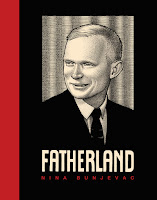
Fatherland by Nina Bunjevac.
Louis Riel: a comic-strip biography by Chester Brown.
A User's Guide to Neglectful Parenting and Jerusalem: chronicles from the holy city by Guy Delisle.
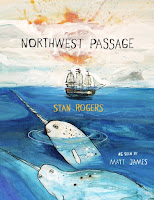
The Adventures of Superhero Girl by Faith Erin Hicks. Northwest Passage by Stan Rogers and Matt James.
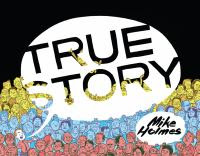
True Story by Mike Holmes

Not yet available through Halifax Public Libraries' collection, Halifax's own Paul Hammond regularly publishes his strange and compelling comic HEY YOU GUYS in The Coast.

http://discover.halifaxpubliclibraries.ca/?itemid=|library/m/halifax-horizon|1869373 http://discover.halifaxpubliclibraries.ca/?itemid=|library/m/halifax-horizon|1857958

http://discover.halifaxpubliclibraries.ca/?itemid=|library/m/halifax-horizon|1870115 http://discover.halifaxpubliclibraries.ca/?itemid=|library/m/halifax-horizon|1816704 http://discover.halifaxpubliclibraries.ca/?itemid=|library/m/halifax-horizon|1775910


http://discover.halifaxpubliclibraries.ca/?itemid=|library/m/halifax-horizon|1834009 http://discover.halifaxpubliclibraries.ca/?itemid=|library/m/halifax-horizon|1828613 http://discover.halifaxpubliclibraries.ca/?itemid=|library/m/halifax-horizon|1750551