Showing posts with label science. Show all posts

Wednesday, April 20, 2016

Exploring Autism

I recently came across a Reddit thread that asked people with autism what they wished others could understand about their condition. The results were varied, but a frequent answer was that they didn't want to be condescended to or treated like children. Another common response was that autism encompasses a wide spectrum of behaviours, and there is no single representative example. The thread came along just as I was reading a very interesting book on the topic.
http://discover.halifaxpubliclibraries.ca/?q=title:neurotribesI've just finished Neurotribes: the legacy of autism and the future of neurodiversity by Steve Silberman. The title of the book led me to believe that the book would be focused on current and future research in autism and brain differences, but it ended up focusing mainly on the history of autism research and how autism became a well-known word over the past few decades. Nonetheless, the book was a fascinating read that delved into the first known autism researchers and how their work affected the beliefs, perceptions, and pseudoscience surrounding autism up to the present day. Although a bit heavy on the history (weighing in at 534 pages!) and disturbing in some parts, it's worth the time.
 
http://discover.halifaxpubliclibraries.ca/?q=title:uniquely%20human%20author:prizantUniquely Human: a different way of seeing autism by Barry M. Prizant with Tom Fields-Meyer is geared toward parents and  caregivers of children with autism, but is a recommended read for anyone interested in autism. Prizant states that "Autism isn't an illness. It's a different way of being human." His book is divided into two sections, the first on understanding autism and the second on living with autism. Prizant uses his 40+ years of experience by peppering the book with real-life examples and focusing on how people can understand autistic behaviours as well as different strategies for dealing with challenges. 


http://discover.halifaxpubliclibraries.ca/?q=title:the%20autistic%20brain%20author:grandinIf you'd like to read something from the perspective of a person with autism, check out The Autistic Brain: thinking across the spectrum by Temple Grandin and Richard Panek. Grandin is one of the most famous individuals on the autism spectrum and has written several books. This one combines her own experiences with the most recent research on brain differences and genetics relating to autism. She also discusses the sensory issues experienced with autism and how parents can help their children integrate into the world. 


Saturday, April 2, 2016

Crime Time

The true crime section of the library has always been popular (364.1523 if you're browsing!) and from the avalanche of books, TV shows, documentaries, and podcasts it seems our appetite is only increasing. Unless you've been living off the grid you've probably heard of the incredibly popular podcast Serial hosted by Sarah Koenig, and the even more popular (and at least in my case, rage-inducing) Netflix documentary series Making a Murderer directed by Laura Ricciardi and Moira Demos. These recent productions are even more fascinating because they cast doubt on who really knows the truth, from the lawyers to the suspects themselves. Although Making a Murderer is not yet available on DVD, there are other twisty true crime documentaries worth watching.

syndetics-lcThe Staircase directed by Jean-Xavier de Lestrade looks at the death of Kathleen Peterson and the resulting trial of her husband, novelist Michael Peterson. There are a couple of unexpected twists in this eight-episode drama. Lestrade also filmed a two-hour followup on the case several years later. Unfortunately this update isn't included in the DVD so you'll have to track it down online.

syndetics-lc Another fascinating crime case is HBO's six-episode series The Jinx directed by Andrew Jarecki, featuring the strange saga of Robert Durst, an American real estate heir investigated in relation to the disappearance of his wife and the murders of two other individuals. You have to watch it to believe it.

syndetics-lcThe 'West Memphis Three' also made headlines for years. Three consecutive documentaries by Joe Berlinger and Bruce Sinofsky followed the lives of three teenagers accused of murdering three eight-year-olds in Arkansas: Paradise Lost: the child murders at Robin Hood Hills (1996) followed by Paradise Lost 2: revelations (2001) and Paradise Lost 3: purgatory (2012). A fourth documentary titled West of Memphis directed by Amy Berg premiered at the Sundance Film Festival, also in 2012.

syndetics-lcWhy are people so fascinated with true crime? Popular Crime: reflections on the celebration of violence by Bill James attempts to answer this question by taking us through various famous crimes, from the Lindbergh kidnapping to O.J. Simpson. He entertains the reader while considering how infamous crimes - and our reactions to them - affect our culture.

syndetics-lcAfter watching and reading about some of these cases, you may want to up your game on crime scene analysis by reading Forensics: what bugs, burns, prints, DNA, and more tell us about crime by Val McDermid. McDermid usually writes crime fiction, and her background research resulted in a fascinating look at how forensic scientists use everything from entemology to psychology to uncover the truth.

Friday, February 12, 2016

Darwin Day!

syndetics-lcOn February 12th 1809 Charles Robert Darwin was born in Shropshire, England. Little did anyone know then that he would revolutionize the scientific world with his observations and writings. Just recently his most famous work was voted the most influential academic book in history. That book, of course, is On the Origin of Species, Darwin's classic text about his theory of evolution by natural selection. Darwin started off studying medicine at Edinburgh University, but was drawn away by his love of studying nature. He spent years researching and refining his theory before publishing it in 1859.

Darwin was a well known scientist by the time of publication, and the book quickly became internationally known while creating lively controversy. A famous debate at Oxford just seven months after publication saw a showdown between several scientists and philosophers on both sides, with Thomas Huxley being given the nickname of "Darwin's bulldog" for his support of the theory of evolution. You may recognize the name - his son, Aldous Huxley, became a world famous author. Since Darwin's theory was published, much more has been discovered about evolution.


http://discover.halifaxpubliclibraries.ca/?q=title:darwin%27s%20ghosts%20author:stottAlthough Darwin was instrumental in bringing the theory of evolution into the mainstream, there were others before him that had similar observations and ideas on how natural life worked. Darwin's Ghosts: the secret history of evolution by Rebecca Stott shows how scientific ideas circulated in the centuries before Darwin and brings to life the intellectual discoveries of various individuals. Her book is a sort of genealogy of evolution, showing how thinkers and observers from Aristotle up to Darwin considered and built on others' ideas. Erroneous beliefs and mistakes also stymied many of these intellectuals, and Stott demonstrates how bumpy the road of scientific inquiry is. This book won rave reviews and is written in an easily accessible style, so don't be worried if you haven't taken a biology class in years.


syndetics-lc The Selfish Gene by Richard Dawkins is another well-reviewed book on evolution, describing how the process works from the point of view of genes, the basic units of heredity in all living things. First published in 1976, the book caused a revolution in the scientific community, extending the explanation of evolution that Darwin provided and causing a paradigm shift in understanding how evolution worked. Almost 40 years later, the book has stood the test of time. Dawkins covers basic biology before jumping into how his theory affects the evolutionary view of altruism, competition, and other behaviours. This book is also written in an entertaining and understandable style for the layperson. This is a classic must-read that will make you reconsider just how this strange world works.


http://discover.halifaxpubliclibraries.ca/?q=title:your%20inner%20fish%20author:shubinMy final book choice for celebrating Darwin's birthday is Your Inner Fish: a journey into the 3.5 billion year history of the human body by Neil Shubin. The author was one of the discoverers of 375-million-year-old Tiktaalik fossils in Nunavut, a species that represents the evolutionary link between fish and amphibians. Shubin starts off the book with this discovery and discusses the source of our various features (such as eyes and noses) and how different animals have common origins. Shubin's entertaining look at how humans came to be the strange creatures we are today takes into account our ancient and diverse ancestors, from fish to reptiles to primates. And if you're overextended on your book commitments, you'll be happy to know that in 2014 Shubin hosted a three-part television series of the same name on PBS.

"There is grandeur in this view of life, with its several powers, having been originally breathed into a few forms or into one; and that, whilst this planet has gone cycling on according to the fixed law of gravity, from so simple a beginning endless forms most beautiful and most wonderful have been, and are being, evolved." - Charles Darwin


Monday, November 16, 2015

Linguaphiles and Passionate Polyglots

Language studies are more than just dictionaries, etymology, and grammar, although these are integral parts. Language is a means by which we understand the world. We label and categorize. We interpret, infer, imply and impress. And language is possibly our most ancient of human skills; our words have been developing since...well...

Check out Adam’s Tongue: how humans made language, how language made humans by Derek Bickerton. By studying the differences between animal communication and human language, he offers new perspectives on our development as a species. He seems to claim humanity, not just human society, evolved in large part due to the creation and application of speech.

Perhaps that is too complex a beginning. For the development of language itself try A Little Book of Language by David Crystal. Its short chapters build on the previous, making this a fast-paced examination. This is good, since the list of topics are surprisingly long. Among these topics are baby talk as a learning tool, how to hold a simple conversation, how word use defines meaning, and how languages begin, develop,and die out.

In a similar vein, try How Language Works: how babies babble, words change meaning, and languages live or die by David Crystal. Its scope is effectively the same, as is the clarity, brevity, and levity. The difference, as with all language, is the presentation. I appreciate the clever chapter headings; each begins with the question of how. Examples include ‘How speech can go wrong’ - a chapter on the physical, psychological, and neurological problems that could hinder speech, and ‘How reading and writing can go wrong’ - a chapter on learning disabilities...not about my blogging.

Interested in how language and culture interact? Take a peek at The Stuff of Thought: language as a window into human nature by Steve Pinker. As a linguist and cognitive scientist, his ‘trilogy’ ends with this title. The first, The Language Instinct, covers language development.

One could also try Through the Language Glass: why the world looks different through other languages by Guy Deutscher; which seems to focus on linguistic and cultural divides.

Both of the above titles are thick reads, heavy on the analysis. For a sillier book, try Biting the Wax Tadpole: confessions of a language fanatic by Elizabeth Little. The title is based on an actual, phonetic translation of ‘Coca-Cola’ into Chinese: ‘ke-kou ke-la’. That translated reads ‘bite the wax tadpole’. This book is full of similar anecdotes and trivia, composed by a language enthusiast. Icelanders must have all unique baby names approved by the Naming Council. Jabba the Hutt of Star Wars fame spoke a language based loosely on South American Quechua. And a man formally known as Theodor Geisel entered a bet wherein he had to write a children’s book using no more than 50 different words...and only one adjective: Green. Can you name the book?

There are plenty of books that narrow in on certain linguistic topics. Take a look at some of these:

Inventing English: a portable history of the language
by Seth Lerer

He traces the invention, progress, acculturation and adaptation of what we call ‘English’. After examining Old and Middle English, he moves from Chaucer to Shakespeare, to Samuel Johnson and the growth of lexicography, then to regionalism, North American English, Ebonics, military speak, and more variants.


In the Land of Invented Languages: Esperanto rock stars, Klingon poets, Loglan lovers, and the mad dreamers who tried to build a perfect language
by Arika Okrent

Where many languages have evolved over many centuries, this book is focused on the 500 plus languages that were artificially created. Whether the creator thought their native language was outmoded, outdated, inaccurate, or simply lacking elegance, each attempted to create a new, universal dialect. This includes Star Trek’s Klingon and Lord of the Rings’ Elvish language Tengwar.

Always On: language in an online mobile world
by Naomi Baron

She argues that our language(s) are on the cusp of a fundamental change, thanks to our new technologies. But she claims it isn’t the texting, emailing, or blogging alone that is undermining our communication. It is the art of communication and the structure of conversation that is adapting to social media and the new online ethic.

Wednesday, September 30, 2015

Staff Pick - The Sound of a Wild Snail Eating by Elisabeth Tova Bailey

Elisabeth Tova Bailey was stricken by a mysterious virus/bacteria that, in an astonishingly short time, rendered her practically immobile for years. She was eventually diagnosed with mitochondrial disease, but her progress was slow and often thwarted. She wasn't able to live in her own home as she became dependent on caregivers and friends. One such friend, perhaps unknowingly, changed the course of her life with a small gift. She bright Bailey a potted violet and on impulse included a wild snail. The end result was The Sound of a Wild Snail Eating, a beautiful little book which is both an insightful patient memoir and a gem of natural history.

It is difficult to imagine an active life suddenly and utterly restricted to stillness. Kind friends visited but she was exhausted by their activity and they would eventually be frustrated by her inactivity. Although she did not initially see the value of the snail, she came to appreciate its slowness and developed a fellow feeling with this creature who also been plucked out of its natural environment and been forced to live a life restricted both geographically and socially. The snail matched her pace and mirrored her life. As she grew more fascinated by this often overlooked creature, she came to appreciate its gifts of slowness, observation and contemplation.

As Bailey's health improved she was able to study the texts of biologists, naturalists and poets who have studied the snail before her. The Sound of a Wild Snail Eating, while lyrical and poetical, is also a wealth of information about this gastropod including its evolution, physiology, digestive habits and reproductive life. Bailey reflects that she might have been the first person to observe a snail tending to its eggs. When her health improved to the point of allowing her to return to her home, her snail was also returned back to wild.

Florence Nightingale recognized the positive effect that pets can have on the ill. In Three Dog Life by Abigail Thomas, a woman, whose life is sidetracked by her brain injured husband, gathers dogs about her to help her cope with her loss. "When Abigail Thomas husband, Rich, was hit by a car, his skull was shattered, his brain severely damaged. Subject to rages, terrors, and hallucinations and with no memory of what he did the hour, the day, the year before he was sent to live in a nursing facility that specializes in treating traumatic brain injuries. This tragedy is the ground on which Abigail had to build a new life. How she built that life is a story of great courage and change, of moving to a small country town, of a new family composed of three dogs, knitting, and friendship, of facing down guilt and discovering gratitude. It is also about her relationship with Rich, a man who lived in the eternal present, and the eerie poetry of his often uncanny perceptions. Hailed by Stephen King as "the best memoir I have ever read," this wise, plainspoken, beautiful book enacts the truth Abigail has discovered since the accident: You might not find meaning in disaster, but you might, with effort, make something useful of it." - publisher

If you enjoy the elegance of science writing, you might also consider The Blind Watchmaker by Richard Dawkins. "The watchmaker belongs to the eighteenth-century theologian William Paley, who argued that just as a watch is too complicated and functional to have sprung into existence by accident, so too must all living things, with their far greater complexity, be purposefully designed. Charles Darwin’s brilliant discovery challenged the creationist arguments; but only Richard Dawkins could have written this elegant riposte. Natural selection—the unconscious, automatic, blind, yet essentially nonrandom process Darwin discovered—is the blind watchmaker in nature." - publisher

Monday, June 15, 2015

Six Easy Pieces by Richard Feynman

Before Sheldon and Leonard made theoretical physics charming, if not comprehensible, there was Richard Feynman. When a colleague saw me holding this book, she said, "Ooooh Richard Feynman!" in much the same way another would say "Ooooh Paul Newman". Feyman had a long and distinguished career. He won the Nobel Prize in 1965 for his contributions in the field of quantum electrodynamics. He was involved in The Manhattan Project and The Challenger Commission, but his legacy will be that of a teacher.

In Six Easy Pieces: essentials of physics explained by its most brilliant teacher Feynman conveys complex topics in simple, understandable terms. The essays were based on lectures which had the intent to excite intelligent and enthusiastic students about physics. Feynman talks about physics in terms of an "expanding frontier of ignorance". Feynman, also known as "the great explainer" used every day analogies to explain complex topics. In this book there is an explanation of the basics of physics and how physics relates to the other sciences. Feyman's strengths lay in his ability to describe complex ideas visually rather than mathematically and his ability to enthrall young (and not so young) minds.

Feynman had a keen sense of showmanship and will be forever remembered for his inspired demonstration of why the Challenger Shuttle exploded with an elastic band dipped in icy water. Feyman the man has generated as much interest as Feynman the scientist. If you are interested in this bongo playing, safe-cracking, practical joking physicist, you might like to try his autobiography Classic Feynman: all the adventures of a curious character. "Not many Nobel laureates in physics amuse themselves by playing the bongo drums and cracking safes. But the capricious personality of Richard Feynman contained more than a few surprises. And it is the sheer unpredictability of this high-spirited genius--partial to the company of Las Vegas showgirls when not in the Caltech lecture hall--that has attracted so many readers to his disarmingly candid memoirs, Surely You're Joking, Mr. Feynman! and What Do You Care What Other People Think? Now chronologically collated into one omnibus volume (packaged with a CD of one of Feynman's signature lectures), these memoirs display perhaps the most flamboyant personality in modern science." - Booklist

Science readers might also appreciate The Elegant Universe: superstrings, hidden dimensions, and the quest for the ultimate theory by Brian Greene. "In a rare blend of scientific insight and writing as elegant as the theories it explains, Brian Greene, one of the world's leading string theorists, peels away the layers of mystery surrounding string theory to reveal a universe that consists of 11 dimensions where the fabric of space tears and repairs itself, and all matter-from the smallest quarks to the most gargantuan supernovas-is generated by the vibrations of microscopically tiny loops of energy. Green uses everything from an amusement park ride to ants on a garden hose to illustrate the beautiful yet bizarre realities that modern physics is unveiling. Dazzling in its brilliance, unprecedented in its ability to both illuminate and entertain, The Elegant Universe is a tour de force of science writing-a delightful, lucid voyage through modern physics that brings us closer than ever to understanding how the universe works."- publisher

Wednesday, April 22, 2015

Humans: A History


Celebrated on April 22 each year,Earth Day is an opportunity to foster respect for the environment, allowing us to reflect on our shared human history while seeking ways to reduce our carbon footprint in the future. This Earth Day, check out some of these fascinating books that provide insight about human history and our effects on the earth:

Sapiens: a brief history of humankind by Yuval Noah Harari

In this book, Dr. Yuval Noah Harari tackles literally the entire history of humankind—no small task!—and yet always seems to ask the right questions, the interesting questions, to make the human journey an exciting one. Originally published in Israel in 2011 and now available in English, this is the companion book to his series of free lectures available on Youtube.

While some of his ideas may stir controversy, Dr. Harari manages to be both informative and highly entertaining as he uncovers the secrets of human civilization, with the end result being a more complete understanding of our past and possible future.

Guns, Germs, and Steel: the fates of human societies by Jared Diamond

This Pulitzer Prize-winning book asks hard-hitting questions about how things in human society came to be, arguing that one of the roots of inequality between human civilizations is due to the land itself: pure geographic luck in agricultural crop farming and animal domestication.

“In this ‘artful, informative, and delightful’ (William H. McNeill) book, Jared Diamond convincingly argues that geographical and environmental factors shaped the modern world. Societies that had a head start in food production advanced beyond the hunter-gatherer stage, and then developed religion—as well as nasty germs and potent weapons of war—and adventured on sea and land to conquer and decimate preliterate cultures. A major advance in our understanding of human societies, this book chronicles the way that the modern world came to be and stunningly dismantles racially based theories of human history.” publisher

The Sixth Extinction: an unnatural history by Elizabeth Kolbert

Another Pulitzer Prize-winner, this book presents heartbreaking scientific data in an accessible format to tell the story of how humans have affected the environment. The author shares firsthand accounts of her travels around the globe, as well as stories of past mass extinctions—and the “sixth extinction” Earth is currently facing.

“Provides a moving account of the disappearances occurring all around us and traces the evolution of extinction as concept, from its first articulation by Georges Cuvier in revolutionary Paris up through the present day. The sixth extinction is likely to be mankind's most lasting legacy. It compels us to rethink the fundamental question of what it means to be human.” publisher

The Human Age: the world shaped by us by Diane Ackerman

In this book, the author offers insight as to how humans have become a global powerhouse by subduing or destroying the vast majority of Earth’s land and creatures, but still offers hope for the future if humans can learn to integrate with the natural world rather than seeking to overcome it. Using poignant examples of new technologies, she points out that while our mistakes are vast, so is our capacity for imagination and our ability to find creative solutions.

“In this landmark book, Ackerman confronts the unprecedented reality that one prodigiously intelligent and meddlesome creature, Homo sapiens, is now the dominant force shaping the future of planet Earth and takes her readers on an exhilarating journey through this new reality, introducing many of the people and ideas now creating—perhaps saving—our future and that of our fellow creatures.” publisher

Saturday, March 14, 2015

March 14 is Pi Day


Celebrate Pi Day, maybe with a little blueberry or maybe with Visions of Infinity: the great mathematical problems by Ian Stewart and with other fascinating books about mathematics.

"It is one of the wonders of mathematics that, for every problem mathematicians solve, another awaits to perplex and galvanize them. Some of these problems are new, while others have puzzled and bewitched thinkers across the ages. Such challenges offer a tantalizing glimpse of the field's unlimited potential, and keep mathematicians looking toward the horizons of intellectual possibility. In Visions of Infinity, celebrated mathematician Ian Stewart provides a fascinating overview of the most formidable problems mathematicians have vanquished, and those that vex them still. He explains why these problems exist, what drives mathematicians to solve them, and why their efforts matter in the context of science as a whole." publisher

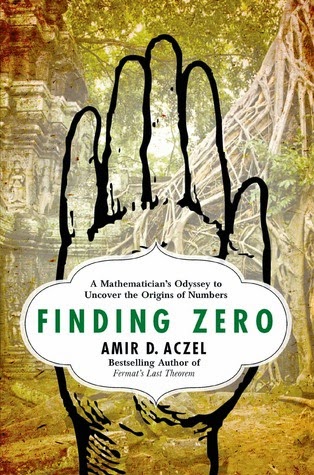
Finding Zero: a mathematician's odyssey to uncover the origin of numbers by Amir D. Aczel
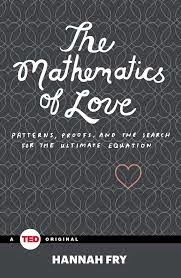
The Mathematics of Love: patterns, proofs and the search for the ultimate equation by Hannah Fry
Things to Make and Do in the Fourth Dimension: a mathematician's journey through narcissistic numbers, optimal dating algorithms and at least two kinds of infinity by Matt Parker
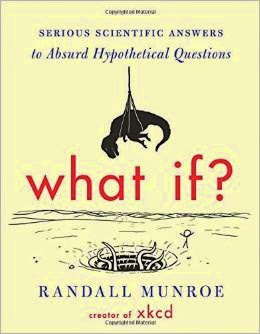
What If?: serious scientific answers to absurd hypothetical questions by Randall Munroe
Mathematics 1001: absolutely everything that matters in mathematics in 1001 bite-sized explanations by Richard Elwes
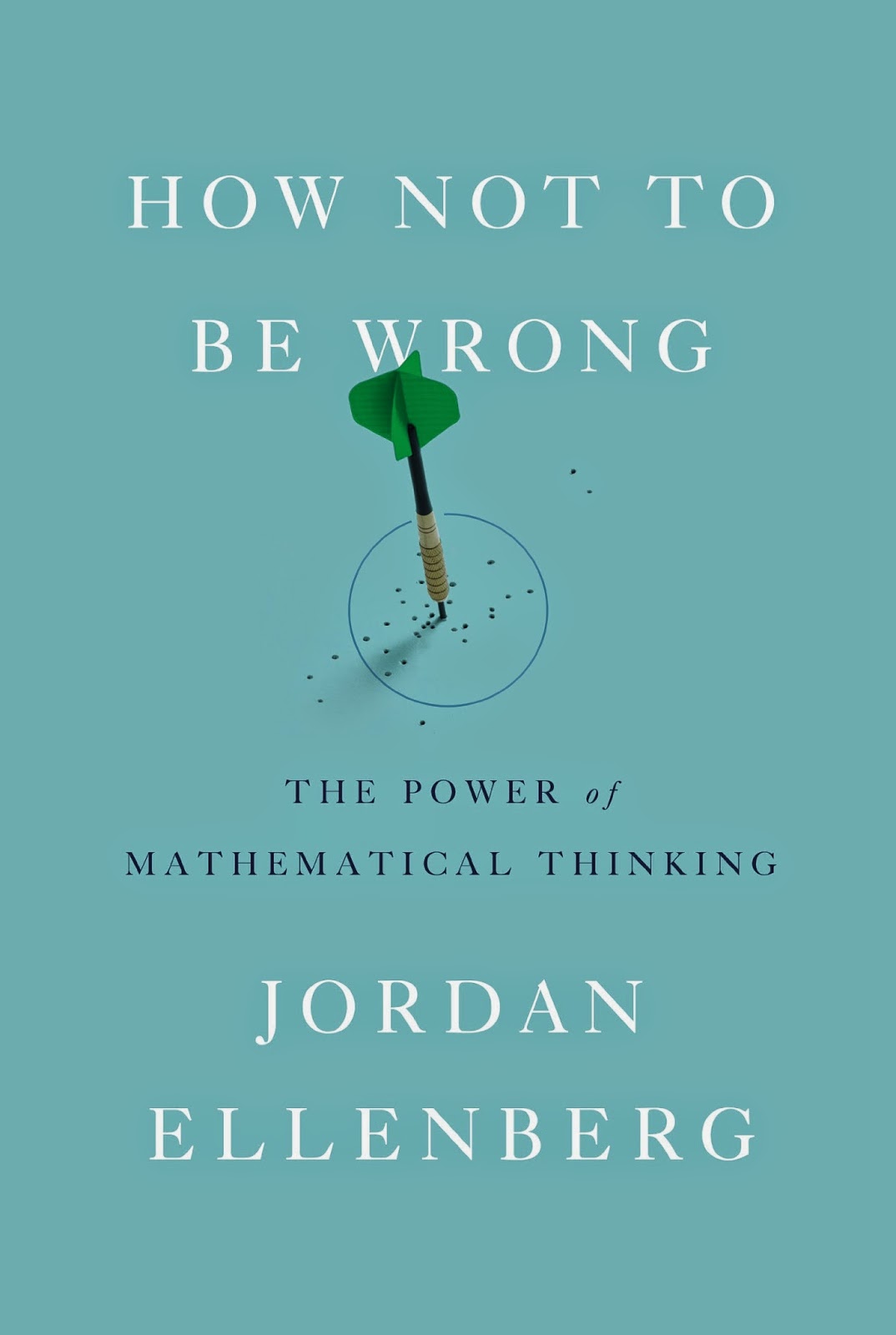
How Not to Be Wrong: the power of mathematical thinking by Jordan Ellenberg

http://discover.halifaxpubliclibraries.ca/?q=title:finding%20zero%20author:aczel http://discover.halifaxpubliclibraries.ca/?q=title:mathematics%20of%20love%20patterns%20proofs http://discover.halifaxpubliclibraries.ca/?q=title:things%20to%20make%20and%20do%20in%20the%20fourth%20dimension

http://discover.halifaxpubliclibraries.ca/?q=title:what%20if%20serious%20scientific http://discover.halifaxpubliclibraries.ca/?q=title:mathematics%201001%20absolutely%20everything http://discover.halifaxpubliclibraries.ca/?q=title:how%20not%20to%20be%20wrong%20the%20power

Tuesday, May 6, 2014

Staff Pick - Between Man and Beast by Monte Reel

Between Man & Beast by Monte Reel was a near perfect non-fiction reading experience for me. It hit on most of my major appeals as a non-fiction reader:  intriguing, sympathetic characters; compelling social history, tension building story lines; and fascinating natural history.  Monte Reel easily achieved all of this for me.

http://discover.halifaxpubliclibraries.ca/?q=title:%22between%20man%20and%20beast%22reel
It is the story of Paul du Chaillu, an Victorian era explorer who was the first Westerner to bring back specimens of gorillas to the US and England. Du Chaillu was a enigmatic individual, rather hard to pin down in terms of his background and motivations, which could be a real barrier to success in the times. Nevertheless, he became both a darling and villain of Victorian London. The amount of nasty back stabbing among society's social and scientific elite was brutal. Apparently, libelous statements were able to be bandied about with reckless abandon. And I must say that the level of evident racism was extremely shocking. This was also the time that Darwin's theory of evolution was being hotly contested. And of course, Du Chaillu's gorillas were often drawn into this emotional debate by all sides.

Equally fascinating was the impact of gorillas in Victorian London. It became a huge fad, with everyone trying to capitalise on the excitement.  People lined up for hours to see the specimens, theatre productions rushed to create new plays featuring gorillas, political cartoonists in particular loved using gorillas as caricatures. Images and stories of gorillas were everywhere.  I guess you could say it went viral.

http://en.wikipedia.org/wiki/File:French_explorer_Paul_du_Chaillu_at_close_quarters_with_a_gorilla.jpg

However, the life story of Paul du Chaillu was the real star attraction of the book.  He was obviously a very driven, brilliant, and capable explorer.  He desperately wanted to be accepted as a member of society's elite, both academically and socially.  He work ethic was astounding.  The travails of his explorations would have defeated many of a lesser explorer.  So to have his exploits and achievements dismissed and ridiculed by competitors who had never been to Africa must of been devastating to him.

His ongoing battles for recognition, including planning a second expedition, are the part of the story where the the readers discovers just how petty and self-serving many the scientific and societal elite of the time could behave.  Nasty business indeed, but rather entertaining for the reader.

I feel that Between Man & Beast would be a good reading suggestion for fans of Simon Winchester and Erik Larson.

~ David

“The gorilla’s very existence suggested—at just the time Charles Darwin was also suggesting—heretical ideas about the origin and nature of mankind. And the man chiefly responsible for bringing this animal to worldwide attention was Paul Du Chaillu, the central character and driving riddle of Monte Reel’s…tale of scientific buccaneering…Intriguing…Rattles along with fine, wacky momentum”
--The New York Times Book Review

Saturday, December 7, 2013

Spinning Science

This Saturday there is a full day series of free public lectures at University of Kings College focusing on the topic of the impact of hype and spin on science. 


We invite you to a free all-day public series of discussions exploring six case studies of overselling, misrepresentation or biasing in the presentation of scientific research. This event is presented by the Situating Science Strategic Knowledge Cluster with Genome Atlantic, Mount Saint Vincent University’s Science Communication Program and the Dalhousie University Centre for Comparative Genomics and Evolutionary Bioinformatics (CGEB).

Saturday, December 7, 2013
Alumni Hall, New Academic Building, University of King’s College
6350 Coburg Rd, Halifax, Nova Scotia
Free. Open to the public. Drop-ins welcome.

http://www.situsci.ca/event/hype-science

It looks to be quite an impressive lineup of speakers and topics.  Check out their website for the full schedule of events.

Here are a few related titles in our library's collection that you may also find interesting:

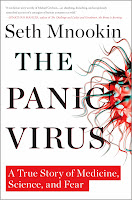
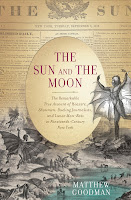
http://discover.halifaxpubliclibraries.ca/?q=title:%22media%20mediocrity%22zurawskihttp://discover.halifaxpubliclibraries.ca/?q=title:%22panic%20virus%22sethhttp://discover.halifaxpubliclibraries.ca/?q=title:%22sun%20and%20the%20moon%22goodman

Media Mediocrity : waging war against science : how the television makes us stoopid!  (M) by Richard Zurawski

The Panic Virus : a true story of medicine, science, and fear  (M) by Seth Mnookin

The Sun and the Moon : the remarkable true account of hoaxers, showmen, dueling journalists, and lunar man-bats in nineteenth-century New York (M) by Matthew Goodman


Thursday, November 7, 2013

Batten Down the Hatches - historic storms

I recently completed Jerry Lockett's The Discovery of Weather: Stephen Saxby, the tumultuous birth of weather forecasting, and Saxby's gale of 1869 (M).  It is a very entertaining and informative book. I also gained a greater respect for the power of nature and the resiliency of our forebearers.

The first half of the book traces the history of weather forecasting, all the way from the early astrology based theories, to the early almanacs, to the slow development of meteorology as an accepted science. This history is surprising rich, with many brilliant, stubborn and colourful personalities competing to be first to unravel the secrets of the weather. The quest wasn't just for personal glory though, as the amount of lives lost to storms in 17th century was absolutely staggering and was a great incentive to develop some sort of forecasting system.

The second part of the book traces the actual impact of the storm, i.e. Saxby's Gale, on the Maritimes. If you are the type of person who can enjoy watching the Weather Network at all, you'll absolutely love this part. The stories of the devastating damage and heroic survival are both frightening and awe inspiring.

In a simlar vien, here are two new books about the August Gale of 1927, another infamous storm that devastated many parts of Atlantic Canada.

Thursday's Storm: the August gale of 1927 (M)
by Darrell Duke

"When the crew of the fishing schooner Annie Healy left their home port of Fox Harbour, Placentia Bay, on Wednesday, August 17, 1927, no one could have imagined what fate held in store for them. Times were hard in Newfoundland that year. On shore, wives of the crew were often worked to exhaustion, even more so while their men were at sea. Most had lost parents, siblings, or children to tuberculosis. Each family had at least one tragic story. But when a hurricane struck Placentia Bay on August 25 of that year, a tragedy unlike any they had lived through would unite these people in ways untold. Now, eighty-six years later, the full story of the ill-fated vessel and her crew is told for the first time. The closeness of the crew and their families, and how they worked together to ensure their little community survived, is relived through the memories of children of the crew, stories passed down from their mothers, and reports from the last men to see the schooner afloat"--Provided by publisher.

The August Gales: the tragic loss of fishing schooners in the North Atlantic, 1926 and 1927
(M)
by Gerald Hallowell

Three different fishing communities, three different countries, but in their pursuit of fish on the banks they would have much in common, including the terrors of the North Atlantic storms. The August Gales is a richly detailed history of the banks fishery, the perils of the North Atlantic, and more specifically, the three powerful, and ultimately deadly, August storms that devastated not only an industry, but entire communities. The great gale of 1873, which struck near the eastern mainland of Nova Scotia, was only a prelude to the gales of 1926 and 1927, which brought unthinkable grief to the towns of Lunenburg and Gloucester as well as the island of Newfoundland. (On one fateful day, a woman in the village of Blue Rocks, near Lunenburg, lost her husband, two of his brothers, and three of her own brothers.) Impeccably researched and with over 40 black and white images, The August Gales is a fascinating and at times moving account of the schooners that made their living, and met their end, in the famed North Atlantic gales.


Sunday, October 13, 2013

Learning About the "God Particle"

This is the season for Nobel Prizes.  Earlier in the week we highlighted Alice Munro's big award.  Concidentially, I had already  planned a different post about Nobel Prize winners, namely the Physics prized award to Peter Higgs and Francois Englert for their work on the Higgs Boson, an aspect elementary physics that explains how elementary matter attained the mass to form stars and planets.

If like me, you are intrigued to learn more about this so called God Particle, checkout one the non-fiction titles listed below.  Just for fun, there are also two related novels for your consideration.

Higgs: the invention and discovery of the 'God particle' (M)
by  Jim Baggott

The hunt for the Higgs particle has involved the biggest, most expensive experiment ever. So what is this particle called the Higgs boson? Why does it matter so much? What does this new particle tells us about the Universe? And was finding it really worth all the effort? The short answer is yes, and there was much at stake: our basic model for the building blocks of the Universe, the Standard Model, would have been in tatters if there was no Higgs particle. The Higgs field had been proposed as the way in which particles gain mass - a fundamental property of matter. Little wonder the hunt and discovery have produced such intense media interest. Here, Jim Baggott explains the science behind the discovery, looking at how the concept of a Higgs field was invented, how it ispart of the Standard Model, and its implications on our understanding of all mass in the Universe.


The Particle at the End of the Universe: how the hunt for the Higgs boson leads us to the edge of a new world (M)
by Sean Carroll

"When the media announced in early July 2012 that researchers had finally confirmed the existence of the elusive Higgs boson, aka the God particle, physicists around the world hailed the discovery as a major scientific breakthrough. To California Institute of Technology researcher Carroll (From Eternity to Here, 2010), the event gave another opportunity to demonstrate what he does best, translating complicated ideas into lay-friendly language. In describing how the Higgs boson was detected after decades of theoretical speculation, Carroll covers a wide swath of science, from the Big Bang to quantum mechanics, as well as the thorny politics behind funding the Large Hadron Collider in Switzerland, where experiments established the particle's existence. Along with an overview of abstract concepts like supersymmetry, Carroll more lightheartedly explains why Hollywood loves science and why the world wasn't likely to end if the collider inadvertently created a mini-black-hole. A first-rate physics guide that enlarges our understanding of the universe we live in" - Booklist

The Infinity Puzzle: how the hunt to understand the universe led to extraordinary science, high politics and the large Hadron Collider (M)
by Frank Close

"Speculation is rife that by 2012 the elusive Higgs boson will be found at the Large Hadron Collider. If found, the Higgs boson would help explain why everything has mass. But there's more at stake-what we're really testing is our capacity to make the universe reasonable. Our best understanding of physics is predicated on something known as quantum field theory. Unfortunately, in its raw form, it doesn't make sense-its outputs are physically impossible infinite percentages when they should be something simpler, like the number 1. The kind of physics that the Higgs boson represents seeks to "renormalize" field theory, forcing equations to provide answers that match what we see in the real world. The Infinity Puzzle is the story of a wild idea on the road to acceptance. Only Close can tell it" - publisher

A Hole in Texas : a novel (M)
by Herman Wouk

Still working more than 50 years after he won the Pulitzer for The Caine Mutiny, and more than 30 years after The Winds of War, Wouk, now nearly 90, has license to write what he pleases: in this case, a light, sprightly story about lost love, high-energy physics and the machinations of Washington. At 60, physicist Guy Carpenter is happily married and the father of two, including a new baby. In the late 1980s and early '90s, he worked on the Superconducting Super Collider, a gigantic federally funded project in Texas aimed at finding the elusive Higgs bosun subatomic particle. Congress pulled the plug on the SSC in 1993-in real life as well as in the novel-professionally stranding Carpenter and leaving the Higgs bosun undiscovered. Ten years later, Carpenter has gotten his life back in order, but when a group of Chinese scientists publish a paper claiming to have discovered the Higgs bosun, his quiet existence is upended. Not only was Carpenter a key staff member on the SSC, he has sustained a secret romance since graduate school with Wen Mei Li, the chief scientist on the Chinese team.

Flashforward (M)
by Robert J. Sawyer

A team of physicists trying to prove the existence of a theoretical particle inadvertently shifts the consciousness of humankind forward 20 years. Only two minutes are "lost," but memories of the future inspire new cults, seemingly illogical stock market speculations, and a host of new patents. Rivalry between two of the male physicists for one woman heats up, since the flash-forward has shown her to be married to the "wrong" man. One of the rivals, Lloyd Simcoe, foresees his own murder, though not his murderer. Even though the event is 21 years away, Lloyd is panic-stricken and searches worldwide for clues in the visions of others. In the end, these brief glimpses of the future prove addictive, and a new team repeats the experiment in a more controlled fashion, which treats the reader to visions of an apocalyptic, almost Wellsian future. There is also Simcoe's sad avoidance of his own death, which he accomplishes by becoming painstakingly cautious. The reliable Sawyer turns in another solid performance