Showing posts with label nature. Show all posts

Saturday, April 16, 2016

The Buzz About Bees Onscreen


Bees have always been fascinating to me, with their interesting social colonies, their ability to keep our agricultural systems going through pollination, their cute fuzzy bodies, and—of course—their delicious honey. And as we learn more about them, the more remarkable and complex they become, and the more we discover just how much our ecosystem relies on their hard work.

A free program on this topic, Beekeeping Basics, will be held at the Halifax Central Library on Saturday, April 30. In preparation, here are some documentaries that investigate and celebrate these amazing insects:

Queen of the Sun: what are the bees telling us?

This informative documentary delves into the long relationship humans have had with honeybees: imagery of bees has been drawn on prehistoric cave walls, ancient Egyptian pharaohs were entombed with honey pots, and in many cases bees were seen as religious symbols. While celebrating our symbiotic relationship through interviews with a wide variety of beekeepers, the documentary doesn’t shy away from showing the various ways that humans may have interfered too much with nature, such as using pesticides that hurt bees and other vital pollinators while contaminating their honey, planting just one crop over a wide area (this leads to increased blights and prevents pollinators from getting nutrients), stressing the bees by transporting them thousands of miles on trucks, using too many antibiotics, and limiting genetic diversity by artificially inseminating queen bees.

Vanishing of the Bees

Narrated by Ellen Page, this profoundly disturbing documentary focuses on the alarming phenomenon known as Colony Collapse Disorder—what seems like a worldwide plague that causes entire colonies of bees to suddenly disappear. In just a few years, millions of beehives have been lost in this way, costing the economy billions of dollars in the loss of these crucial pollinators. Speaking with various beekeepers, both those at huge industrialized companies and smaller organic hobby farms, the filmmakers investigate many possible causes of this disorder and suggest ways to help bees overcome it.

Colony: the endangered world of bees

This gorgeously-filmed documentary follows several migratory beekeepers who have brought their boxes of beehives to California for the pollination of almond trees. This type of commercial beekeeper moves thousands of bees around on trucks throughout North America, following the pollination seasons of various crops. As the documentary explains, the bees’ greatest value is not in honey or beeswax but in their pollination abilities, without which we would lose about a third of all fruits and vegetables. They then delve into the tragedy and possible causes of Colony Collapse Disorder, which is responsible for killing huge amounts of bees—over 30% of North American bees in just the past few years. However, even if the bees were healthy, another problem facing the industry is very demanding work for very low prices, so it is difficult to stay in business even under the best conditions. I liked how the filmmakers emphasize that our food doesn’t just come from the store; it has a long history before that, and sometimes we can forget that we are part of the food chain, too.

If you are interested in learning how to keep your own beehive, check out these resources:

Top-Bar Beekeeping

In this instructional DVD, married couple Les Crowder and Heather Harrell provide details about how to organically raise bees. They include practical information about using a smoker (to calm the bees), opening the hive, doing maintenance, preventing swarms, expanding the beehive, and harvesting honey and beeswax without needing to buy fancy equipment. Unlike other beehive designs, top-bar beekeeping does not use a metal frame, so the bees build the honeycombs organically down from a wooden bar. Crowder and Harrell even include a section on the best flowers to plant if you want to attract bees and provide a diversity of nectar and pollen. They stress the importance of listening to bees, allowing them to teach us instead of forcing them into conditions that just maximize honey output, ending with the line, “Honeybees enrich our gardens and our lives.”

Save the Bees with Natural Backyard Hives: the easy and treatment-free way to attract and keep healthy bees by Rob and Chelsea McFarland

With plenty of colour pictures, the authors promote treatment-free apiculture (the technical name for beekeeping) as a set of principles. They explain that our understanding of honeybees is ever-evolving and that the bees need help in order to continue their work. The book focuses on the urgency of small, personal solutions to big problems, recognizing that beekeeping is ultimately not about honey or profit but about survival—both of the bees and of humankind. But I liked that it also highlights the principle that beekeeping should be fun.

The Rooftop Beekeeper: a scrappy guide to keeping urban honeybees by Megan Paska

For those in a more urban environment, this book provides advice, checklists, guides to community resources, and lots of recipes from an urban apiarist. Living in Brooklyn, New York, the author notes that at first she was terrified of bees and didn’t realize their importance to the urban environment: “the concrete jungle is not exactly the backdrop one imagines as a honeybee heaven.” But she quickly overcame her fear and discovered that city bees actually have a great chance of thriving in big cities, and the rooftop beehives mostly go unnoticed by neighbours.

If you want to know more about bees and beekeeping, check out the upcoming library program Beekeeping Basics on April 30!

Monday, August 10, 2015

Dolphin and Whale Documentaries


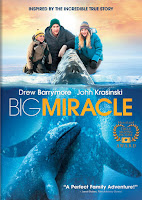
Ever since I was a child watching movies like Free Willy and Flipper (and more recently family-friendly films like (Big Miracle, Dolphin Tale, and Whale Rider), I’ve been captivated by stories of highly intelligent marine mammals: whales and dolphins—or cetaceans, for their scientific name! Since then, there has been more attention paid to these creatures in the wild, including how they play and strategize, how human activities affect them, and what we can learn from them. While I enjoy reading books about dolphins and whales, I also love watching nature documentaries: in these movies, the world under the sea comes to life thanks to the work of many skilled filmmakers and high-definition underwater cameras. They reveal amazing sights previously hidden to us and reinforce how humans can be both a source of danger and of hope to the ocean. Check out these fascinating dolphin and whale documentaries:

http://discover.halifaxpubliclibraries.ca/?q=title:big%20miracle http://discover.halifaxpubliclibraries.ca/?q=title:dolphin%20tale http://discover.halifaxpubliclibraries.ca/?q=title:whale%20rider

Ocean Giants

Narrated by Stephen Fry, this 3-episode documentary series features many different types of whales, including the blue whale, the largest known animal to have ever lived on Earth—bigger even than the dinosaurs! This series is unusual because it explicitly tells the story from the perspective of the cameramen, those who are usually silent behind the camera. Experienced underwater cameramen Doug Allan and Didier Noirot are some incredibly brave people, venturing into Arctic temperatures and getting as close as possible to such huge creatures who could seriously injure or even kill them with a flick of their tail.

Blackfish

Although I loved visiting Sea World as a kid and sitting in the “splash zone” at Shamu Shows, I would feel seriously conflicted about going back after watching this profoundly disturbing documentary. The film covers a killer whale in captivity named Tilikum, who has been responsible for killing several of his trainers. Such attacks happen often in captivity but are rare in the wild. The filmmakers posit that keeping such intelligent wild creatures in small artificial tanks is the height of cruelty. One of the most haunting images in the film is that of the collapsed dorsal fins that many orcas in captivity develop, which are unusual to see in the wild (hypothesized to be because the whales in captivity don’t have enough space to swim around and keep their fins upright).

If you saw Blackfish and want to learn more, check out the book that spawned the influential documentary, Death at SeaWorld: Shamu and the dark side of killer whales in captivity.

Disneynature Oceans

Pierce Brosnan narrates this documentary, which was filmed all throughout the globe, touching on creatures in each of the five oceans. While whales and dolphins are heavily featured, the film includes many other oceanic dwellers, such as sharks, birds, crabs, turtles, otters, and the lovely colourful sea slug called the “Spanish dancer.” All films about the ocean tend to be visually stunning, but this one is particularly so. I would have loved to see it in the theaters or even on an IMAX big screen. In addition to presenting scenes of wonder, though, the film meditates on the current state of the oceans due to the effects of pollution, rising sea temperatures, overfishing, and other environmental problems, ending with the line, “Instead of asking, ‘What exactly is the ocean?’ maybe we should be asking, ‘Who exactly are we?’”

The Cove

Awarded the Oscar for Best Documentary in 2010, this documentary works more like a fast-paced thriller with the filmmakers trying to get photographic evidence of a horrifying secret dolphin hunt that goes on in the small cove of Taiji in Japan. The documentary is told from the perspective of activist Ric O’Barry, a former dolphin trainer who helped capture the wild dolphins who shared the lead role in the television series Flipper (based on the movie of the same name). After the movie and TV series helped to popularize dolphin shows, O’Barry became consumed with guilt and remorse when he witnessed how captivity caused the dolphins such suffering. In Taiji, the filmmakers go into detail about how those involved in the hunt attempt to suppress reporting and prevent locals from knowing what goes on, and after seeing the visceral and distressing footage, I understood why. I appreciated how the filmmakers put the hunt into context and went into detail about whaling practices and what happens to the dolphin meat, which is dangerously high in mercury.

The Whale

Produced by Ryan Reynolds and Scarlett Johansson, this heartbreaking documentary tells the story of Luna, a two-year-old orca who in 2001 was separated from his family in Nootka Sound, off the coast of Vancouver Island. Because killer whales have strong social ties to each other and Luna was alone, he decided to make friends and play with local fishermen and townspeople, coming up to boats in the Sound and begging for attention. Watching the footage, it was clear that Luna had emotions and was lonely. But whether all that contact with humans was good for him was less clear. Luna eventually found himself in the middle of a political controversy between the Department of Fisheries and Oceans, who wanted to take him away into captivity, and the local people, including those of the Mowachaht/Muchalaht First Nations, who believed Luna was a reincarnation of their former chief and wanted him to be left alone. Regardless of the politics, though, it was very moving to see the depth of the connections that Luna formed with the people of Nootka Sound.

If you want to learn more about Luna, check out the book, The Lost Whale: the true story of an orca named Luna.

Tuesday, May 6, 2014

Staff Pick - Between Man and Beast by Monte Reel

Between Man & Beast by Monte Reel was a near perfect non-fiction reading experience for me. It hit on most of my major appeals as a non-fiction reader:  intriguing, sympathetic characters; compelling social history, tension building story lines; and fascinating natural history.  Monte Reel easily achieved all of this for me.

http://discover.halifaxpubliclibraries.ca/?q=title:%22between%20man%20and%20beast%22reel
It is the story of Paul du Chaillu, an Victorian era explorer who was the first Westerner to bring back specimens of gorillas to the US and England. Du Chaillu was a enigmatic individual, rather hard to pin down in terms of his background and motivations, which could be a real barrier to success in the times. Nevertheless, he became both a darling and villain of Victorian London. The amount of nasty back stabbing among society's social and scientific elite was brutal. Apparently, libelous statements were able to be bandied about with reckless abandon. And I must say that the level of evident racism was extremely shocking. This was also the time that Darwin's theory of evolution was being hotly contested. And of course, Du Chaillu's gorillas were often drawn into this emotional debate by all sides.

Equally fascinating was the impact of gorillas in Victorian London. It became a huge fad, with everyone trying to capitalise on the excitement.  People lined up for hours to see the specimens, theatre productions rushed to create new plays featuring gorillas, political cartoonists in particular loved using gorillas as caricatures. Images and stories of gorillas were everywhere.  I guess you could say it went viral.

http://en.wikipedia.org/wiki/File:French_explorer_Paul_du_Chaillu_at_close_quarters_with_a_gorilla.jpg

However, the life story of Paul du Chaillu was the real star attraction of the book.  He was obviously a very driven, brilliant, and capable explorer.  He desperately wanted to be accepted as a member of society's elite, both academically and socially.  He work ethic was astounding.  The travails of his explorations would have defeated many of a lesser explorer.  So to have his exploits and achievements dismissed and ridiculed by competitors who had never been to Africa must of been devastating to him.

His ongoing battles for recognition, including planning a second expedition, are the part of the story where the the readers discovers just how petty and self-serving many the scientific and societal elite of the time could behave.  Nasty business indeed, but rather entertaining for the reader.

I feel that Between Man & Beast would be a good reading suggestion for fans of Simon Winchester and Erik Larson.

~ David

“The gorilla’s very existence suggested—at just the time Charles Darwin was also suggesting—heretical ideas about the origin and nature of mankind. And the man chiefly responsible for bringing this animal to worldwide attention was Paul Du Chaillu, the central character and driving riddle of Monte Reel’s…tale of scientific buccaneering…Intriguing…Rattles along with fine, wacky momentum”
--The New York Times Book Review

Wednesday, October 23, 2013

Urban Tigers Two: more tales of a cat vet by Kathy Chisholm

Kathy Chisholm will be reading from
Urban Tigers Two: more tales of a cat vet
on Wednesday, October 23 @ 7 pm.
Everyone is welcome.


For everyone who fell in love with the cast of characters in Urban Tigers you’re in for a real treat! Urban Tigers Two: more tales of a cat vet (M) is here and tells the continuing story of Dr. Emily McBride and the many adventures at the fictional Ocean View Cat Hospital. All of your favorites are back, including the beloved Dr. Hughie Doucette, the caring and loving staff at the clinic, and Emily’s mother who is still trying to find her a husband.

Kathy Chisholm is a great storyteller who combines humor, compassion, and caring in her tales. She doesn’t hesitate to show you the sad side of work in a vet clinic and the tough decisions that caring animal caregivers must make on a daily basis. But Chisholm’s writing also give us hope that there are still caring people out there who don’t see cats as disposable creatures and who are willing to go to great lengths to see them treated humanely and responsibly. If you love cats (or any animal) and great stories then pick up Urban Tigers Two. You’ll laugh, you’ll cry, but mostly you’ll marvel at the great lengths pet owners will go to when their four-legged friends are in need of care.


By the way, you might recognize the book cover cat as the well-known mayoralty candidate Tuxedo Stan. He ran on a platform of responsible pet ownership and affordable spaying and neutering facilities. While Stan recently lost his battle with cancer, his brother Earl Grey is continuing his political work and ran a spirited race for Premier of Nova Scotia.


Thursday, October 3, 2013

Staff Pick - Watership Down by Richard Adams

I recently read the novel Fauna (M) by Alissa York, which is the One Book Nova Scotia selection for 2013. One of the many intriguing parts of this wonderful novel was the role of classic literature in the story. Rudyard Kipling's The Jungle Book (M) is featured prominently, as is Watership Down (M) by Richard Adams.

Coincidentally, just as I finished reading Fauna, a brand new copy of Watership Down was put on display in the children's section at the Library. What the heck I thought, I'll give this a quick scan on my coffee break.

Within the first chapter I was hooked.  What a great reading experience. Although it is sometimes thought of as a children's book, it really is a book for all ages.

It is a story about a group of rabbits in search of a new home. The novel features fantastic characterization, tension filled story lines, great pacing and insightful writing about the lives of animals. And while the novel is anthropomorphic in nature, the rabbits are still rabbits. They don't wear clothes or ride bicycles.  Other than the ability to talk to each other, they are real rabbits. I am sure that this is part of the reason the novel resonated so much with me. I felt like I gained a whole new understanding of rabbits. And I'll never forget Fiver and Hazel.

In Fauna, the characters often gather together after supper to listen to The Jungle Book being read aloud. I think Watership Down would also make a great read-a-loud book.  Why not try it out on your friends and family?

Watership Down has won numerous awards, has been adapted as an animated film and recently was chosen by the British public as one of the best books of all time in The Big Read.

Highly recommended!
David

btw, Alissa York will be reading from Fauna at the Spring Garden Road Memorial Public Library on Sunday Oct 6th, 2:00 pm. I hope to see you there.

Wednesday, June 26, 2013

Books to Crow About

Gifts of the Crow: how perception, emotion, and thought allow smart birds to behave like humans (M)
by John Marzluff and Tony Angell

"In this astonishing, beautifully illustrated look at the uncanny intelligence and emotions of crows, professor of Wildlife Science at the University of Washington John Marzluff teams up with artist and fellow naturalist Tony Angell to offer an in-depth look at these incredible creatures. Redefining the notion of "bird brain", crows and ravens are often called feathered apes because of their clever tool-making and their ability to respond to environmental challenges, including those posed by humans." - publisher

Crows: encounters with the wise guys of the avian world (M)
by Candace Savage

"Crows are cool. These enormous black-clad songbirds are extremely social, solve puzzles, play with toys, steal from wolves (and the family dog), and generally show themselves to be among the brainiest animals on the planet. As science writer Savage says in this lively celebration of the world's crows and ravens, they make a statement just by being themselves..." Booklist

Crow Planet : essential wisdom from the urban wilderness (M) by Lyanda Lynn Haupt

"Haupt (Rare Encounters with Ordinary Birds) delivers a delightful meditation on our role in the natural world. By focusing on the proliferation of the American crow, she provides a rich context for exploring the relationship between humans and nature. Crows are one of the most easily identifiable, intelligent, and prolific birds whose abundance stems from their unique ability to cohabitate with humans. Haupt contends that with a little effort, humans can tap into the natural environment even in the most urban of areas. Verdict Highly recommended for birders but especially fans of Bernd Heinrich (The Mind of a Raven) and Marie Winn (Central Park in the Dark)" - Library Journal

fiction:

One Crow Sorrow (M)
by Vernon Oickle

Something wicked and dark has descended on the small town of Liverpool, Nova Scotia. In one week, an entire family is nearly decimated and the community is shattered by the evil in its midst.... On a damp March morning, the unexpected arrival of young Maggie Collins coincides with the sudden appearance of thousands of crows that descend upon Liverpool, covering it with a dark shroud of foreboding. The large ebony birds have visited the town in the past, and the residents understand that their return is a sinister omen. As the town is shaken to its very foundation, Maggie Collins goes about her mission.

Raven's End: a tale from the Canadian Rockies (M)
by Ben Gadd

Spiritual, philosophical, political, and beautifully written, Raven’s End is an exciting novel about the lives of ravens. Over the course of four seasons in the spectacular Rocky Mountains, Raven’s End follows the adventures of Colin, a young raven who arrives unexpectedly to join the Raven’s End flock. His newfound friends include Greta, the wise elder; lifelong nestmates Molly and Zack; spunky teenagers, Sarah and Brendan; and the two scoundrels, Dolus and Garth. ... Written with graceful prose and a passion for the natural world, Raven’s End will delight readers from ages 9 to 95.

memoir:

Seven Ravens: two summers in a life by the sea (M)
by Lesley Choyce

"This collection is a philosophical and perceptive memoir of a time in author Lesley Choyce's life when he'd been knocked down "several rungs on the wobbly ladder I was climbing." On this journey we meet orphaned raccoons and lost arctic birds, revisit some of the history of Nova Scotia and are accompanied by the wisdom of ancient writers. This is a fascinating, meandering work, filled with gentle humour and unabashed joy at the beauties of the natural world." publisher