Showing posts with label translations. Show all posts

Thursday, April 7, 2016

From Another Land - new novels in translation


All In by Simona Ahrnstedt

"In the cutthroat world of Sweden's financial elite, no one knows that better than corporate raider David Hammar. Ruthless. Notorious. Unstoppable. He's out to hijack the ultimate prize, Investum. After years of planning, all the players are in place; he needs just one member of the aristocratic owning family on his side--Natalia De la Grip. Elegant, brilliant, driven to succeed in a man's world, Natalia is curious about David's unexpected invitation to lunch. Everyone knows that he is rich, dangerous, unethical; she soon discovers he is also deeply scarred. The attraction between these two is impossible, but the long Swedish nights unfold an affair that will bring to light shocking secrets, forever alter a family, and force both Natalia and David to confront their innermost fears and desires." publisher

The Lion's Mouth by Anne Holt and Berit Reiss-Andersen

"Hanne Wilhelmsen is on the case when someone murders the prime minister of Norway. Less than six months after taking office, the Norwegian Prime Minister is found dead. She has been shot in the head. But was it a politically motivated assassination or personal revenge?  Hanne Wilhelmsen, Chief Inspector of the Norwegian Police, is on leave in California but when the death shakes the country to its core, she knows she can’t remain on the sidelines of such a crucial investigation. The hunt for the Prime Minister’s killer is complicated, intense, and grueling. When secrets begin to unravel from the Prime Minister’s past, Hanne and her partner, Billy T., must piece together the crime before a private tragedy becomes a public outcry, in what will become the most sensitive case of their career." publisher

Sudden Death by Alvaro Enrigue

"The poet and the painter battle it out in Rome before a crowd that includes Galileo, Mary Magdalene, and a generation of popes who would throw the world into flames. In England, Thomas Cromwell and Henry VIII execute Anne Boleyn, and her crafty executioner transforms her legendary locks into those most-sought-after tennis balls. Across the ocean in Mexico, the last Aztec emperors play their own games, as the conquistador Hernán Cortés and his Mayan translator and lover, La Malinche, scheme and conquer, fight and f**k, not knowing that their domestic comedy will change the course of history. In a remote Mexican colony a bishop reads Thomas More’s Utopia and thinks that it’s a manual instead of a parody. And in today’s New York City, a man searches for answers to impossible questions, for a book that is both an archive and an oracle. Álvaro Enrigue’s mind-bending story features assassinations and executions, hallucinogenic mushrooms, bawdy criminals, carnal liaisons and papal schemes, artistic and religious revolutions, love and war." publisher

The Killing Forest by Sara Blaedel

"Following an extended leave, Louise Rick returns to work at the Special Search Agency, an elite unit of the National Police Department. She's assigned a case involving a fifteen-year-old who vanished a week earlier. When Louise realizes that the missing teenager is the son of a butcher from Hvalsoe, she seizes the opportunity to combine the search for the teen with her personal investigation of her boyfriend's long-ago death . . . Louise's investigation takes her on a journey back through time. She reconnects with figures from her past, including Kim, the principal investigator at the Holbaek Police Department, her former in-laws, fanatic ancient religion believers, and her longtime close friend, journalist Camilla Lind. As she moves through the small town's cramped network of deadly connections, Louise unearths toxic truths left unspoken and dangerous secrets." publisher

Endgame by Ahmet Altan

"In this sweeping story, a novelist travels to a small town near the coast to write a murder mystery and instead, through a series of twists and turns, becomes a murderer himself. Over the course of one night, he reveals what drove him to murder, including a love affair, a dangerous friendship with the town’s mayor, and an unwitting involvement in the power struggle among the townsfolk who believe that treasure is buried in the nearby hills. As with all of Altan’s work, the story is rife with fear, courage, evil, virtue, loyalty, betrayal, pleasure, sins, sex, dreams and solitude, all drawing us back to the power of the written word and the complexity of human relationships." publisher

Friday, November 13, 2015

Staff Pick - The Violin of Auschwitz by Maria Angels Anglada

Daniel, a Jewish luthier, tells his Nazis captors that he is a carpenter and a cabinetmaker, thinking that this will make him more useful to them than as a maker of fine violins. He stumbles upon a musician playing badly and saves him serious punishment by speaking up and declaring the instrument to be damaged. He is tasked with repairing the violin and feels his humanity returning as he practices his craft once again. His success leads to a cruel wager. If Daniel builds a violin within a certain time frame the barbaric doctor will give the camp Kommandant a case of burgundy; if he his is unsuccessful the doctor will get Daniel for his insidious experiments.

The Violin of Auschwitz by Maria Angels Anglada is a beautiful little book that has tremendous emotional impact. Amidst the cruelty and arbitrary rules of the concentration camp, Daniel is able to focus on his talent rather than on the atrocities that surround him. His essential kindness is never lost and he remains compassionate to those around him. He takes comfort in the fact that his fiance and niece are in better circumstances than he. It is a story of contrasts. As he starves he imagines his fiance eating bread with butter. Despite the beatings, starvation, and torture in the name of medicine, there is music and craftsmanship. The prisoners live in an atmosphere of anxiety and fear. They know they will suffer punishment for unknown offences, they know that prisoners vanish and never return and they imagine much worse. Despite this Daniel retains his essential humanity and dignity.

The Violin of Auschwitz was first published in Catalan in 1994. It has attracted international attention as it has been translated. The author, Maria Angels Anglada, completed this novel towards the end of her life, passing away in 1999. 

This subtle and lyrical story has inspired me to try other Catalan writers.

A Not So Perfect Crime by Teresa Solana - "Another day in Barcelona, another slimy politician’s wife is suspected of infidelity. Lluis Font discovers a portrait of his wife in an exhibition that leads him to conclude he is being cuckolded by the artist. Concerned only about the potential political fallout, he hires twins Eduard and Pep, private detectives with a supposed knack for helping the wealthy with their “dirty laundry.” Their office is adorned with false doors leading to nonexistent private rooms, a mysterious secretary who is always away, and a broken laptop computer picked up on the street. The case turns ugly when Font’s wife is found poisoned by a marron glacé from a box of sweets delivered anonymously. This is a deftly plotted, bitingly funny mystery novel. A satire of Catalan politics and a fascinating insight into the life and habits of Barcelona’s inhabitants, diurnal and nocturna." - publisher

Pandora in the Congo by Albert Sanchez Pinol - "It is 1914. In the heart of the Belgian Congo, Garvey, a bedraggled British manservant, emerges from the jungle. He is the lone survivor of a mining expedition in which both his masters have died, and all of the party's African porters have fled. With him, he carries two huge diamonds. From his prison cell in London, Garvey recounts his horrific and thrilling ordeal. Young Tommy Thomson, an aspiring novelist, is assigned to transcribe the story, and only he can untangle the extraordinary mysteries of the Garvey case" - publisher

Sunday, August 23, 2015

Staff Pick: Black Alley by Mauricio Segura

Okay, here’s the truth. I’ve been having a horrible time trying to write this post about Black Alley by Mauricio Segura. And I keep asking myself, why? I really liked this book: I thought it was well written, had a great story and an important message. However, the more I think about the book, the less I feel like I'm able to articulate my thoughts about it in a way that will do it justice. I find myself frozen in my attempts to describe it, which is weird, because it’s a book that I really want to have the opportunity to tell more readers about.

I’m going to ease myself into this, here's how the book jacket describes the story:

"In the Côte-des-Neiges area of Montreal, the first stop for many new immigrants, live people of more than 100 nationalities. Marcelo, the sensitive son of Chilean refugees, and Cléo, a shy boy from Haiti, find friendship on the track, winning a major relay race together. Years later, in the same streets, two violent gangs, the Latino Power and the Bad Boys, confront each other, and their leaders must decide whether they will be united by their childhood friendship, or divided by race.... "

There were a lot of things that grabbed my attention about this book. Despite my love for the great historical novels written by many Canadian authors, I frequently feel that there are less stories being told about modern Canada. Even though this book is actually set more than a decade ago (it was originally published in French in 1998) it feels very much as though it depicts life in Canada as it is now—highlighting stories of immigrants, multiculturalism and the changing makeup of Canadian society. I also feel that I read a lot of Canadian books that look at life in rural areas and small towns, but not as many urban ones—so Black Alley’s Montreal setting also interested me. Finally, I always seem to be drawn to stories of youth and coming-of-age, and the various ways that authors can depict that tumultuous time of life, which was certainly an appeal here too.

So that’s what made me want to read this book, here’s what I found when I did.

The novel opens in a crowded high school gymnasium where the principal has gathered the students to talk about recent incidents in the school that have arisen through ethnic tensions. In the rough and boisterous actions of the students—quick spats with one another, power games with the school monitors who are there to keep the peace, boos and shouts at the principal's words—we are immediately immersed in the world of the characters, and we stay immersed in that world. The characters—their conversations, thoughts and struggles—feel very real, as does the setting.

There is a lot in this book to praise—both plotwise and stylistically. The plot grows gradually through the everyday lives of the characters, flashing back to their childhoods, and arriving at a climax, that for the characters seems simultaneously inevitable and a shocking surprise.

Stylistically, Segura made some interesting choices that, for me, really enhanced the story. In part of the book, he uses 2nd person narration (if you haven’t encountered it before, the wikipedia explains it as “a narrative mode in which the protagonist or another main character is referred to by employment of second-person personal pronouns and other kinds of addressing forms, for example the English second-person pronoun "you".”). In the 2nd person parts of Black Alley, the story becomes extremely personal for the reader: the character is being addressed and talked to, but on some level it feels as though you—the reader—are also being addressed, or are at least a fly-on-the-wall in a private conversation.

A second stylistic choice is the that book tells it story in a number of languages. The bulk of the story is told in English (French originally but this is a translation) but it is peppered with incidences of the characters addressing each other in their first languages–Spanish and Haitian Creole. The storyline remains clear, but the setting is enhanced by the bits of meaning that are dropped out: you feel like you are on the street with the characters, hearing the multitude of languages that are spoken in an urban centre. In particular in the scenes of tension between the rival groups,this heightens the tension, because you (presumably like the members of the rival gang), don’t necessarily know what has just been said.

This is a book that has left me with a lot to mull over in my mind: about life in Canada, life in Quebec, about the challenges for new immigrants to this country and about the things that you take for granted when you were born and raised somewhere. But it also has left me thinking about the challenges of youth, how we grow up and form our identities, the opportunities we have or in other cases don’t, the choices we made when we were young and how decisions that seem to make sense at the time, can have terrible and lasting impacts. There are probably pages worth of other things that I could have said about this book as well, but you’ll have to read it yourself and discover what those might have been.

And because here at The Reader we like to do this kind of thing, here are a few books that might also interest you if this story sounds appealing.

The Fat Woman Next Door is Pregnant by Michel Tremblay: several sources have made comparisons between these two, on many levels, quite different books. Tremblay's novel also examines the lives of Montrealers at a particular place and time—in this case Mont-Royal in the 1940s. The two would make interesting companion pieces for people interested in the social history of the city. Like Black Alley this novel is translated from the original French.


The Outsiders by S.E. Hinton: although this book is based around clashes between economic groups, not cultural ones, I can't help but feel like there is a strong link here. If Black Alley's story of teen gang life and the difficulty of belonging appeals to you, you might want to revisit this classic.


More by Austin Clarke: for another take on the urban experience of immigrants—this time in Toronto. Clarke's book includes the reality of teen gangs, but focuses on the parent of a gang member. From the publisher "At the news of her son's involvement in gang crime, Idora Morrison collapses in her rented basement apartment. For four days and nights, she retreats into a vortex of memory, pain, and disappointment that unravels a riveting dissection of her life as a black immigrant to Toronto. "

Tuesday, January 20, 2015

Read Your Way Around the World - Polish fiction in translation


Phantoms of Breslau: an Eberhard Mock investigation by Marek Krajewski.

"Breslau, 1919: The hideously battered, naked bodies of four sailors are discovered on an island in the River Oder. When Criminal Assistant Eberhard Mock, back from the war, arrives at the scene to investigate, he finds an enigmatic note addressed to him insisting that he admit to past mistakes and become a believer. As he endeavors to piece together the elements of the brutal crime, Mock combs the brothels and drinking dens of the then still-German city of Breslau and is drawn into an insidious game: it seems that anyone he questions during the course of the investigation is destined to become the next victim. Meanwhile, Mock uncovers a secret society that has the Criminal Assistant himself clearly in its sights. Dark, sophisticated, and uncompromising, the distinctive Breslau series has already received broad critical acclaim. Phantoms of Breslau confirms Eberhard Mock as one of the most outrageous and original detectives in crime fiction." publisher

The Property by Rutu Modan

"Rutu Modan's second full-length graphic novel is a triumph of storytelling and fine lines. After the death of her son, Regina Segal takes her granddaughter Mica to Warsaw, hoping to reclaim a family property lost during the Second World War. As they get to know modern Warsaw, Regina is forced to recall difficult things about her past, and Mica begins to wonder if maybe their reasons for coming aren't a little different than what her grandmother led her to believe. Modan offers up a world populated by prickly seniors, smart-alecky public servants, and stubborn women--a world whose realism is expressed alternately in the absurdity of people's behavior and in the complex consequences of their sacrifices. Rutu Modan was born in Israel in 1966. She lives in Tel Aviv." Discover

A Grain of Truth by Zysmunt Miloszewski

"It is spring 2009, and prosecutor Szacki is no longer working in Warsaw—he has said goodbye to his family and to his career in the capital and moved to Sandomierz, a picturesque town full of churches and museums. Hoping to start a "brave new life," Szacki instead finds himself investigating a strange murder case in surroundings both alien and unfriendly.The victim is found brutally murdered, her body drained of blood. The killing bears the hallmarks of legendary Jewish ritual slaughter, prompting a wave of anti-Semitic paranoia in the town, where everyone knows everyone. The murdered woman's husband is bereft, but when Szacki discovers that she had a lover, the husband becomes the prime suspect. Before there's time to arrest him, he is found murdered in similar circumstances. In his investigation Szacki must wrestle with the painful tangle of Polish–Jewish relations and something that happened more than sixty years earlier." publisher


The Doll by Boleslaw Prus

"At the center of the book are three men from three different generations. Prus’s fatally flawed hero is Wokulski, a successful businessman who yearns for recognition from Poland’s decadent aristocracy and falls desperately in love with the highborn, glacially beautiful Izabela. Wokulski’s story is intertwined with those of the incorrigibly romantic old clerk Rzecki, nostalgic for the revolutions of 1848, and of the bright young scientist Ochocki, who dreams of a future full of flying machines and other marvels, making for a book of great scope and richness that is, as Stanisław Barańczak writes in his introduction, at once “an old-fashioned yet still fascinating love story . . . , a still topical diagnosis of society’s ills, and a forceful yet subtle portrayal of a tragically doomed man." publisher


Pornografia by Witold Gombrowicz

"The place is Poland, in the early years of the German occupation. Pornografia's narrator, an author named Witold Gombrowicz, meets a swarthy and overly formal man named Fyderyk at a Warsaw house party, and the two soon become engaged in a business of a dubious (if not downright criminal) nature. When an acquaintance of theirs, a corpulent provincial landowner named Hipolit, requests that they come stay with him to discuss some of his city affairs, it is not hard to convince them to leave the claustrophobic city for the fresh air of the countryside. Once in the country, however, Fryderyk and Witold quickly bore of their surroundings -- all of their surroundings, that is, but the two teenagers who are staying on Hipolit's farm: Henia, Hipolit's daughter; and Karol, the son of one of the farmhands, who has just returned from a stint in the Polish resistance movement." publisher

Sunday, November 2, 2014

Read Your Way Around the World - Japanese Novels in Translation


Read Your Way Around the World invites you to Japan.

Enjoy these recently published novels that have been translated from Japanese into English.


Malice: a mystery by Keigo Higashino

" Acclaimed bestselling novelist Kunihiko Hidaka is found brutally murdered in his home on the night before he’s planning to leave Japan and relocate to Vancouver. His body is found in his office, a locked room, within his locked house, by his wife and his best friend, both of whom have rock solid alibis. Or so it seems. At the crime scene, Police Detective Kyochiro Kaga recognizes Hidaka’s best friend, Osamu Nonoguchi. Years ago when they were both teachers, they were colleagues at the same public school. Kaga went on to join the police force while Nonoguchi eventually left to become a full-time writer, though with not nearly the success of his friend Hidaka. As Kaga investigates, he eventually uncovers evidence that indicates that the two writers’ relationship was very different that they claimed, that they were anything but best friends." publisher


Colorless Tsukuru Tazaki and His Years of Pilgrimage by Haruki Murakami

"Colorless Tsukuru Tazaki and His Years of Pilgrimage centers on a devastating emotional betrayal and its consequences. Tsukuru Tazaki belongs to a tight-knit group of five friends in high school--three boys and two girls who form a perfect circle they imagine will stay together forever. But when Tsukuru returns home from college in Tokyo, he finds himself inexplicably rebuffed by the group. Something has changed, but nobody, not even his closest friends, will tell him what. Years later, Tsukuru, now a successful engineer, begins dating an older woman named Sara and confesses to her the shadow this betrayal has cast over his life. Sara urges Tsukuru to try to find his old group and to try to solve the mystery that has haunted him all these years: why did they suddenly turn on him?" publisher


Evil and the Mask by Fuminori Nakamura

"When Fumihiro Kuki is eleven years old, his elderly, enigmatic father calls him into his study for a meeting. "I created you to be a cancer on the world," his father tells him. It is a tradition in their wealthy family: a patriarch, when reaching the end of his life, will beget one last child to cause misery in a world that cannot be controlled or saved. From this point on, Fumihiro will be specially educated to learn to create as much destruction and unhappiness in the world around him as a single person can. Between his education in hedonism and his family's resources, Fumihiro's life is one without repercussions. Every door is open to him, for he need obey no laws and may live out any fantasy he might have, no matter how many people are hurt in the process. But as his education progresses, Fumihiro begins to question his father's mandate, and starts to resist." publisher


A True Novel by Minae Mizumura

"A True Novel begins in New York in the 1960s, where we meet Taro, a relentlessly ambitious Japanese immigrant trying to make his fortune. Flashbacks and multilayered stories reveal his life: an impoverished upbringing as an orphan, his eventual rise to wealth and success—despite racial and class prejudice—and an obsession with a girl from an affluent family that has haunted him all his life. A True Novel then widens into an examination of Japan’s westernization and the emergence of a middle class. The winner of Japan’s prestigious Yomiuri Literature Prize, Mizumura has written a beautiful novel, with love at its core, that reveals, above all, the power of storytelling."

Edge by Koji Suzuki

"Edge begins with a massive and catastrophic shifting of the San Andreas fault. The fears of California someday tumbling into the sea--that have become the stuff of parody--become real. But even the terror resulting from this catastrophe pales in comparison to the understanding behind its happening, a cataclysm extending beyond mankind's understanding of horror as it had previously been known. The world is falling apart because things are out of joint at the quantum level, about which of course there's never been any guarantee that everything has to remain stable."publisher

Friday, September 19, 2014

Let me introduce you to "A man called Ove"

"A man called Ove" by Fredrik BackmanIn my latest reading adventure I traveled to Sweden where I met “A man called Ove“.  

Ove is a loveable curmudgeon in late middle-age.   He is ever so slightly OCD and has a problem with the machinations of society.   Ove is very set in his ways and is disdainful of almost everyone he meets.  He has a fondness for rules and thinks that anyone who doesn’t  follow them is a harbinger of chaos.   He has always driven a Saab car and thinks that what car a person drives tells a lot about a person.

Ove's story is told in a series of flashbacks which makes the reader cognizant of all the loss and sadness that Ove has encountered in his life along with all the many talents he possesses.

In the present, over the course of of several months, Ove, with a little help from his friends, gets a new lease on life.

Poignant and hysterically funny in equal measure, “A man called Ove” is a heartwarming novel of life, loss, and our intrinsic need to be needed.  Skillfully written with charm and wit, this debut novel is a fast read – and one you will remember for a long time.   You know you’ve read a good book when after the last page is turned you are already missing the characters…  I highly recommend it to anyone who enjoyed “The storied life of A.J. Fikry” or “The unlikely pilgrimage of Harold Fry“.

Fredrik Backman
A man called Ove” came about as a result of a blog post from Swedish author Fredrik Backman.   His readers took to the character and requested more and more.  The result was this novel.   Like Frederik Backman’s blog readers, this reader believes that the world would be a better place with more people like “A man called Ove“.

Friday, May 16, 2014

Read Your Way Around the World - Spanish titles in translation


Read Your Way Around the World invites you to Spain.

Spanish literature has a long and rich history dating back to the beginning of the last millennium. Spain has produced a number of Nobel Prize winning writers like Camilo Jose Cela, Vicente Aleixandre, Juan Ramon Jimenez, Jacinto Benavente, and Jose Echegaray. For a taste of Spanish fiction translated into English you may wish to try some of these authors found in the library's collection.

Javier Marias is an award-winning novelist whose honours include the 1997 Impac Dublin Literary Award for A Heart So White. In The Infatuations Maria Dolz, over breakfast in a cafe every morning, watches Miguel and Luisa who appear to be a perfect couple. When Miguel is (apparently) pointlessly murdered, Maria strikes up a friendship with Luisa involving herself in unraveling the murder. Literary fiction both thought-provoking and complex.

In The Sound of One Hand Killing by Teresa Solana, ironically, the director of new age meditation centre is killed, having been bludgeoned by a Buddha statue. Barcelona detectives Eduard Martinez and Borja Masdeu are engaged by Teresa Solana (also a character in the book) to research new age healing for her novel. In the course of their research the pair discover another murder victim in their own apartment and the story progresses as the two murders are investigated.

The Summer of Dead Toys by Antonio Hill features detective Hector Salgado who loses his temper while investigating a human trafficking case and beats a suspect so badly that he finds himself put on leave. During his probation he investigates the murder of an upper class teenage in Barcelona, and in true murder mystery fashion, the two cases connect and threaten to cause great chaos.

The House of Impossible Loves by Cristina Lopez Barrio tells the story of the Leguna family whose women are cursed to have tragic love affairs and to only produce female offspring who will share their mothers' fate. Clara Leguna builds and runs a successful brothel which becomes home to the next generations. Eventually, with the appearance of a son, the curse appears to be broken. This multi-generational saga would appeal to fans of magic realism.

The Prisoner of Heaven by Carlos Ruiz Zafon is set in 1950s Barcelona and tells the story of antiquarian bookseller Daniel Sempere whose world is disturbed by a stranger who leaves a mysterious message for his friend Fermin. This literary thriller is the third in the intriguingly title series The Cemetery of Forgotten Books in which secrets threaten relationships and the reader is drawn into the horrors of a 1940s prison in this gothic tale.

This one is set in Spain but originally written in German. The Island of Second Sight: from the applied recollections of Vigoleis by Albert Vigeoleis Thelan features the author's alter ego, Vigoleis who moves with his wife Beatrice to Mallorca in the 1930s to help her brother who they believe to be dying. In reality, he is not dying but rather under the spell of a prostitute. As they are drawn into his depraved world and pursued by Nazis and other elements of the local underworld.

The Barcelona Brothers by Carlos Zanon tells the sotry of a man who murders his friend in a bar in Barcelona. His brother, in order by buy time, blames the murder on a Pakistani man while he tries to find a way to save his brother. A dark and brutal story that exposes the seedier (seediest?) side of Barcelona. Not for the faint of heart.

Saturday, December 14, 2013

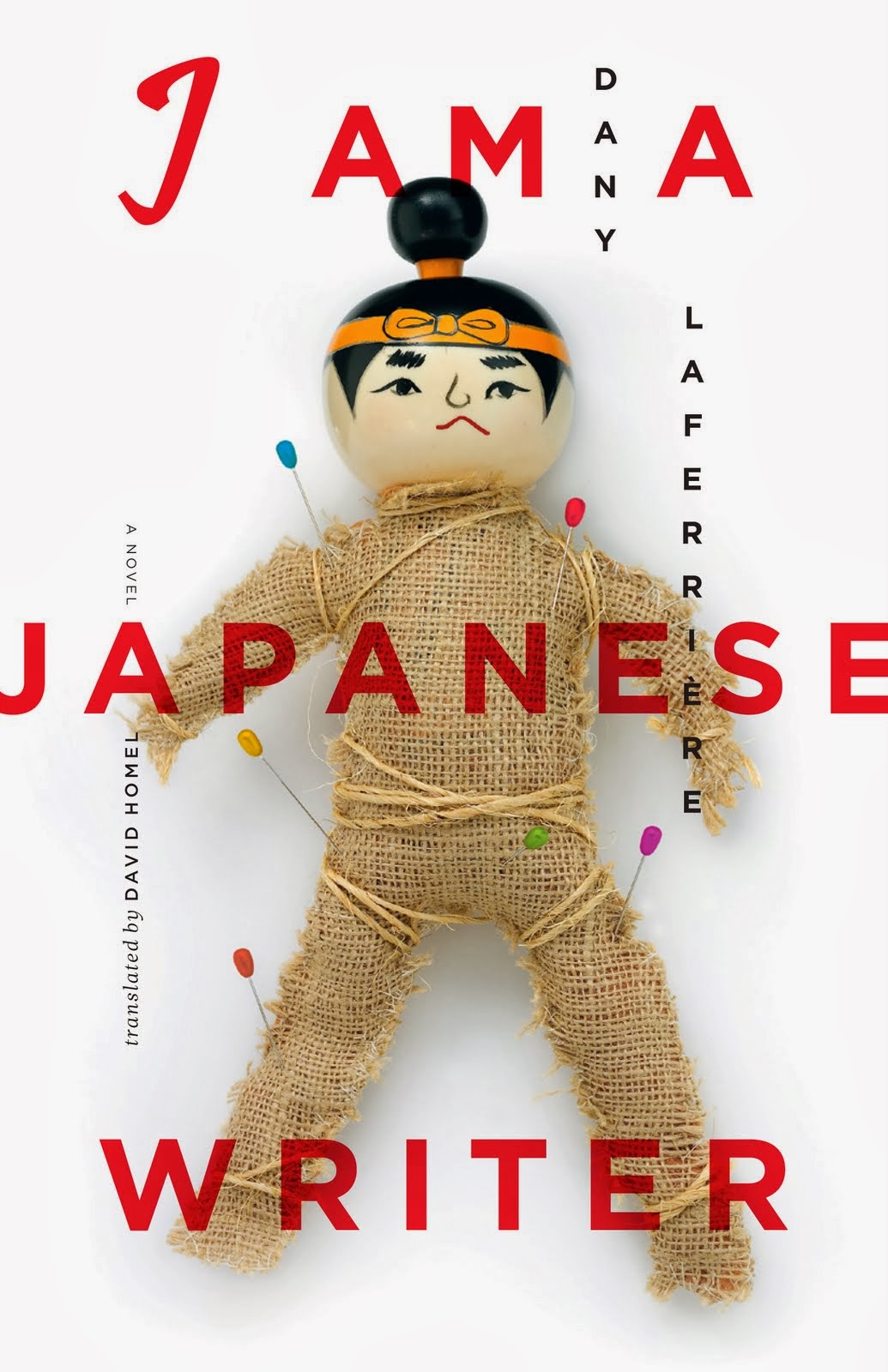
Dany Laferriere joins les Immortels

http://www.académie-française.fr/

http://www.editionsboreal.qc.ca/catalogue/auteurs/dany-laferriere-1528.htmlA favourite author of many of the bloggers here, Dany Laferriere (M) has received what is perhaps the the highest praise that can be be bestowed on a French writer. He has been admitted to Académie française.

He now holds chair no. 2 as a member of les Immortels, a 40 member organization who acts as France's official authority on all matters relating to the French language. Dany is both the first Quebecer and the first Haitian to be inducted.

All of this points to the simple fact that Dany Laferriere is an extraordinary and supremely gifted writer. Fortunately many of his works have also been translated into English by David Homel, including one of my favourite books of all time, The Return (M).

So don't delay any longer.  Read Dany Laferriere!  Re-read Dany Laferriere. Highly recommended by Académie française (and the bloggers at thereader.ca).

http://discover.halifaxpubliclibraries.ca/?q=title:%22return%22laferrierehttp://discover.halifaxpubliclibraries.ca/?q=title:make love laferrierehttp://discover.halifaxpubliclibraries.ca/?q=title:%22i am a japanese writer%22laferriere

Sunday, September 22, 2013

A Bad Thing Happened in Autumn...


Autumn Killing (M)
by Mons Kallentoft;
translated from the Swedish by Neil Smith

"It is Autumn in Linköping and the heavens have opened. But not even those biblical rains can wash away the blood of crimes past and present. Then the brutally-stabbed body of self-made Internet billionaire Jerry Petersson is discovered floating facedown in the moat surrounding his home, the imposing Skogså Castle. Malin Fors, the brilliant but flawed star of the Linköping police force, is already struggling to keep her life together following the recent murder attempt on her teenage daughter, Tove. Now, as the Petersson case forces Malin to delve deep into Linköping's history and her own family's past, the secrets she uncovers threaten to drown her, too ..." - publisher

Wicked Autumn: a Max Tudor novel (M)
by G. M. Malliet

"Having spent almost three years in the idyllic village of Nether Monkslip, Max Tudor is well acclimated to his post as vicar at the church of St. Edwold’s.  This quaint town seems to be the perfect new home for Max, who has fled a harrowing past serving in the British counter-intelligence agency, the MI5. Now he has found a measure of peace among urban escapees and yoga practitioners, artists and New Agers. But this serenity is quickly shattered when the highly vocal and unpopular president of the Women’s Institute turns up dead at the Harvest Fayre. The death looks like an accident, but Max’s training as a former agent kicks in, and before long he suspects foul play." - publisher

Exit Music (M)
by Ian Rankin

"It's late autumn in Edinburgh and late autumn in the career of Detective Inspector John Rebus. As he tries to tie up some loose ends before retirement, a murder case intrudes. A dissident Russian poet has been found dead in what looks like a mugging gone wrong. By apparent coincidence a high-level delegation of Russian businessmen is in town, keen to bring business to Scotland. The politicians and bankers who run Edinburgh are determined that the case should be closed quickly and clinically. But the further they dig, the more Rebus and his colleague DS Siobhan Clarke become convinced that they are dealing with something more than a random attack - especially after a particularly nasty second killing. Meantime, a brutal and premeditated assault on local gangster 'Big Ger' Cafferty sees Rebus in the frame. Has the Inspector taken a step too far in tying up those loose ends? Only a few days shy of the end to his long, inglorious career, will Rebus even make it that far?" - publisher

Saturday, June 29, 2013

3426 pages of Epic Reading for the Summer


For many readers, summertime is their time to escape into a epic story. A detailed story that will completely absorb them into another world or another time.

Listed here are five epic fiction reading suggestions that are at least 500+ pages long. If you read them all, it will be 3426 pages of epic reading.... Enjoy.

Promise of Blood (M)
by Brian McClellan
548 pages

Field Marshal Tamas' coup against his king sent corrupt aristocrats to the guillotine and brought bread to the starving. But it also provoked war with the Nine Nations, internal attacks by royalist fanatics, and greedy scrambling for money and power by Tamas's supposed allies: the Church, workers unions, and mercenary forces. Stretched to his limit, Tamas is relying heavily on his few remaining powder mages, including the embittered Taniel, a brilliant marksman who also happens to be his estranged son, and Adamat, a retired police inspector whose loyalty is being tested by blackmail. Now, as attacks batter them from within and without, the credulous are whispering about omens of death and destruction. Just old peasant legends about the gods waking to walk the earth. No modern educated man believes that sort of thing. But they should.

"McClellan's debut packs some serious heat.... A thoroughly satisfying yarn that should keep readers waiting impatiently for further installments." - Kirkus Reviews

~~~

God of War (M)
by Christian Cameron
773 pages

The story of how Alexander the Great conquered the world - first crushing Greek resistance to Macedonian rule, then destroying the Persian Empire in three monumental battles, before marching into the unknown and final victory in India - is a truly epic tale that has mesmerised countless generations of listeners. He crammed more adventure into his thirty-three years than any other human being before or since, and now for the first time a novelist will tell the tale in a single suitably epic volume. The combination of Alexander's life story and Christian Cameron's unrivalled skills as an historian and storyteller will ensure that this will not only be the definitive version for many years to come, but also one of the most exciting historical epics ever written.


"The more Cameron's 700-page story progresses, the more impressive it becomes. Detail is piled upon detail to reconstruct the Alexandrian world... brilliantly evoked. Cameron has risen to the challenge of creating a portrait of Alexander that matches - and often eclipses - those of earlier novelists." - Sunday Times

~~~

The Legend of Broken (M)
by Caleb Carr
734 pages

Some years ago, a remarkable manuscript long rumored to exist was discovered: The Legend of Broken. It tells of a prosperous fortress city where order reigns at the point of a sword—even as scheming factions secretly vie for control of the surrounding kingdom. Meanwhile, outside the city’s granite walls, an industrious tribe of exiles known as the Bane forages for sustenance in the wilds of Davon Wood.

An excellent and old-fashioned entertainment . . . The Legend of Broken seamlessly blends epic adventure with serious research and asks questions that men and women grappled with in the Dark Ages and still do today.” - The Washington Post

~~~

Where Tigers Are at Home (M)
by Jean-Marie Blas de Roblès
- translated from the French by Mike Mitchell
817 pages

When Eleazard von Wogau, a retired French correspondent, begins editing a strange, unpublished biography of 17th century Jesuit scholar Kircher, the rest of his life seems to begin unraveling -- his ex-wife goes on a dangerous geological expedition to Mato Grosso, his daughter abandons school to travel with her young professor and her lesbian lover to an indigenous beach town, and Eleazard himself starts losing his sanity.

"Blas de Robles, who won the Prix Medicis for this work, presents an absurdist literary narrative for readers who have the patience and persistence to stay with him on this long, strange, mind-bending trip." - Library Journal

~~~

The Street Sweeper (M)
by Elliot Perlman
554 pages

From the civil rights struggle in the United States to the crematoria of Auschwitz-Birkenau, there are momentous stories everywhere. But only some survive to become history. This is an astonishing feat of storytelling that addresses the personal and the political as it sweeps across the globe, through the seminal events of the twentieth century to the present. Honest, hypnotic and redemptive, this is a novel that explores the responsibility of the historian, the weight of history on all of us, and the crucial role that bearing witness plays in breaking the cycle of human cataclysm.

"Acclaimed Australian writer Perlman is a master at meshing his characters' streams of consciousness with social tsunamis of hate and violence. In his intently detailed, worlds-within-worlds third novel, this discerning and unflinching investigator of moral dilemmas great and small takes on the monstrous horrors of racism in America and the Holocaust." - Booklist

Wednesday, June 12, 2013

Versions of Translation – new collections of Russian poetry

Osip Mandelstam

The library feels rich in poetry these days. Two books that I picked up recently were new collections of work by Osip Mandelstam and Marina Tsvetaeva. These two renowned Russian poets have been dead for over 70 years, but now we have new English translations of their work.

Marina Tsvetaeva
They wrote through the Russian Revolution; they wrote of hunger and anger, of passion and exhaustion. Both are known for their music, and at times, their inaccessibility. There have been many translations of Mandelstam and Tsvetaeva’s writing, but these new translations are praised for the way they have carried over the attention to sound and rhythm.

Neither Christian Wiman (M) (Mandelstam) nor Jean Valentine (Tsvetaeva) wanted to call the poems translations, in order to acknowledge the murkiness of the work; Wiman prefers versions, and Valentine uses the word readings. Both Mandelstam and Tsvetaeva “translated” poems from languages they did not speak, so likely they would understand the desire of non-Russian speakers to bring their work into another language (Wiman is clear about his lack of Russian, and while I couldn’t confirm this for Valentine, the participation of Ilya Kaminsky suggests a need for assistance).

In fact, Odessa-born poet Ilya Kaminsky worked on both collections. He writes an essay in each book, and I found these just as engaging as the poems. He weaves the history of lives and places with examinations of language and translation. He leaves space in his prose for us to breathe and conjure.

And space we need in the reading of these poems. In Stolen Air: selected poems of Osip Mandelstam (M), the sounds of the words increase the strength – and burden – of their meaning. In Dark Elderberry Branch: poems of Marina Tsvetaeva (M), there is a CD with recordings of the poems in their original Russian. How bewildering to listen to what you cannot understand, trusting somewhere that you do.

To learn more about 20th century Russian poets, check out some of these biographies (M). There’s also a new biography of Mandelstam (M) soon to be available.