Showing posts with label essays. Show all posts

Sunday, December 13, 2015

Halifax Public Library Staff Favourites - Poetry and Short Stories


We've been posting our favourite books of 2015 over the last few days. It shouldn't be surprising that library staff are voracious readers, but I admit I was pleasantly surprised at the wide range of recommendations. Many of the genres that have been recommended aren't often written about in The Reader, so it has been a great opportunity to highlight some valuable books in our collection.

Here are our picks for essays, poetry, and short stories!

  http://discover.halifaxpubliclibraries.ca/?itemid=|library/m/halifax-horizon|1869842 http://discover.halifaxpubliclibraries.ca/?itemid=|library/m/halifax-horizon|1877994 http://discover.halifaxpubliclibraries.ca/?itemid=|library/m/halifax-horizon|1876322

Ten windows: How Great Poems Transform the World by Jane Hirshfield (essays)
Recommended by Sam: "The latest collection of essays – after many years – by American writer Jane Hirshfield. These rich examinations of how poetry lives and works also serve as meditations on ways of being in the world. Best read slowly!"

Complete Stories by Clarice Lispector (short stories)
Recommended by Andrew: "Clarice Lispector's writing is like no other. She explores the physical and spiritual worlds with equal fervour, retracing the line between mind and body with a stark, intoxicating precision."

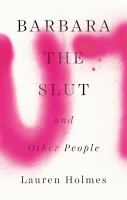
Barbara the Slut and Other People by Lauren Holmes (short stories)
Recommended by Lindsay RB: "Great short stories about a whole bunch of women who are struggling in different ways, all of them so relatable."

http://discover.halifaxpubliclibraries.ca/?itemid=|library/m/halifax-horizon|1865037 http://discover.halifaxpubliclibraries.ca/?itemid=|library/m/halifax-horizon|1879603

Still No Word by Shannon Webb-Campbell (poetry)
Recommended by Lindsay RB: "A local poet we're lucky to have."


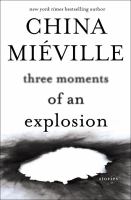
Three moments of an explosion, by China Mieville. (short stories)
Recommended by Jeremy: " Nice and bizarre collection of absurd and fantastic short stories. Bizarre, Absurd, and fantastic  -  these are a few of my  favorite things."

Sunday, January 6, 2013

Warming Up to Winter - essays, cookery and paranormal romance

Winter can a tough time of year, as it is mostly cold, dark and blustery. But with a positive attitude, it can be a beautiful and exciting time of the year.  Here are three rather disparate titles that all celebrate the beauty and excitement of winter. Embrace and enjoy the season!

Winter : five windows on the season (M)
by Adam Gopnik

"In this ruminative collection, Gopnik offers five essays on winter-exploring it as season and idea, elemental force and cultural influence. The New Yorker staff writer and author of Paris to the Moon composed these pieces for the 50th anniversary of the Canadian Broadcasting Corporation's Massey Lectures. He acknowledges that "chapters are meant to sound vocal" and rough edges have been left in place.

Readers will find pleasures of the serendipitous variety, including introductions to Wilson "Snowflake" Bentley, the underground architect Vincent Ponte, and the engineers who helped developed central heating. Gopnik's round-the-world tour of "romantic winter" covers more than 200 years in art, music, poetry, literature, and theology. In "Radical Winter," he describes the absurd courage of the men who raced for glory at the North and South Poles; in "Recreational Winter," he untangles the motley origins of ice hockey. Though the prose moves slowly at times, Gopnik leavens dense material with humor, and makes unwieldy concepts accessible through modern-day comparisons (consider Dickens the Francis Ford Coppola of his day). In the end, the lectures serve as Gopnik's equivalent to a Playmate's "turn-ons and turn-offs." That being the case, we'd call him a worthy Mr. December." Publisher Weekly

Roast Figs, Sugar Snow : winter food to warm the soul (M)
by Diana Henry

British author Henry (The Gastropub Cookbook) presents a soul-stirring collection of winter comfort food as warm and welcoming as a cup of hot cocoa on a snowy day. Henry warms readers with mulled wine, rich Onion and Cider Soup and a Camembert-topped slice of toasted bread, a pumpkin tart with spinach and gorgonzola and Stuffed Quail with Marmalade and Whiskey. Henry's Eurocentric lineup includes regional favorites like Romanian Bean, Smoked Bacon and Sour Cream Soup, Sorbronade (essentially a simpler cassoulet) and a Tagliatelle with roast pumpkin, sage, ricotta and smoked cheese from northern Italy. She also offers dishes from this side of the pond, such as a Quebecois Mussel Chowder with Cod and Cider as well as classic baked beans. A tendency to ramble, waxing poetic about the wonders of pears or cranberries, but is all a part of Henry's charm. Peppered with snow-filled snapshots, the work as a whole makes a kind of greatest wintertime hits." -Publisher Weekly

Nocturne: a haunting story of forbidden love (M)
by Syrie James

"Unconscious and stranded in the Colorado Rockies after her car skids off an icy road during a blizzard, Nicole Whitcomb awakes in the magnificent, isolated mountain home of the astonishingly good-looking man who rescued her. Michael Tyler is brilliant, reclusive, enigmatic, and a potentially deadly, centuries-old vampire. Now, snowbound together until the storm ends and the roads can be cleared, they begin a wary, star-crossed journey from attraction to passion as Nicole's fears and Michael's bloodlust war with their love for each other. Beautifully descriptive, well written, and simply plotted, this story spans only four days and features just two characters, but as the story progresses they grow individually, as well as in their relationship, and are profoundly changed as a result. Verdict Lyrical, lush, and intensely romantic, this infinitely touching, bittersweet story from James (Dracula, My Love) will weave its way into readers' hearts, with its complex characters and compelling emotions sure to linger long after the last page has been turned. While not a romance in the truest sense, this novel will have a poignant appeal for romance as well as paranormal fans and provides a slim glimmer of hope for the optimists among us." - Library Journal

Tuesday, September 11, 2012

The 2012 PEN Literary Awards -

 
The PEN Literary Awards is the most comprehensive awards program in the country, offering over $100,000 each year to fiction writers, poets, translators, children’s authors, biographers, nonfiction writers, and playwrights. Each prize is conferred by a panel of PEN members who bring to the task a familiarity with the solitary task of creating great literature

The 2012 PEN Literary Awards have been awarded. Listed below are five titles from the shortlists available our library collection that may be of interest to leisure readers. Please visit the PEN website for the full list of winners and nominees.

~~~~~~~~~~~
 
PEN/Robert W. Bingham Prize:
To a fiction writer whose debut work, published in 2011, represents distinguished literary achievement and suggests great promise.

Zazen (M)
by Vanessa Veselka (winner)

In a dystopian America on the verge of war, Della begins making phone calls about false bomb threats in her neighborhood, but realizes too late that she may be part of something bigger when someone starts bombing some of her phony targets.


Leaving the Atocha Station: a novel (M)
by Ben Lerner (runner up)

Adam Gordon is a brilliant, if highly unreliable, young American poet on a prestigious fellowship in Madrid, struggling to establish his sense of self and his relationship to art. What is actual when our experiences are mediated by language, technology, medication, and the arts? Is poetry an essential art form, or merely a screen for the reader's projections?

~~~~~~~~~~~

PEN Open Book Award: 
For an exceptional work of literature by an author of color published in 2011.

The Beautiful and the Damned: a portrait of the new India (M)
by Deb Siddhartha

The one book you need on the New India. In 2004, after six years in New York, Siddhartha Deb returned to India to look for a job. He discovered that sweeping change had overtaken the country. With the globalization of its economy, the relaxation of trade rules, the growth in technology, and the shrinking down of the state, a new India was being born. Deb realised he had found his job: to explore this vast, complex and bewildering nation and try to make sense of what was underway. The Beautiful and the Damned is the triumphant outcome. It is a virtuosic work that combines personal narrative, travalogue, reportage, penetrating analysis, and the stories of many individuals across a vast range of geographical and social cicumstances.

~~~~~~~~~~

PEN/ESPN Award for Literary Sports Writing:
For a nonfiction book on the subject of sports published in 2011.

Bottom of the 33rd: hope, redemption, and baseball’s longest game (M)
by Dan Barry

From Pulitzer Prize-winning "New York Times" columnist Dan Barry comes the beautifully recounted story of the longest game in baseball history--a tale celebrating not only the robust intensity of baseball, but the aspirational ideal epitomized by the hard-fighting players of the minor leagues.

~~~~~~~~~~~

PEN/Diamonstein-Spielvogel Award for the Art of the Essay:
For a book of essays published in 2011 that exemplifies the dignity and esteem of the essay form.

Arguably: essays (M)
by Christopher Hitchens

From one of the most admired public intellectuals of our time, and a multi-award winning and #1 bestselling author, comes a collection of his most important and controversial essays on the theme of culture and politics and how the two relate.

Thursday, August 2, 2012

In Memoriam - Gore Vidal, 1925-2012

The highly successful novelist, screenwriter, playwright, essayist, literary critic and satirist Gore Vidal (M) has died at the age of 86. A man of many literary accomplishments, he was recognized as a eloquent and witty writer, but also a man of strong opinions. He never shied away from controversy and critical discourse. Love him or loathe him, everybody respected his ability as a man of letters.

His first novel was Williwaw published in 1946. It received good reviews at the time and seemed to set the course for future success. However, his third novel, The City and the Pillar almost derailed his career completely. He was essentially blacklisted for future book reviews for several years. The book's theme of homosexuality as natural behaviour was the root cause of the controversy.

Fortunately for us readers, Vidal persevered and continued writing, even going so far as to create the pseudonym of Edgar Box. He also successfully delved into television and stage writing. He was even hired as a contract screenwriter writer at MGM in 1959.

He began publishing fiction under his own name again in 1960s, starting with Julian and Washington, D.C.. He stirred the pot of controversy again in 1968 with the novel Myra Breckinridge (M), a satirical exploration of transsexuality. Fortunately, the literary world was far more accepting of such subject matters than when he published The City and the Pillar. Myra Breckinridge was even made into a major motion picture in 1970 - featuring actresses Raquel Welch and Farrah Fawcett. Unlike the book, the film was not well received.

Vidal was also known as a brilliant essayist, especially in the area of US politics, foreign policy and culture. He was often provocative and seemed to love a good argument. He became involved in several high profile spats with other public figures, notably suing Truman Capote for libel, arguing live on camera with Norman Mailer- whom Vidal had compared to Charles Manson- and an epic ongoing battle with William F. Buckley.

Check out his memoir Palimpsest: a memoir (M) and/or Vidal Gore: a biography (M) by Fred Kaplan for more details on Vidal's incredibly dynamic and entertaining life.

In our fiction collection, checkout Lincoln (M) for a good example of his historical writing and consider Myra Breckenridge (M) as a great example of his satirical work.

May he rest in peace.


Saturday, March 10, 2012

It's About Time - nonfiction

Time... time is a mystery, time waits for no one, just in time, time changes everything, time stands still.... and so on and so on. There are so many different saying about time, and even rules of thought. My son is a huge science fan and we have been having discussions on parallel universes and how someone could be in more than one place (or dimension) at one time. With the time changing for daylights savings time on March 11th. I figured it would be a good time to write a blog about this subject matter.

Time's Arrows : scientific attitudes towards time (M) by Richard Morris. As children we all had trouble with the concept of time. It is hard to explain what later, tomorrow, or even five minutes means to a child. What is time and how is it measured? Can you measure it by the seasons, and what is a season when we have had such an unusual winter this year? What is a year and whose calendar year is the "true" one? - the "normal " one, the Jewish one, Chinese, etc... Morris brilliantly presents some of the most intriguing questions about time, all in a language that the lay person can understand and, even more importantly, enjoy!

Canadian award winning poet, Christopher Dewdney, has written a lyrical narrative on the science of the perception of time, entitled Soul of the World : unlocking the secrets of time. (M) The review posted in The Vancouver Sun states "Soul of the World demonstrates how poets can help us rediscover the wonders that lie hidden within the sciences". Dewdney presents how time has been perceived throughout the ages in mythology, philosophy, art and science.

Conversations about the End of Time (M) by Stephen Jay Gould, Umberto Eco, Jean-Claude Carriere and Jean Delumeau was written in 2000. Perhaps you will remember the hoopla regarding the start of the new millennium. Y2K was going to destroy all the world’s computers because of the time adjustment, the Apocalypse would come along with Jesus reappearing on earth, and either war or peace would rule the world. The four authors listed above had a series of discussions on subject of time, the millennium, science, God and humankind. There are many, many interesting ideas in this book but one that sticks out to me is by Carrierre. "Absolute time, whether we call it divine or cosmic time -pays no attention to us, it treats us within disdain."

Wednesday, December 21, 2011

The TBR Challenge: Changing My Mind by Zadie Smith

I looked at the calendar the other day and had a mild moment of panic when I realized the date and my progress in the To Be Read book challenge for 2011. My last post was in September, I've been a little delinquent.

Or not: I've still been reading, I just haven't been completing. Case in point, I've been picking away at Changing My Mind (M) by Zadie Smith since spring. The subtitle of the book is "occasional essays", perhaps I took that too much to heart. If Smith can occasionally write an essay, why can't I occasionally read one? Thus it's a book that has been sitting on my coffee table, on my night table, on my desk and in my purse as I find the time and the inspiration to read it. Last week I made a final push to switch it from the "in progress" column to the "read" column.

Smith is a talented writer. Her writing is smart but funny, and she can sketch out a scene or a character with depth and authenticity. Her novels White Teeth (M) and On Beauty (M) are among my favourites, although her middle novel The Autograph Man (M) left me cold. Her essays had a similar impact on me: some of the pieces in the book left me cheering her wit and insight, others left me flipping ahead to see how many pages were left.

Changing My Mind is divided into 5 sections: Reading, Being, Seeing, Feeling and Remembering. For me the strongest section was Feeling, where the essays are all connected to Smith's father (to whom the book is also dedicated). In these essays we see the author more personally, and she brings the qualities that make her a great fiction writer to nonfiction work.

On the other hand, I was genuinely surprised to find myself slog through the section on Reading. In part my problem was that most of these essays were about books that I hadn't read, or books that I had read so long ago I've forgotten their details, but these essays were also the most academic and for me were dry and too full of theory. Contrast those to the last section "Remembering", which contains just one essay, "Brief Interviews With Curious Men: the Difficult Gifts of David Foster Wallace". There is a lot in this piece that could also be called academic (including a lot of linguistic theory and philosophy), but Smith carries it with more panache, and although I read much of it with a dictionary close at hand, I enjoyed the experience and the "difficult gifts" it presented.

My favourite essays in the book? "One Week in Liberia" in which Smith brings the fiction writers' knack for character building and setting a scene to showing life in an impoverished nation of political turmoil, "Dead Man Laughing" where Smith dissects the comedic preferences of her father in doing so, says a lot about the British sense of humour, and "Hepburn and Garbo" which made me interested in an era of film that I've previously not cared to investigate. A couple of the essays I think I'll mark again for seasonal reading. "Smith Family Christmas" is a great one for anyone who has ever been stressed during the holiday season, and "Ten Notes on Oscar Weekend" seems a sure fit to revisit while menu planning for your Oscar party.

As with any good book of essays, Smith has opened up a list of other books that I now want to read, including:

Fifth Avenue, 5 am: Audrey Hepburn, Breakfast at Tiffany's, and the dawn of the modern woman (M) by Sam Wasson (I told you I liked that Hepburn and Garbo essay);

and The Gift: creativity and the artist in the modern world (M) by Lewis Hyde (which was cited in the DFW essay).

Wednesday, February 9, 2011

Hard Core Parenting Stories

So, I'm a newish mom and like a lot of new parents I'm often drawn to parenting memoirs that reflect on the transition to parenthood and the personal joys and challenges inherent in this experience. I've blogged a little about the subject on this site and while I don't really want to make a habit of it, recently I have come across a couple of books in the genre that really are worth mentioning.

The first is entitled Afterbirth: stories you WON'T read in a parenting magazine (2009), edited by Dani Klein Modisett, and she really means it. The authors of this collection, drawn largely from the entertainment industry (television writers, producers, playwrights, and comics, among others), share brutally honest passages from their experiences as parents. As someone who just doesn't see herself reflected in the tiresomely conventional images of motherhood that appear on the covers of popular parenting magazines, this book came as something of a breakthrough for me.

There is a trend toward confessional parenting books in which the author brags about what a bad mom or dad they are, usually to comic effect. In Bad Mother: a chronicle of maternal crimes, minor calamities, and occasional moments of grace (2009), author Ayelet Waldman argues that this is actually driven from a deep sense of shame born of the author's own perceived inadequacies as a parent. Waldman herself seems to share these feelings; reading about her simpering responses to random strangers who offer unsolicited parenting advice, I wanted to smack some self-respect into her. This is not an approach I can relate to. I had to put the book down.

I'm the kind of mom who body blocks the little beasts who try to run over and through my 19-month old at "unsupervised" indoor play parks. I call the police when drivers cut me off while I'm walking with the stroller. No random stranger has yet attempted to offer me parenting advice (though I think I'd have some fun with that if they tried). In short, a poor self-image is not my issue.

However, as a more "mature" mom (in age, at least), adapting to the dramatic change in lifestyle that parenting can bring has been a challenge. Apparently, I do not handle frustration well. There have been times when I have felt so overwhelmed by the emotion that I have pounded my fist into the floor of our apartment while the baby's back was turned. Then I read Jason Nash's chapter in Afterbirth; "Ten Months In". He's a television writer who came to fatherhood reluctantly. In his essay, Nash recalls a particularly difficult time in his life when his career was at a low point:
My son started crying and wouldn't stop. My failure, my life, the feeling that everything was finished came to a head.

I put my son down in his crib. Then, enraged, I punched a giant hole through the door to his room. One time. Boom! Again. Boom! And again. Screaming [...] each time, letting everything out. I knew I was doing it. I knew I wasn't hurting the baby, but I was so mad I wanted my wife to see my anger. I wanted to tell her, "You took my [...] life away and this is what you get. A hole in the door of your perfect baby's room, in your perfect house."

And I turned and saw my son and he was so scared. And for the first time, it clicked. That I was wrong. That I was part of something larger now. That I was being a selfish [...] and it didn't matter how my career ended up. I grabbed him, held him and just cried. The next week I went into therapy and started a massive overhaul of myself. [Expletives deleted.]
This is powerful stuff. This is the real work of parenting, when you finally realize that you're the one who needs to grow up.

The topics covered in this collection vary from how to handle a young bully ("What Grown-Ups Do"), to the obstacles of raising a boy free of gender stereotypes ("Oliver's Pink Bicycle"), to negotiating the issue of your children's privacy ("Reading Her Journal"). There is humour here. There's also plenty of honesty, insight, love, courage, and compassion.

The Library has other titles along these lines. I'd recommend The Hip Mama Survival Guide (1998), Essential Hip Mama: writing from the cutting edge of parenting (2004), and really, anything by the awesome Ariel Gore, founder of the Hip Mama zine. Also, don't overlook Sh*t My Dad Says (2010) by Justin Halpern which offers some inspiring reflections on his father's rather ... um ... blunt parenting style.

Thursday, July 22, 2010

Shorts for Summer - Essay Edition

Last summer I wrote a post about reading short stories in the summer time. The idea being that summer is a great time to grab a book and feel like you can dip into it and jump back out again, without taking on the commitment of a whole novel. The same can be said of nonfiction, which more and more of us read for pleasure these days. If you don't feel like tackling a whole book cover to cover this summer, why not check out one of these essay collections?

Cabin Fever: the best new Canadian non-fiction. "In honour of the 20th anniversary of the Literary Journalism Program at the Banff Centre ... a selection of the finest creative non-fiction written by participants from the past six years". A range of pieces on topics as diverse as bilingualism, absinthe and the atomic bomb from Canadian writers you already know and some you'll be glad you found out about.

Best American NonRequired Reading. I'm a fan of many of the "Best American" series, but this is my favourite. Dave Eggers is the series editor, and each year he, and a group of students select the best writing that appeared in magazines in the previous year. It's not just essays—it includes fiction, poetry and graphic story telling as well. The jacket blurb from that 2004 edition sums it up well saying the collection includes "the best and least-expected ... from publications large, small and online". The 2009 edition features cover art by street artist Banksy, and an introductory essay by Persepolis author Marjane Satrapi.

Burn This Book: PEN authors speak out on the power of the word. A selection of essays by some of the biggest names in contemporary writing, all looking at the "the meaning of censorship, and the power of literature to inform the way we see the world, and ourselves". Edited by Toni Morrison, and featuring pieces by John Updike, Orhan Pamuk and Nadine Gordimer, this may not be the lightest book you read this summer, but it will leave you with a lot to ponder.

Essay collections by a single author are also a treat—they let you get a peek into the mind of the author and see one person's opinion on a variety of topics. A few recent ones of note:

The Education of a British Protected Child by Chinua Achebe: the author of the much acclaimed Things Fall Apart, presents a series of essays examining his childhood in colonial Nigeria

The Nearest Exit May Be Behind You by S. Bear Bergman: a finalist for the 2010 Lambda Literary Award for Transgender writing, this collection explores issues of gender identity in a way that the publisher tells us is "alternately unsettling and affirming, devastating and delicious" that is "irrevocably honest and endlessly illuminating" but also tells its tales "with humour and grace".

Changing My Mind: occasional essays by Zadie Smith. I love Zadie Smith, her fiction is entertaining yet thoughtful, she weaves stories of modern life whose characters and scenes are vivid and realistic. Hers are the type of book that you can spend hours in the pages of and when you finally look up, find yourself surprised to not be in that world. Her collection of essays was published late last year to surprisingly little fanfare and shares her thoughts on a range of topics in four categories "Reading," "Being," "Seeing," and "Feeling".

I Was Told There'd be Cake by Sloane Crosley. If you'd like something a little lighter in your summer reading, Crosley may just be your thing. Lots of laughs as Crosley recounts tales of her life, her obsessions and the types of weird incidents that seem to befall 20-something North Americans in this day and age. There is much here for fans of David Rakoff, Sarah Vowell or David Sedaris. Sloane has a new collection called "How Did you Get this Number" that was released in June.