Showing posts with label reading challenges. Show all posts

Sunday, January 26, 2014

Reading Challenge Redux: The Thousand Autumns of Jacob de Zoet by David Mitchell


So, I guess I will just have to start my latest book challenge post by pointing out the obvious: I did not complete my reading challenge from last year.  Back in January of 2013, I tasked myself with reading 12 different books all by authors that I'd already previously read a single title by. I haven't fared terribly: I've read and written about 8 of the 12 books and it has been a wonderful way to get a bit more familiar with some authors who I already knew that I liked. I snuck the 8th book in under the wire, finishing it in mid-December but only taking the time to write about it now. That book, The Thousand Autumns of Jacob de Zoet (M) by David Mitchell, won't be the last book on my challenge list that I write about though, as I have decided to just continue through 2014 with my challenge and finish the other books in due course. Stay tuned for those in the coming months.

Photo © Paul Stuart
I have a number of friends who are huge David Mitchell fans: he's an author that people will passionately talk to you about when they hear you are reading one of his books and rapturously list their favourite title from his short but impressive oeuvre. My previous experience with David Mitchell was reading his Booker Prize shortlisted Cloud Atlas - an epic novel that travels from the distant past to the far future in six different "nested" plotlines (the first part starts, abruptly ends midstream and the 2nd beings, and so forth and then comes back to each story in turn). It was a book I read voraciously, intrigued by each of the separate yet somehow linked storylines that were filled with vivid characters, rich emotion and intriguing plot twists. It was a book that has a little bit of everything: historical fiction, noir thriller, science fiction, romance, etc. and for me was the sort of book I was sad to close when I finished it.

The Thousand Autumns of Jacob de Zoet is Mitchell's most recent book, published to strong reviews in 2010. Like Cloud Atlas, the book jumps from part to part, but unlike that book, it has a single, linear narrative. From Wikipedia, a fairly straightforward description of the plot: "The novel begins in the summer of 1799 at the Dutch East India Company trading post Dejima in the harbor of Nagasaki. It tells the story of a Dutch trader's love for a Japanese midwife who is, however, spirited away into a sinister mountain temple cult."

As with my experience with reading Cloud Atlas (M), the main characters in The Thousand Autumns of Jacob de Zoet were one of the novel's great strengths. The Dutch clerk Jacob de Zoet is in some ways an odd choice for a main character, bookish and thoughtful, his character doesn't scream leading man and yet he is the perfect place to base a novel that is in itself a thoughtful study.  The Japanese midwife Orito was for me the most interesting character, a woman of science in a time and place that did not allow for such non-traditional roles. The interaction between two characters, each out of place in their world for different reasons, was engrossing.  Beyond those two there is a wide cast of characters from a surprising range of backgrounds for a novel set in isolationist Japan of the turn of the 19th century making the book an interesting study in cultural difference and language also.

Speaking of language, the title refers to a Japanese idiom: "Ichijitsu-senshuu" or "One Day A Thousand Autumns" which is used to describe waiting, a suitable sentiment for a novel in which the various characters are waiting endlessly -- for love, to return home, to prove themselves. This is not a novel of action (although action filled sequences exist within it) but a novel of time passing and how people react to it and how it effects them.

http://discover.halifaxpubliclibraries.ca/?q=author:%22mitchell,%20david%22I enjoyed The Thousand Autumns of Jacob de Zoet, yet it let me down somewhat. It was perhaps too long, and too thoughtful: too good at creating the thousand autumns of waiting that its title refers to. I found myself turning the pages very slowly, reading small parts and then somewhat reluctantly returning to the book a few days later. The character of Orito being my favourite, I wanted more of her story but found that her thread of the book was left dangling somewhat. She is such a striking character the book could have been hers alone, but it is of course the story of the eponymous de Zoet.

Further reading suggestions if you like the sounds of these two David Mitchell books?

Any of Mitchell's three other books (M) seem to be a good place to start: Black Swan Green, Number9Dream or Ghostwritten. As I said at the start, Mitchell's fans are passionate and I know a number of people who have read all his books and speak enthusiastically about them all.  They and you may be excited to know he has a 6th novel due this year: The Bone Clocks is expected in September.

There are definitely parallels to be drawn between Mitchell and Haruki Murakami (M), although I don't think fans of either should expect an exact mirror of styles. Both authors are known for experimentation and incorporating the fantastical into their works. Mitchell, who has lived in Japan and speaks Japanese, also frequently brings in aspects of Japanese culture into his works.

Novelist suggests that for readers who enjoy the historical detail of The Thousand Autumns of Jacob de Zoet may also enjoy Storm Rider (M) by Akira Yoshimura. Set in the same era as Mitchell's book it explores the life of a young Japanese boy who leaves his homeland for the seafaring life, eventually landing in San Francisco. Readers who enjoyed de Zoet's observations of Japanese culture and life, may appreciate the opposite experience of a Japanese character exploring a new culture.


Friday, December 20, 2013

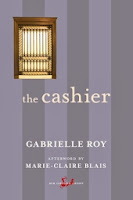
Reading Challenge Redux: The Cashier by Gabrielle Roy

Canada has a long and proud tradition of great fiction, and Canadians love to celebrate their home grown authors. Every fall big book awards (The Giller and The Governor General's awards in particular) make headlines, the annual Canada Reads book battle pulls in large audiences from coast to coast, and all year long websites like the 49th Shelf draw attention to Canadian writing of all types. But it can be easy to get caught up in the newest writing sensations and forget about the books and authors that formed the foundation of the rich literary landscape we have today.

http://fr.wikipedia.org/wiki/Gabrielle_RoyWhen I set up my reading challenge this year, I wanted to make sure it included some Canadian fiction but not just modern titles. Gabrielle Roy was an award winning French Canadian novelist who lived from 1909-1983. Today she is probably best remembered for her World War II set novel The Tin Flute (Bonheur d'Occasion -- secondhand happiness-- in the original French) which was a bestseller, won several major book awards in both English and French and was made into a film.

I first encountered The Tin Flute in a university English class, and approached it with the lack of enthusiasm that is sometimes typical of twenty year a Canadian old student faced with a fifty year old Canadian book: my assumption was that it would be boring and irrelevant. I couldn't have been more wrong. Years later, I read the Tin Flute again in a book club and was again impressed with Roy as a writer--her clarity, her realism--and always had it in mind to visit some of her other work.

http://discover.halifaxpubliclibraries.ca/?itemid=|library/m/halifax-horizon|1002128The Cashier (M) is the story of Alexandre Chenevert, an ageing teller in a Montreal bank. His life is a routine - he works, he returns home, he is annoyed by his neighbours, he argues with his wife -- and he is a joyless man caught up in his brooding thoughts about people, politics, religion and the world. The story -- largely told through Alexandre's thoughts -- is a meditation on urban life at the end of the 1940s. From the book jacket of the 1987 New Canadian Library edition "The themes of The Cashier are myriad and modern: the alienation of modern man faced with problems too big either to control or to ignore, the struggle to maintain a separate identity in the oppressive indifference of urban society, and, reaching deep into Canadian life, the contrast between the loneliness of that society and the peace and solace of the wilderness."

What struck me most about The Cashier was just how modern it felt. Ignore the references to the politicians to of the time, the corner payphones, and the details of 1940s banking practices and you could very much imagine that this is a novel set in any modern city today. Chenevert's anxieties and pains -- a difficult economy, the fear of cancer, feeling lost in a rapidly changing society -- seem as much at home today as they do n the time period in which the novel is set. The middle part of book features Chenevert getting away from his oppressive city life by retreating to a cabin in the woods and getting back to nature: an idea that seems to have become popular once again in our early 21st century society. There were times when I could easily imagine the action of this book taking place in modern Montreal, and when I envisioned that this book could easily be adapted into a film or TV series with a current setting.

http://discover.halifaxpubliclibraries.ca/?itemid=|library/m/halifax-horizon|1002128The Cashier is not a happy book: I would not recommend it for someone looking for an escape. It is however a beautifully crafted book. As the introductory essay in the 1987 edition of The Cashier notes, the book is notable for its "precision of style ... spareness of word and a tautness of syntax." Roy brings a simple beauty to this emotionally dark story. The New York Times Book Review called it "An unforgettable story of Montreal ... Remarkable for its truth and quiet power" and that seems to hold true today. If you are looking for a book that is thought-provoking and profound and don't require fast paced action, The Cashier is a story that will resonate as much today as it did when it was written.

http://discover.halifaxpubliclibraries.ca/?itemid=|library/m/halifax-horizon|1007738If you like the writing style of The Cashier then reading other books by Roy seems an obvious choice. The library has translations of several of her novels including The Tin Flute (M) and The Road Past Altamont (M) as well as several novels in the original French. If you are interested in Roy herself, you might want to read Enchantment and Sorrow: the Autobiography of Gabrielle Roy (M) (also in French as La détresse et l'enchantement) or Intimate Strangers: the Letters of Margaret Laurence and Gabrielle Roy (M).

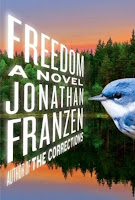
http://discover.halifaxpubliclibraries.ca/?q=title:%22freedom%22franzenWhen I was thinking about The Cashier in terms of other books to suggest to readers, I couldn't help but think of Freedom (M) by Jonathan Franzen. Like The Cashier, Freedom examines focuses on a man in mid-life who questions where he fits in society. It is concerned with morals and relationships and the political issues of the day. Freedom is also very concerned with nature and the environment, and although Franzen's message regarding nature is ultimately different than Roy's there is a similarity to their approach. Stylistically they are different, but in some ways, Freedom feels like an update of the story Roy tells.

Friday, December 6, 2013

Reading Challenge Redux: The Monsters of Templeton by Lauren Groff

It's going to be a mad rush to the end for this year's Reading Challenge Redux. Here's another peek at a title I've crossed my list: The Monsters of Templeton by Lauren Groff. (M)

http://discover.halifaxpubliclibraries.ca/?q=title:%22monsters%20of%20templeton%22groffI've actually owned a copy of The Monsters of Templeton for a few years now, having come across an inexpensive copy at a second hand store. As often happens for me with books that I buy, it promptly made its way to a shelf in my house, where I thought it should sit until I got through the library books I had checked out. Problem being, there are always more library books that I've got checked out, and purchased books (without the looming due date deadline) continually get pushed aside.

(c) : Lucy Schaeffer
Groff is a young American novelist: The Monsters of Templeton was her first novel and her first book. She is an author I've read about, and read a little bit by: although I realized after placing her on my reading challenge list of authors whom I'd read a previous book by, that it actually wasn't 100% true. I'd previously read a short story by Groff, not a whole book: clearly the story Delicate Edible Birds from the collection of the same name, left a big impact on me. Delicate Edible Birds is a story of a group of journalists feeling the fall of Paris in World War II. My recollection of that story was that it dripped with atmosphere and matched the writing prowess of great novels of World War II -- think Suite Française or Atonement -- but did so with the compactness and intensity of a great short story.

The Monsters of Templeton is stylistically a very different story than Delicate Edible Birds. Both are equally well crafted but Delicate Edible Birds is very serious historical fiction, while The Monsters of Templeton blends genres including historical fiction, family saga and fantasy and mixes both seriousness and whimsy. Here's a synopsis:

http://discover.halifaxpubliclibraries.ca/?q=title:%22monsters%20of%20templeton%22groff"One dark summer dawn in Templeton, New York, at the moment an enormous monster surfaces in Lake Glimmerglass, twenty-eight-year-old Willie Upton returns pregnant and miserable to her hometown of Templeton, N.Y. Willie is a descendant of the creator of the town, Marmaduke Temple, and she expects to be able to hide in the place that has been home to her family for centuries. But the monster changes the fabric of the village, and Willie's mother, Vivienne, has a surprise that will send Willie careening through her family's history to dig up clues about her heritage. Spanning two centuries and based on Cooperstown, New York., the story is told through two centuries of voices, from Templeton ghosts to residents, masters to servants, natives to interlopers, and historical figures to literary characters."

The Monsters of Templeton is a genealogical mystery of sorts, but it is also wildly imaginative piece of writing. Groff seems equally comfortable writing in contemporary settings as historical ones -- the book jumps back and forth between Willie's modern day life in Templeton and the lives of the historical family members she researches. Groff's characters -- both modern and historic -- are real and full of life, her settings are vivid to the point of feeling familiar. Between the two very different pieces I have now read by her, Groff has shown herself to be a talented and diverse writer who seems capable of anything she puts her mind to writing about. Instead of scratching a book off my to-be-read list, I feel like I've now added two more: the balance of the stories in Delicate Edible Birds and Arcadia, her second novel, released in 2012 and set in the hippie heydays of the 1960s.

If you're a fan of Groff you may want to explore these other authors (or if these other authors are already favourites of yours, you should consider give Groff a try).

http://discover.halifaxpubliclibraries.ca/?q=author:%22russell,%20karen%22Karen Russell (M): I've talked about Karen Russell a lot on this blog I think -- she was even a part of this very reading challenge this year. Like Groff, Russell is a young, American novelist who shows great range in her writing. Russell is perhaps slightly more encamped in the whimsical side of things than Groff, and there are similarities in their approach to pulling the fantastical into otherwise very of-this-world settings. Like Groff, Russell seems comfortable in both the novel and short story format.

http://discover.halifaxpubliclibraries.ca/?q=author:%22hunt,%20samantha%22Samantha Hunt (M): I am admittedly less familiar with American author Hunt's writing than I am with either Karen Russell or Lauren Groff's but from my reading of Hunt's 2007 novel The Invention of Everything Else I think there is room for comparison. Hunt's novel is historical fiction of the life of Nikola Tesla, but like Groff's stories, Hunt seems willing to step outside normal genre conventions. Booklist called this book "Oddly charming and pleasantly peculiar, Hunt's novel offers a unique perspective on hope and imagining life's possibilities".

http://discover.halifaxpubliclibraries.ca/?q=author:%22cooper,%20james%20fenimore%22James Fenimore Cooper (M): This one is perhaps more of a novelty comparison than a stylistic one: Lauren Groff is from Cooperstown New York, as was American novelist James Fenimore Cooper. Groff pays tribute to Cooper's The Pioneers in The Monsters of Templeton: like him she sets her book in a fictionalized version of Cooperstown called Templeton Cooper's novel. Although the styles of the books differ greatly, fans of one may want to investigate the other to gain a more complete picture.

Friday, November 22, 2013

Reading Challenge Redux - Night Film by Marisha Pessl

This year the challenge of my reading challenge is shaping up to be writing about the books I've said I'd read, rather than the actually reading of them (and just to recap, the challenge I set myself was to read another book by an author I'd previously read). My last post was in August, but I've actually read a number of my To Be Read pile books: although I haven't had the time to fill anyone in on them.

http://discover.halifaxpubliclibraries.ca/?q=%22night%20film%22pesslI'm determined to remedy that and so I'll start with the most anticipated book on my challenge this year; one which I didn't have the option to read early in the year (because it wasn't released until August) and one that I have been waiting to read for several years: Night Film (M) by Marisha Pessl.

Let's start with the why of this book's highly anticipated status. Reason #1: Pessl is the author of one other book, a first novel that developed a bit of a cult following: the quirkily titled Special Topics in Calamity Physics (M). Reason #2: this second book was quite delayed. Special Topics was released in in 2006 and fans were already waiting for a follow up. Night Film was long rumoured as a second project, then given a release date in the summer of 2012, but then pushed back until this year. Was it worth the wait? Read on!

http://discover.halifaxpubliclibraries.ca/?q=%22Special%20Topics%20in%20Calamity%20Physics%22pesslNight Film centres around the enigmatic film director Stanislas Cordova, whose underground film oeuvre has won him legions of devoted fans, and cult popularity. Scott McGrath is a journalist whose career is on the rocks after launching a failed investigation into Cordova: having accused Cordova of sinister dealings, McGrath ended up in the spotlight of a libel suit and Cordova back into the shadows. Then, "on a damp October night, the body of young, beautiful Ashley Cordova is found in an abandoned warehouse in lower Manhattan. By all appearances her death is a suicide--but investigative journalist Scott McGrath suspects otherwise.... As McGrath pieces together the mystery of Ashley's death, he is drawn deeper and deeper into the dark underbelly of New York City and the twisted world of Stanislas Cordova, and he begins to wonder--is he the next victim?"

Pessl is a talented writer: she builds vivid scenes and characters. In Night Film, this aspect of her writing is on full display. Set largely in New York City, Night Film is like a walking tour of the city: the streets are alive and the reader can envision them self moving through the settings. On top of her vivid descriptions of real world places, she creates wonderfully dark, creepy, elaborate sets for the scenes of her book: night clubs, gothic shops, a sprawling estate. For a book steeped in film lore, sets seems the correct word for it: and in fact, the book's vivid approach to storytelling made me feel the author had an adaptation in mind all along. (There is in fact a film version currently in development).

http://discover.halifaxpubliclibraries.ca/?q=title:%22the%20Keep%22eganI enjoyed not knowing too many details of the plot going into reading Night Film, so I'll leave you with the same. I'll tell you that it is a very clever noir thriller, dripping with atmosphere and intrigue. Kirkus reviews called it "An inventive--if brooding, strange and creepy--adventure in literary terror" and that feels kind of right. Of note as well though is that Night Film isn't just a straight forward text-based novel: photographs, newspaper and magazine excepts, website screenshots pepper the text, building a sense of realism around this fictional tale and making the reader feel a part of an investigation, rather than just an observer.

http://discover.halifaxpubliclibraries.ca/?q=title:%22Last%20Seen%20Leaving%22braffetIf Night Film sounds intriguing, you should definitely also check out Pessl's debut Special Topics in Calamity Physics. Novelist suggests that the writing of Jennifer Egan may also appeal to Pessl fans -- particularly the more gothic The Keep (M). The website Bookbrowse suggests the work of Kelly Braffet, another young female suspense novelist. Not a name that I recognize, though her book Last Seen Leaving (M), about a girl who hasn't been seen for two months after crashing her car and being picked up roadside by a sinister stranger sounds like it might be something new for my To Be Read list.

Tuesday, August 13, 2013

Reading Challenge Redux -- Apex Hides the Hurt by Colson Whitehead


As the year progresses, I find I'm moving pretty slowly through my 2013 Reading Challenge: to read a new book by an author that I'd previously read a single title by. I glance back at my list of proposed titles fairly frequently, and each time I do I have a moment of thinking, oh those books, I can't wait to read those and then I get distracted and read something else.

That said, I do have another book to tell you about: Apex Hides the Hurt (M) by Colson Whitehead.

Here's what you should know about Colson Whitehead. He's the author of 5 very well received novels that have gotten nods from just about every major American prize you can think of (Pulitzer, National Book Critics Circle, PEN/Faulkner, etc).

He has a nonfiction book of essays called The Colossus of New York (M) that looks at the city of New York from perspectives you may never have considered. He has won a MacArthur Fellowship (Genius Grant) and frequently writes articles for magazines like The New Yorker, Harper's and Granta and the New York Times.

I've been hearing about Whitehead as an author for awhile, but the conversation about him that I was hearing really heated up in 2011 when he released the novel Zone One (M).

Why so much buzz about Zone One? It was riding a trend: it's a zombie novel. But it's also a zombie novel from an author who has previously been given all sorts of critical acclaim and who is very solidly not perceived of as a genre author, and that got people talking. Oh, and it didn't hurt any that it is a great zombie novel: both from the perspective of a genre piece and from the perspective of a literary novel. I really liked Zone One: it was creepy and frightening, people had to run away from things just like you'd expect in a horror novel, but it was also an extremely thoughtful examination of the decline of civilization.

The fact that I finally came to Whitehead's writing from what seemed like a bit of a strange direction made me want to go back and see what another of his books would be like. Enter Apex Hides the Hurt. This slim novel (his third), is a satire that tells the story of a "nomenclature consultant", a—unco-incidentally nameless—guy whose job it is to come up with names for things who is tasked with assisting the small town of Winthrop in their quest to find a new name. This consultant's greatest previous achievement is the naming of a bandage brand—one whose popularity comes from the fact that it comes in a range of colours for a multiracial society. The name he came up with? Apex. And its tag line? "hides the hurt". There are parallels between that achievement and his newest commission, which Publisher's Weekly pointed out by saying "The "hurt" of the Apex tag line is deviously resonant, poetically invoking banal scrapes and deep-seated, historical injustice; both types of wounds are festering in the town of Winthrop, which looks like a midwestern anytown but was founded by ex-slaves migrating during Reconstruction."

Reviews on this book were mixed. Booklist gave it a rave, saying it continued in Whitehead's established tradition of "shrewd and playful inquiry into the American soul" while Publisher's Weekly was lukewarm, calling the book "intriguingly conceived but static". For me, I'd say I can see the reason for both views: the social commentary in the book is brilliant, but the story arc may leave readers who favour a more plot focused story wanting. There is plot to Apex Hides the Hurt, but it's not a book where the plot is the key appeal. Like the last book I read a part of my reading challenge—Patrick deWitt's Abultions—for me, Apex Hides the Hurt's strength lies in its individual scenes, rather than in its overall story arc. Individual moments and scenes leave the reader thinking, questioning, and in many cases laughing-out-loud (Whitehead's writing is very intelligent, but it is also often very, very funny). The book seems to unfold in equal measure through the musings of the narrator and in small absurd moments of comedy and confusion.

As seems to happen to me a lot these days, the books I like the most are the ones I have the hardest time talking about and Apex Hides the Hurt is one of those books. This is a book I would like to revisit, a book that I think anyone would take more from on a second reading and it is a book that has left me wanting to read more from this thoughtfully, funny author.

And now the difficult job of finding comparable authors. Novelist notes that Whitehead is known for "shrewd humor, evocative writing, well-crafted characters, sharp social commentary, and plenty of references to popular culture" and I think this is key in suggesting comparable authors. I can't help but think of David Foster Wallace who also uses language playfully, embraces the absurd and wrote biting social commentary, although I think Whitehead's writing is more straightforward and less willfully complicated than Wallace's. Percival Everett is another African American author who is similarly described as writing satirical, inventive books about social issues (although as Novelist notes some of his books can be quite dark and violent). Canadian author Dany Laferrière also comes to mind as an author who writes humourous-to-the-point-of-sometimes-absurd social fiction in a post-modern style.


Thursday, June 27, 2013

Reading Challenge Redux - Ablutions by Patrick deWitt


It's hard to know where to start with this post, the latest in my Reading Challenge Redux, in which I'm finally getting around to reading another book by an author who I have previously only read one book by. (Have I mentioned how difficult it is to articulate that premise every post? Next reading challenge I need to come up a concept that is a little more pithy.)

My selection this time? The 2009 novel Ablutions: notes for a novel (M) by Canadian writer Patrick deWitt. You likely know Patrick deWitt's name as the author of The Sisters Brothers (M), his 2011 western novel that took Canadian literature by storm and was nominated for all three major Canadian literary prizes (winning two—The Governor General's and the Writer's Trust awards) as well as being shortlisted for the Man Booker Prize. My recollection at that time is that many thought the book was a first novel—deWitt seemed to burst on to the scene out of nowhere—but it was in fact his second effort, following Ablutions.

So, why is this a difficult post? Largely, I guess, because it was a difficult book. Or maybe difficult is the wrong word. It's not a complicated book, it's not the sort of book that on an sentence-by-sentence level is difficult, but it is dark and the scenes depicted—the lives of the narrator and characters—are vividly dark, vividly difficult.

Here's the jacket blurb from the edition I read:

"In a famous but declining Hollywood bar works a barman. Morbidly amused by the decadent decay of his surroundings, he establishes tentative friendships with variously pathological and darkly comical regulars, watching them stumble into nightly oblivion as he makes notes for his novel. But as his tenure at the bar continues, he begins to serve himself more often than his customers. His damaged life starts to unravel completely: he loses his wife, his way, himself. Trapped by his habits and his loneliness, he hatches a terrible plan of escape, his only chance for redemption."

US cover
As jacket blurbs go, I think it is a highly successful one. It sets the scene and the style of a book filled with "decadent decay", of people both "pathological and darkly comical" that is very much a picture of a "damaged life". It focuses on ambience, rather than plot: feelings rather than action. A slim volume at 164 pages, Ablutions carries the subtitle "notes for a novel" which is appropriate. It is of course what the narrator is doing—writing notes for his novel—but it is descriptive of the writing style as well. Ablutions feels like an outline in some ways, a character sketch and peek into the head of the author (by which I mean not deWitt himself but the narrator as a writer, and in a sense authors universally). The book—told in the second person, heightening the sense of the universal—unfolds as a series of scenes rather than as a linear story arc: there is a beginning, a middle and an end, but not in a way that you might be accustomed to, as the importance of the overall story seems to fall behind the importance of the impact of individual moments.

I liked Ablutions. I liked it quite a bit, really. I found it dark and depressing, which is probably what keeps me from saying that I loved it. Here's a quote from the New York times review that seems to speak very well to that fact: “Ablutions” is not meant to be an enjoyable book, or a loving book, or even a beautiful book (although it has moments of beauty). It is ugly on purpose. It flays open its ugliness as if to say: I’m here too. Look at me. See me." Generally, I don't like this kind of darkness in a book, but with a thoughtfulness to accompany the darkness—and the occasional burst of the darkly comic—deWitt made it work for me.


Back to The Sisters Brothers: there will be many who loved that book who will despise this one, I think. Although deWitt's style and craftmanship are fully on view here, this is a very different book and one with probably a very specific audience. If you loved the The Sisters Brothers for its plot, its western flare, its adventure, Ablutions is probably not the book for you. If you liked The Sisters Brothers for its darkness, its peek into the mind of an antihero, its introspection: Ablutions is probably worth a read.

Similar books? Charles Bukowski's (M) name gets mentioned a lot in terms of an author that deWitt owes something to with this book. Under the Volcano (M) by Malcolm Lowry, another difficult novel that looks at alcoholism and decline may also be a good match.


Friday, May 31, 2013

Reading Challenge Redux: St. Lucy's Home for Girls Raised by Wolves

It's once again been awhile since I've reported back on my Reading Challenge Redux for this year. If you need a refresher, I've committed to reading 12 books in 2013 by authors of whom I've previously only read a single book. With May rapidly coming to a close, my showing is pretty poor: I've only blogged about one of the books on my list.

Here's an attempt to make up for that with a peek at St. Lucy's Home for Girls Raised by Wolves (M), the début short story collection by American author Karen Russell. I'm pretty sure I've gone on at length on The Reader about how delightful I find Russell and about how much I enjoyed her 2011 novel Swamplandia! (M) I've been eager to read more from her for awhile.

If you're a fan of Swamplandia! you'll want to pick up St. Lucy's Home for Girls Raised by Wolves if only to read the collection opener "Ava Wrestles the Alligator". Ava is Ava Bigtree: the protagonist of Swamplandia! and the novel evidently grew out of this story. Swamplandia! fans will not only recognize the characters, but they will also feel right at home amidst Russell's vivid descriptions of the Florida wetlands other natural landscapes. Like in Swamplandia! the stories are peopled with quirky characters, fantastical developments and natural settings that are memorable and vibrant.

(C) Joanne Chan
Russell has many literary talents and these stories highlight them. In "The Star-Gazer's Log of Summer-Time Crime" she displays her gift for telling stories through the eyes of children. Ollie (a nerdish, good-kid) enters into a summer friendship with the cool-kid/bully from his grade school: Russell gives a pitch perfect depiction of the delicate and unlikely friendships that develop in the brief out-of-school period known as summer vacation. In "from Children's Reminiscences of the Westward Migration" she shows her knack for making the mythical seem ordinary as she weaves the tale of a family struggling across America in a wagon train. A story that feels like a classic American western historical in all respects but the fact that the father of the family happens to be the Minotaur.


Personally, I struggle with reading full short fiction collections: I'm more of a reader who likes to pick and choose a few tales from a full book and often feel like I have to push myself to read a collection cover to cover. This book was no different and there were some stories that didn't work well for me: on another occasion I might enjoy them, but in attempting to read the book start to finish, I just wasn't in the mood for all of these tales. On the whole though, I agree with this jacket quote from Carlo Wolff of The Denver Post : "A master of tone and texture and an authority on the bizarre, Karen Russell writes with great flair and fearlessness." There is a quality to her writing that takes you back to childhood imaginings and yet many of the stories have very grown-up messages. My favourite in the collection is title story, in which a group of girls are left by their wolf parents at a boarding school that aims to reintroduce them to human society. The last story in the book, it makes commentary on feminism, colonialism, family ties and what it means to to be an individual while being funny and filled with delight. If you only read one in this collection, I'd suggest this one.

Although only just past 30, Russell's writing has already garnered a number of accolades that any writer would be pleased to accumulate over a life time of writing. She has appeared on lists of young authors to watch, was long-listed for the Orange Prize and named a finalist for the Pulitzer Prize. She is among a number of writers who are currently credited with revitalizing the short story form and has just released a new book of short stories called Vampires in the Lemon Grove.

If you like Karen Russell you may also find these authors interesting:

Chris Adrian (M):another novelist who mixes fantastical elements into his stories. Try The Great Night: a modern retelling of Shakespeare's A Midsummer Night's Dream.

Jim Shepherd (M) another American author known for his short story prowess. Like Russell, Shepherd has a wry sense of humour.


Thursday, March 21, 2013

Reading Challenge Redux -- The Moonstone by Wilkie Collins

Back in January I committed myself to a reading challenge for 2013, something I'd previously done back in 2011 to decent results. This year's challenge? To read a second book by 12 authors whom I'd previously read a book by. A quick bit of math will reveal that the idea behind the year-long challenge is to read one book from the list each month: this is my first follow up post for the year, so clearly I'm bit behind. I'm not to be discouraged however, and am pressing on with my reading. Hopefully these posts will be more frequent as the year goes on, but in the meantime, here's some thoughts on my first challenge book of the year, The Moonstone (M) by Wilkie Collins.

Some background: Wilkie Collins was a 19th century English writer who wrote essays and short fiction as well as several novels that fell into the category of sensation novels and which can be seen as a precursor to modern day thriller and detective stories. Collins was a contemporary -- and good friend -- of Charles Dickens, and like Dickens, his novels were largely serialized -- published in instalments in magazines -- prior to being released as a full book. This gave him a large audience and he was a prolific and popular author in his time. Several books are now considered classics, including The Woman in White (M) (the book of Collins' that I first read as part of a university course) and The Moonstone.

The Moonstone follows the case of a missing diamond, which was bequeathed to a young woman named Rachel Verinder on her 18th birthday. The large diamond has a checkered history, having been removed without permission from a Hindu shrine by a relation of Rachel's who was serving in the army in India. After having the diamond in her possession for a single evening, it is mysteriously stolen from the cabinet outside of her bedroom. The novel is told in epistolary style (in letters or documents) through case reports written by a number of the story's characters that detail the events as they saw them.  The style is enjoyable, giving you different voices as the story progresses, and leaving the reader, like the characters in the story, in the dark about what happened until the big reveal at the end.

I liked the Moonstone: the book is a fun, early example (some say the first) of a detective novel. But I have to admit, that as someone who loved The Woman in White, I was a bit disappointed with this book. I found that I wasn't as interested in the plot of this book: The Woman in White focuses on the plight of a young woman who is being mistreated by scheming relatives, while the Moonstone is mostly just about a bunch of rich people feeling bad that their big diamond (which was acquired through dubious means) has been stolen from them. My recollection of The Woman in White is that it has some social commentary built into the drama, and the Moonstone feels less so.

Although both books use the epistolary style to tell their narrative, I also found the narrators in The Moonstone less compelling -- and at least one of them was a little bit annoying. As you might expect in a novel that was written as a serial, there are a number of cliff-hanger chapter endings and sudden twists-of-fate: reading it cover to cover as a novel, there are a few plot twists that feel a little too convenient, and despite the fact that it was an innovator at the time, for a modern reader, it felt a bit clichéd.

That said, I'm glad I read the Moonstone. Tonally it is very similar to the Woman in White, and the tone is one of the things about the first book that I really enjoyed. If you haven't read The Woman in White, I'd suggest starting there if you're interested in exploring this era of writing, and don't be fooled into thinking that because of its age it will be boring -- my recollection is that it's a real page turner. If you're already a fan of Collins and The Moonstone isn't one you've read, it's still worth a visit. Although I didn't get pulled in by the mystery, clearly many readers have: and on top of that, there is some real humour in the pages, and the descriptions of Victorian English life make it worth the read regardless. I guess, I can't ignore the fact that it's probably been more than ten years since I last read The Woman in White, it might have an unfair glow in my memory: but it's one that has stuck with me for a long time, and I'm not sure The Moonstone will be the same.

If you're interested in Victorian detective fiction you might also enjoy:

Other books by Wilkie Collins (M). In addition to the Moonstone and The Woman in White, many of Collins' other books are still available in print and the library collection includes several of these. If you're already a Collins fan, I'd love to hear your thoughts and comparisons in the comments below.

Lady Audley's Secret (M) by Mary Elizabeth Braddon. Another Victorian sensation novel that was wildly popular in its time and is now considered a classic. "Lady Audley, a beautiful woman with a mysterious past, rises from governess to become the selfish and shamelessly acquisitive wife of an aristocrat."

The Dead Witness : a connoisseur's collection of Victorian detective stories (M) edited by Michael Sims. This collection includes a stories from Wilkie Collins and Charles Dickens, as well as a number of lesser known authors of the era.

The Notting Hill Mystery (M) by Charles Warren Adams (written under the pseudonym Charles Felix). Another originally serialized novel that tries to vie for the title of first detective novel. "The story is told by insurance investigator Ralph Henderson, who is building a case against the sinister Baron R suspected of murdering his wife in order to obtain significant life insurance payments. Henderson descends into a maze of intrigue including a diabolical mesmerist, kidnapping by gypsies, slow-poisoners, a rich uncle's will and three murders."