Showing posts with label Alexandra. Show all posts

Friday, October 17, 2014

Keshen Gooman's Thomas Raddall Book Club reads The Orenda by Joseph Boyden


The Orenda by Joseph Boyden - Keshen Goodman's Thomas Raddall Book Club

This month the Thomas Raddall Book Club tackled Joseph Boyden's new novel, The Orenda which is a historical novel about the roots of colonialism in Canada.

"An epic story of first contact between radically different worlds, steeped in the natural beauty and brutality of our country's formative years. A visceral portrait of life at a crossroads, The Orenda opens with a brutal massacre and the kidnapping of the young Iroquois Snow Falls, a spirited girl with a special gift. Her captor, Bird, is an elder and one of the Huron Nation's great warriors and statesmen. It has been years since the murder of his family, and yet they are never far from his mind. In Snow Falls, Bird recognizes the ghost of his lost daughter and sees that the girl possesses powerful magic that will be useful to him on the troubled road ahead. Bird's people have battled the Iroquois for as long as he can remember, but both tribes now face a new, more dangerous threat from afar. Christophe, a charismatic Jesuit missionary, has found his calling among the Huron, and devotes himself to learning and understanding their customs and language in order to lead them to Christ. An emissary from distant lands, he brings much more than his faith to the new world. As these three souls dance with each other through intricately woven acts of duplicity, small battles erupt into bigger wars and a nation emerges from worlds in flux." - Discover

Opinions about The Orenda were somewhat mixed for the book club members. Although most (though certainly not all) agreed that it was an important book and one worth reading, it was also almost universally acknowledged to be a challenging read. One reason for the difficulty was that the novel is incredibly violent. Boyden attempts to showcase the mentality of violence among warring Huron and Iroquois factions, the effect of which is a book that is both "terrific and horrific". Many of the book club members had listened to Wab Kinew's defense of The Orenda on CBC radio's Canada Reads and were not unanimously convinced by his argument that violence was a form of respect within the novel.

The book club was also interested in discussing the interesting conceptions of faith and belief that run throughout the book in the juxtaposition of native faith and spirituality with the Jesuit and Christian concepts of religion. The concept of the orenda, which a kind of life force, pervades discussions of the novel and the characters' motivations.

There were some members who felt that Boyden overstepped his abilities in attempting to portray the thought processes and way of speaking of Native Canadians at that time. There were also criticisms of the way that violence was most often attributed to Huron and Iroquois characters. The problem which continually creates controversy about The Orenda is whether Boyden's portrayal of Jesuits and Native Canadians represents a colonialist alibi or a reconciliation manifesto -- it seems to depend who you ask.

For more on the debates surrounding The Orenda try Canada Reads and an a CBC article:


If you enjoyed The Orenda, Joseph Boyden's Through Black Spruce and Three Day Road are similarly controversial and fascinating novels.

Through Black Spruce

"A young Cree woman who has been searching for her missing sister sits at the hospital bedside of her unconscious uncle, an injured bush pilot. Both share family tragedies and personal resilience." - Discover

Three Day Road

"It is 1919, and Niska, the last Oji-Cree medicine woman to live off the land, has received word that one of the two boys she grudgingly saw off to war has returned. She leaves her home in the bush of Northern Ontario to retrieve him, only to discover that the one she expected is actually the other. Xavier Bird, her sole living relation, gravely wounded and addicted to the army's morphine, hovers somewhere between the living world and that of the dead. As Niska paddles him the three days home, she realizes that all she can offer in her attempt to keep him alive is her words, the stories of her life. In turn, Xavier relates the horrifying years of war in Europe: he and his best friend, Elijah Whiskeyjack, prowled the battlefields of France and Belgium as snipers of enormous skill. As their reputations grew, the two young men, with their hand-sewn moccasins and extraordinary marksmanship, became both the pride and fear of their regiment as they stalked the ripe killing fields of Ypres and the Somme. But what happened to Elijah? As Niska paddles deeper into the wilderness, both she and Xavier confront the devastation that such great conflict leaves in its wake. Inspired in part by real-life World War I Ojibwa hero Francis Pegahmagabow, Three Day Road reinvents the tradition of such Great War epics as Birdsong and All Quiet on the Western Front. Beautifully written and told with unblinking focus, it is a remarkable tale, one of brutality, survival, and rebirth." - Jacket

Friday, September 12, 2014

Staff Pick - The Darkest Minds by Alexandra Bracken


The Darkest Minds by Alexandra Bracken

For those of you who who have finished reading the Divergent trilogy and are looking for something similar to read, the Darkest Minds series is a great choice. Similarly fast paced with a young female protagonist, The Darkest Minds is a great example of teen science fiction.

In this American dystopia, Ruby is growing up during a time of crisis. When she is 10 years old, many of the children in her class begin to die of a gene mutation that eventually kills the majority of the children in the United States. The ones left behind, which become referred to as Psi, survive because of their own gene mutations which give them special powers to control fire and electricity, to make objects fly, to have extraordinary brain powers, or to control the minds of other people. These remaining children are rounded up by the government and sent away from their families to camps intended to root out their abnormalities so that they might return to normal society.

Ruby grows up in one of these camps, but when she unexpectedly finds herself alone in the outside world, she realizes that perhaps the camps were not the altruistic organizations she was led to believe. On the outside she allies herself with three other Psi on the run - Zu, Chubs and Liam - in their quest to find the Slip Kid, a quasi-mythical figure who is rumoured to help reunite Psi with their families.

Ruby shares many qualities with Divergent's Tris, but I think I prefer Ruby's character in many ways - she seems to be quite a bit more logical in her approach to solving the problems that they encounter. I enjoyed The Darkest Minds in a similar way to Divergent - they are both fast reads, with elements of action, intrigue and romance. I am reading Never Fade, which promises to be just as interesting as the first, and a third book called In the Afterlight is due to be published in October 2014.

Friday, August 29, 2014

The Life of Charlotte Brontë by Elizabeth Gaskell - Staff pick


The Life of Charlotte Brontë by Elizabeth Gaskell

It was an extremely dorky moment of excitement for me when, staying in Haworth, England I visited the parsonage where the Brontë family lived. It was an interesting little museum house, which contained a number of Brontë 'artefacts' including the sofa where Emily Brontë supposedly died. It was in the gift shop where I found a copy of a biography of Charlotte Brontë, which was in fact written by her friend Elizabeth Gaskell. I didn't know that this existed, but it immediately appealed to me -- a biography of one of my favourite authors, by another favourite author.

Fully expecting that this would be a somewhat dry account of her life, I was delighted to find that it is an incredibly readable biography, and is still considered to be one of the most authoritative works about Charlotte Brontë's life. I particularly enjoyed reading about the lives of the Brontës when they were young, because they were extremely interesting and creative children. All four of the Brontë children (Patrick Branwell, Charlotte, Emily & Anne) wrote collaboratively about a fantasy world called Gondal, for which they created histories, characters and legends.

Throughout their years living at home and as governesses, Charlotte and her sisters continued to write prolifically, usually editing each others' writing, and staying up late at night discussing their works and plans for the future. In spite of many setbacks, including the deaths of all of her siblings, Charlotte persevered in her writing, eventually becoming one of the best known writers of the English literary canon.

Written in her characteristically descriptive style, Gaskell manages to show her fondness for the Brontës (Charlotte in particular), as well as looking at them with a critical eye. It is by no means a short book, but for those who love the Brontës (and perhaps Elizabeth Gaskell as well), it is a fascinating insight into their lives and motivations for writing their well-loved classics including Jane Eyre, Agnes Grey, Wuthering Heights, Villette, and The Tenant of Wildfell Hall.

The library owns some more recent biographies of the Brontës including:

The Brontë Family: Passionate Literary Geniuses by Karen Smith Kenyon

"A joint biography of Charlotte, Emily, Branwell, and Anne Brontë, exploring how the siblings sparked creativity in each other and how their lives were woven into their novels." - Discover


The Brontës by Juliet Barker
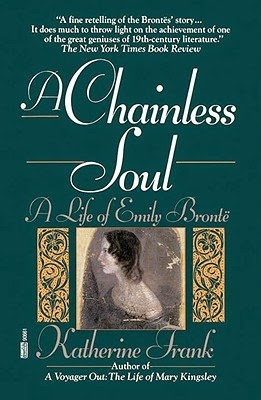
A Chainless Soul: A Life of Emily Brontë by Katherine Frank
The Brontë Sisters' Search for Love by Dilys Gater
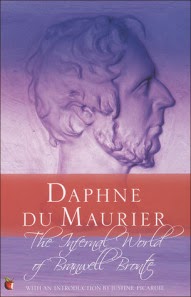
The Infernal World of Branwell Brontë by Daphne du Maurier

http://discover.halifaxpubliclibraries.ca/?q=title:chainless%20soul%20a%20life%20of%20emily%20bronte http://discover.halifaxpubliclibraries.ca/?q=title:bronte%20sisters%20search%20for%20love http://discover.halifaxpubliclibraries.ca/?q=title:infernal%20world%20of%20branwell%20bronte

Thursday, August 14, 2014
Staff Pick - I Capture the Castle


I Capture the Castle by Dodie Smith

Although the film has been one of my favourites for a few years now, I only recently read the book for I Capture the Castle (1949). I was delighted to find that the novel easily outstripped the film. Dodie Smith, known primarily for her children's book Hundred and One Dalmatians, also wrote prolifically for adults in a variety of novels and plays.

Narrated by the charismatic 17 year old Cassandra Mortmain, this bildungsroman style novel is in the form of a journal that she keeps during a particularly turbulent time for her family. The Mortmain family, in spite of their living in an ancient moated castle, are destitute. The father, a brilliant and groundbreaking author, has not written a word in many years, becoming ever more withdrawn from his family and his young wife Topaz as his shame and frustration deepens. The three women attempt to make ends meet, but Cassandra and her sister Rose dream of the day when they will leave their poverty behind.

When the owner of the surrounding estate (and of the castle that the Mortmain family lives in) dies, the American inheritors - the Cottons - arrive in town to change the fortunes of the Mortmain family. Rose sets her sights on Simon, the eldest son, going to sometimes embarrassing lengths to catch his eye. Cassandra, still very young and naive, struggles to understand her feelings about Simon and Neil Cotton, as well as about Stephen, the young man who lives with the Mortmain family.

With almost painful realism, and insights into the pitfalls of growing up and falling in love, Cassandra records her often painful, and yet endearingly amusing transition out of childhood. I found this book immensely enjoyable because of the combination of the vivid characters and the dilapidated castle which draws them all together.

Tuesday, July 8, 2014

Staff Pick - Illusions: The Adventures of a Reluctant Messiah


Illusions: the adventures of a reluctant messiah by Richard Bach

Someone recently recommended this book to me, and though I was initially somewhat reluctant to read it since it isn't the type of book I typically go for, I found it to be an intriguing book. At under 200 pages, it was a very quick read which delved into the author's own philosophical notions about mortality and free will.

A drifting barnstormer named Richard meets another pilot named Donald P. Shimoda, who turns out to be a rogue messiah. Richard, who can't understand why Shimoda would turn his back on his gift and on humanity, becomes enthralled by Shimoda and his miracle-working. Shimoda begins to teach Richard about his job as a messiah, and shows him how to perform miracles with the aid of passages from the Messiah's Handbook that Shimoda lends to Richard. As Richard comes to know Shimoda his perception of reality begins to change as he is forced to confront the paradoxical nature of faith and belief.

The book that really put Richard Bach on the literary map was his novel Jonathan Livingston Seagull: a story, which is a commentary on the pursuit of perfection told through the story of a seagull that is learning about life and flight.

"This is a story for people who follow their hearts and make their own rules...people who get special pleasure out of doing something well, even if only for themselves...people who know there's more to this living than meets the eye: they'll be right there with Jonathan, flying higher and faster than ever they dreamed." Goodreads

“Don’t believe what your eyes are telling you. All they show is limitation. Look with your understanding. Find out what you already know and you will see the way to fly.” Richard Bach, Jonathan Livingston Seagull

Wednesday, April 30, 2014

Staff Pick - Diane Setterfield

Internationally acclaimed for her first novel, The Thirteenth Tale, Diane Setterfield has now written a second novel called Bellman and Black, which I believe is - if possible - even better than the first. Although the novels have completely different stories, each contains an element of mystery and occultism that makes them feel like the Gothic fiction of the Brontes or Ann Radcliffe. Impeccably written and richly descriptive, Setterfield's novels are really fantastic fiction.

Bellman and Black by Diane Setterfield

William Bellman seems to have it all - a loving wife, children, and a successful business which he has built from the ground up. However, when a series of tragedies strike, it appears that something is working against Bellman's happiness. As a young boy, egged on by his friends, Bellman shot and killed a rook with a sling shot. Although it was an incredible feat since the bird was so far away, Bellman felt guilty about killing the bird and tried to forget that it had ever happened - but rooks never forget. A mysterious man dressed all in black begins to appear like a spectre at the funerals of Bellman's loved ones, and in a last ditch attempt to save himself and his family, he strikes a deal with the man he knows as Black, and they go into an unusual business together.

The Thirteenth Tale by Diane Setterfield

"Vida Winter, a bestselling yet reclusive novelist, has created many outlandish life histories for herself, all of them invention. Now old and ailing, at last she wants to tell the truth about her extraordinary life. Her letter to biographer Margaret Lea - a woman with secrets of her own - is a summons. Vida's tale is one of Gothic strangeness featuring the Angelfield family: the beautiful and wilful Isabelle and the feral twins Adeline and Emmeline. Margaret succumbs to the power of Vida's storytelling, but as a biographer she deals in fact not fiction and she doesn't trust Vida's account. As she begins her researches, two parallel stories unfold. Join Margaret as she begins her journey to the truth - hers, as well as Vida's." Discover

I enjoyed reading both of these novels because they were an interesting combination of spine-chilling suspense and historical fiction.

Tuesday, April 22, 2014

Staff Pick: Save Me the Waltz by Zelda Fitzgerald


It came as something of a surprise to me, having read quite a lot of 1920's fiction - including many of the works of F. Scott Fitzgerald - to discover that his wife Zelda Sayre Fitzgerald had, in fact, written a novel called Save Me the Waltz (1932).*

Zelda was born in Alabama in 1900, and 
married Fitzgerald in 1920. Shortly afterwards the couple moved to France, where Zelda would become - as Fitzgerald described her - the 'first American flapper'. Having undergone significant psychological strain during her marriage, Zelda returned to the U.S., where she was admitted to a psychiatric hospital. Her novel was written over 6 short weeks whilst undergoing treatment at the Johns Hopkins Hospital. Zelda's novel is heavily autobiographical, drawing primarily on her experiences of life in France with Fitzgerald. Fitzgerald, who was furious that Zelda had divulged so much information about their private life, forced her to revise the novel. However, some speculate that he was simply jealous of his wife's novel and the speed at which she wrote it, having spent years attempting to write a similar novel - Tender Is the Night. Tragically, Zelda Fitzgerald would later die in a hospital fire, but her novel continues to serve as an expression of her fascinating life, and fraught relationship with F. Scott Fitzgerald.

Zelda Sayre Fitzgerald's Save Me the Waltz
tells the story of Alabama Beggs who marries the artist David Knight (who are meant to be Zelda and Scott). Together they move to France, where their marriage begins to fall apart. David begins an affair with an actress and Alabama, determined to live beyond her marriage, throws herself into becoming a ballet dancer. Zelda's prose is frenetic and intimate, exposing her own personality and desire to make sense of her life.

I really loved reading this book because it was so fascinating to me to see another side of that idealized 'lost generation' - the voice of one of its more peripheral (but hugely influential) figures. It is interesting to read Zelda's novel in conjunction with Fitzgerald's Tender Is the Night, because although both are based on their lives together, they give very different perspectives on their marriage.

F. Scott Fitzgerald's Tender Is the Night:

"Set on the French Riviera in the late 1920s, Tender Is the Night is the tragic romance of the young actress Rosemary Hoyt and the stylish American couple Dick and Nicole Diver. A brilliant young psychiatrist at the time of his marriage, Dick is both husband and doctor to Nicole, whose wealth goads him into a lifestyle not his own, and whose growing strength highlights Dick's harrowing demise." - Discover

*Save Me the Waltz is currently out of print. Try Interlibrary Loan to get a copy.

Thursday, March 20, 2014

Popular J/YA Titles with Adult Appeals


Having been an avid reader of fantasy as a young adult, I decided to try out some of the titles that are popular among the kids at the library - the first of course being the Percy Jackson and the Olympians series.

Percy Jackson and the Olympians - Rick Riordan (M)

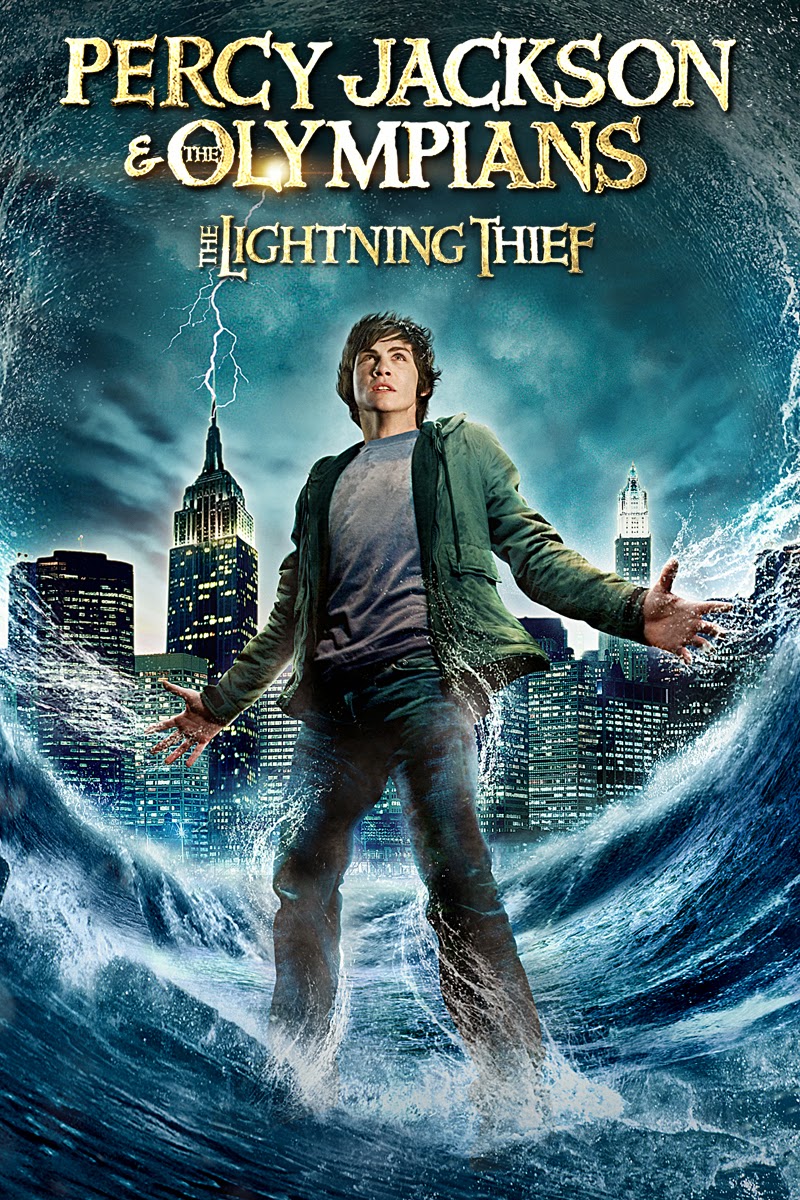
http://discover.halifaxpubliclibraries.ca/?q=percy%20jackson%20olympiansThe Percy Jackson series - unlike some of the other popular children's titles - held appeal for me because of their historical connections and clear intent to teach people about Greek mythology. At the beginning of the first book, The Lightning Thief, Percy Jackson seems like an ordinary boy. He struggles in school, suffers from dyslexia, and is not very popular at school. Indeed, his only friends at school are a boy named Grover, and his teacher Chiron who is in a wheelchair.

When Percy's math teacher (actually a Fury) attacks him and tries to kill him, Percy discovers the truth about his life. Not only is Grover a satyr who was sent to protect Percy, but Percy discovers that the Greek gods of ancient myths were not only living in New York, but that his absent father is actually Poseidon. Percy joins the other half-god children at Camp Half-Blood, and is soon embroiled in a series of adventures to help free the world from the clutches of the Titan lords.

I enjoyed Percy Jackson, in spite of the fact that it is intended for children, because it had an interesting and well-written storyline which incorporates tons of information about Greek mythology. It has also been nice being able to talk to kids about Percy Jackson, and to help them find other, similar books - such as the Ash Mistry series.

The Savage Fortress - Sarwat Chadda (M)

http://discover.halifaxpubliclibraries.ca/?q=savage%20fortress%20sarwatThe Ash Mistry series bears a clear resemblance to the Percy Jackson books. Ash is also a regular boy, but when he goes to India with his Aunt, sister Lucky, and Uncle who has been employed by Lord Alexander Savage to translate some manuscripts, he inadvertently finds a powerfully magical arrowhead that belonged to the goddess of destruction, Kali. It turns out that Savage has been secretly searching for that arrowhead, which would give him unprecedented powers which he would use for evil. Unbeknownst to both Savage and Ash, when Ash found the arrow a small piece of it broke off and became embedded in his thumb, which resulted in those magical powers being transferred to Ash, who became the Kali-aastra, or weapon of Kali.

Alongside Parvati, the daughter of demon-king Ravanna, Ash battles Lord Savage, overcoming the things of Indian mythology to restore balance to India. In Chadda's new Ash Mistry novel, City of Death, Lord Savage has stolen the Koh-I-Noor diamond from London, and it is up to Ash and Parvati to return it. A third novel, World of Darkness, has yet to be released in Canada.

Like Percy Jackson, the Ash Mistry novels combine not only intelligent writing, but also a wealth of information about Indian mythology. In both cases, I love that these books are educational as well as being highly entertaining, quick and engrossing reads.

Saturday, March 15, 2014

Thomas Raddall Book Club reads Will Ferguson


419 by Will Ferguson (M)

I recently sat in on a meeting of the Thomas Raddall Book Club at the Keshen Goodman library, and was interested to hear some of the comments that they made about Will Ferguson's recently popular novel, 419.

http://discover.halifaxpubliclibraries.ca/?q=title:%22419%22ferguson419 is the section of the Nigerian criminal code that deals with fraud, and in his novel, Ferguson discusses the personal significance of the widespread problem of internet scams. When Laura discovers that her recently deceased father has lost all of their family's money, and had to remortgage their house due to an internet scam, she goes on a journey to find out who did this to her family, and why. Running alongside the story of Laura and her family, is that of the Nigerians who must resort to such scams to survive. Winston, one such scammer, as well as Nnamdi, a young man from the Niger Delta, and the mysterious Amina, a pregnant woman who walks into Lagos out of sub-Saharan Africa, all show how far reaching the impact of 419 scams can be.

http://www.willferguson.ca/For most of the book club, Ferguson's work was well written, stylistically pleasing, with logical temporal shifts. They noted the way that Ferguson used repetition of themes to draw connections between characters and places. It was also important that Ferguson's novel drew attention to real-world problems, on more than one level. Not only are internet scams a reality of survival in the Nigeria, but they have consequences in the Western world as well.

Other members were less satisfied with the novel, feeling dismayed and sometimes frustrated by the novel and characters. Despite the beautiful writing, some of the book club disliked the book because it was so full of pain. The characters lived through such difficult circumstances, and in many cases, evil prevailed. Even those characters who were 'good' became corrupted by their connection with the 419 scams. Furthermore, some thought that the Western aspect of the novel was weak, because of the sheer gullibility of Laura's father, Henry. Although it does not stretch the imagination that someone could become embroiled at some level in such a scam, it seems difficult to believe that someone could get to the point of re-mortgaging their home.

UK cover
Although there was some difference in opinion, the general consensus at the meeting was that although the novel may have had some flaws, it was certainly worth reading.

I enjoyed sitting in on the meeting, because as a library employee I spend a lot of time around these prize winning novels (reading some and missing some others) but it was particularly interesting to hear how Ferguson's novel was received by patrons, some who would not have picked the book up ordinarily. I also enjoyed the opportunity to gain some different perspectives about Ferguson's book.


Thursday, March 6, 2014

Staff Pick - The Stockholm Octavo - Karen Engelmann

The Stockholm Octavo - Karen Engelmann (M)

http://discover.halifaxpubliclibraries.ca/?q=title:%22stockholm%20octavo%22The thing that initially drew me to this book was the interesting choice of cover design, with the blue background and the antique looking tarot cards. Reading the cover, however, I realized that this novel - Karen Engelmann's first - would combine a unique and fascinating story with an interesting historical setting.

In spite of the rumblings of revolution that were spreading out of France at the end of the 18th century, Stockholm remained a bright cultural center, the aristocracy continuing to live extravagantly under King Gustav III. Emil Larsson has the good fortune one night to gain an invitation to an exclusive card house owned by the clever and mysterious Mrs. Sparrow.

http://www.karenengelmann.com/contacteventsmore.htmlMrs. Sparrow, experienced in the art of the occult, offers to lay an octavo of fortune-telling playing cards for Emil to help him find love and connection. Each night for 8 nights Emil goes to Mrs. Sparrow to receive a new card, each one representative of a person who would become important in his life. Emil's octavo, once complete, spells not only the love and connection he sought, but forces him into a world of power and politics, of assassination attempts and the delicate power of folding fans that would ultimately change the course of Swedish history.

Brimming with interesting characters and elements of magic, Engelmann's writing is charmingly complex and fills the reader with a sense of intrigue.

Three other books that share Engelmann's mixture of occultism and literary style are:

Foucault's Pendulum - Umberto Eco (M)

http://discover.halifaxpubliclibraries.ca/?q=title:%22foucault%27s%20pendulum%22"Three Milan editors, who have spent much time rewriting crackpot manuscripts on the occult, decide to have a little fun. Their plan encompasses the secrets of the solar system, Satanic initiation rites, and Brazilian voodoo. A terrific joke--until people begin to disappear." - Publisher


The Tree People - Naomi Stokes (M)
http://discover.halifaxpubliclibraries.ca/?q=title:%22tree%20people%22naomi
"When a sacred cedar tree is cut down on the Quinault reservation, the evil spirit of an ancient shaman, Xulk, is released. Thus begins a sequence of macabre events orchestrated by Aminte, a red-haired witch. Losing her husband in a mysterious accident, Hannah McTavish struggles to maintain the logging business while dealing with the environmental issues that threaten her livelihood. Jordan Tidewater, reservation sheriff, assumes her inherited role as shaman and undergoes Native American rituals that allow her passage into the spirit world." - Publisher

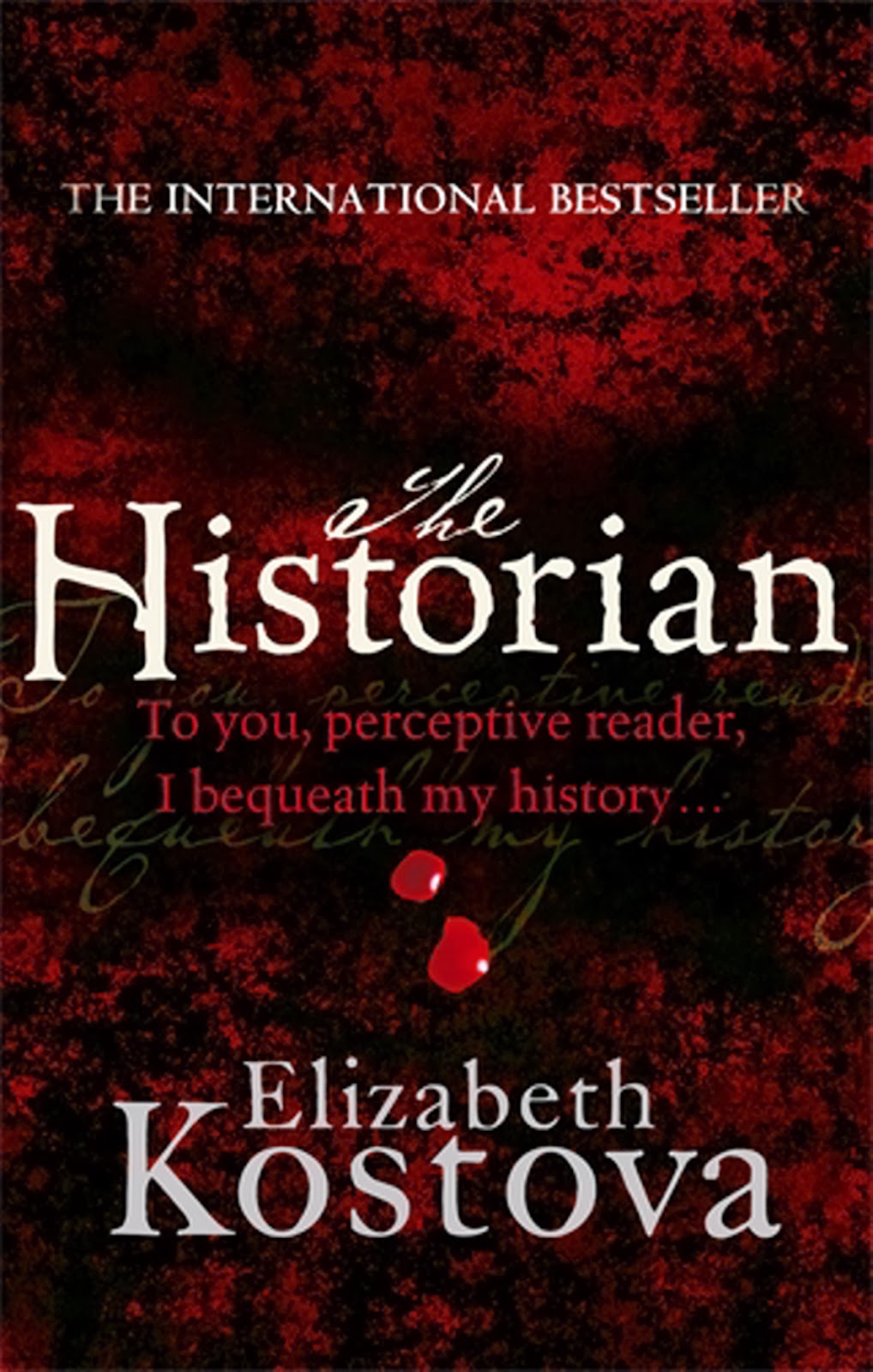
The Historian - Elizabeth Kostova (M)

http://discover.halifaxpubliclibraries.ca/?q=title:%22historian%22kostova"Late one night, exploring her father’s library, a young woman finds an ancient book and a cache of yellowing letters addressed ominously to ‘My dear and unfortunate successor’. Her discovery plunges her into a world she never dreamed of – a labyrinth where the secrets of her father’s past and her mother’s mysterious fate connect to an evil hidden in the depths of history." - Goodreads

Saturday, February 15, 2014

Staff Pick - Julia Child's My Life in France

http://discover.halifaxpubliclibraries.ca/?q=title:%22my%20life%20in%20france%22I remember seeing Julia Child on television as a kid, but it was only after reading My Life in France (M) and cooking some recipes from Mastering the Art of French Cooking (M) that I realized how important Julia Child is to the way that we cook and eat today. I absolutely loved this biography because it is so easy to hear Julia Child's voice in her writing, and it gives a clear picture of how her love of food and cooking began.

Although it may come as a surprise to some, Child explains that when she was first married she was not a very adventurous, nor a very skilled cook. It was only when she and her husband Paul moved to France, that she began to develop her passion for all things culinary.

http://discover.halifaxpubliclibraries.ca/?q=title:%22mastering%20the%20art%20of%20french%20cooking%22Child recalls her struggles and triumphs as an American woman attempting to cope with the rigours of attending cooking school at the Cordon Bleu, and how she came to appreciate the importance of food and cooking in France. Her descriptions of eating sole meuniere (flat fish fried in butter with lemon and parsley), and of choosing vegetables and bartering in the produce markets take you straight to Paris, and inspire you to try some of the recipes in her cookbooks.

Central to Child's memoir is her relationship with her collaborator Simone Beck, and her work on Mastering the Art of French Cooking, a cookbook designed to allow American cooks to create authentic French dishes. Despite the years that have passed, her cookbook Mastering the Art of French Cooking is still the most complete guide to French cooking and eating that I can think of - and most importantly, the recipes are really foolproof. Julia Child's biography is bursting with her joy and her love of life, food and France - and it rubs off.

Wednesday, January 29, 2014

Discovering Ian McEwan

Photo: Annalena McAfee
Although I have only read the first two books listed here, Ian McEwan (M) is fast becoming one of my favourite writers because of his attention to social issues and his style of literary fiction. I found that both On Chesil Beach and Atonement dealt with controversial subjects with great insight, and were challenging but ultimately rewarding reads.

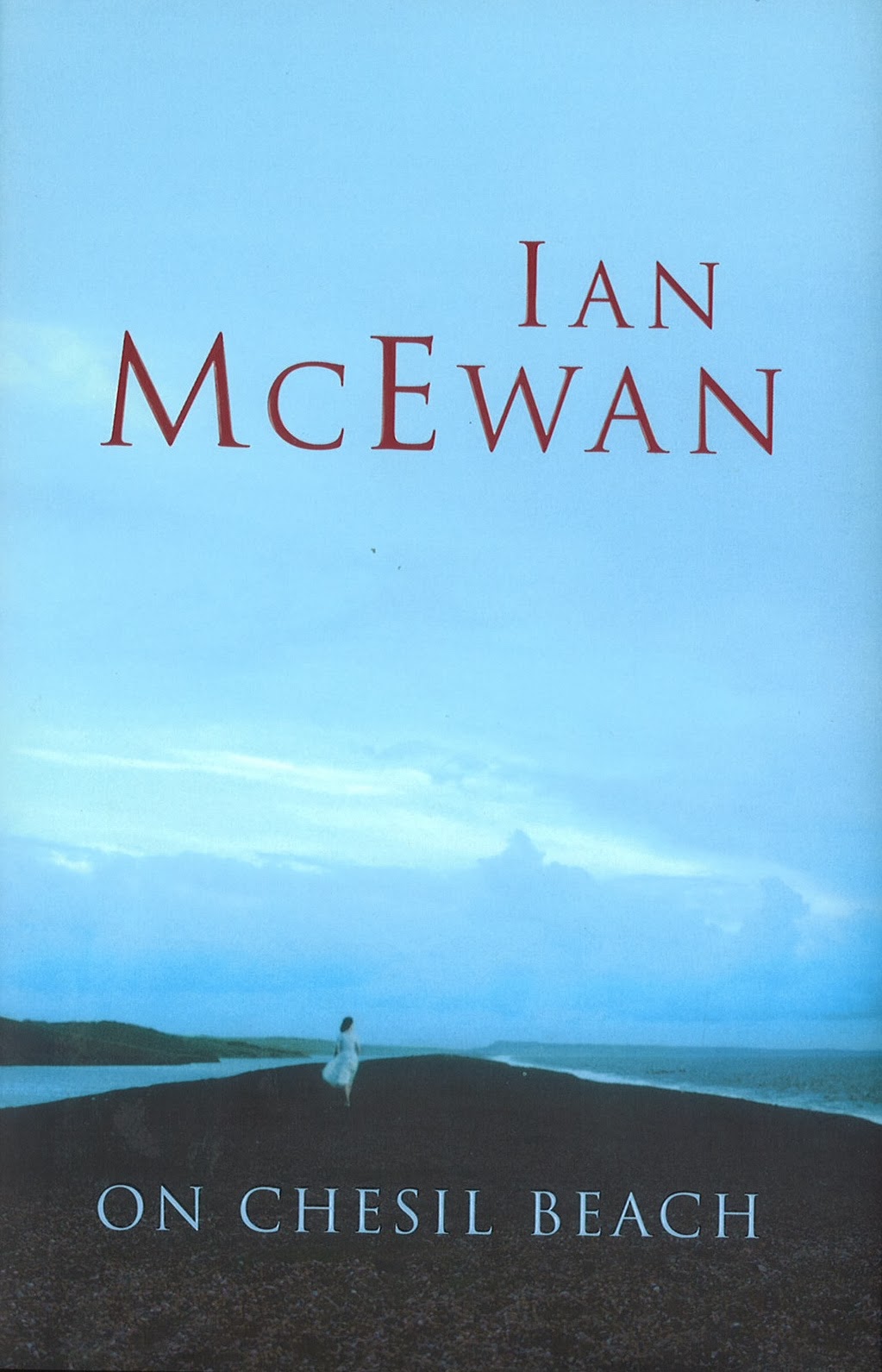
On Chesil Beach (2007)

http://discover.halifaxpubliclibraries.ca/?q=title:%22on%20chesil%20beach%22On a summer evening in 1962, Florence and Edward arrive at their honeymoon destination on Chesil Beach in Dorset. As they sit down to dinner a growing sense of awkwardness pervades their happy day, as neither is able to express their fears and anxieties about wedding night expectations. Unabashedly intimate and complex, McEwan explores the impact of ignorance and the lasting significance of a word not spoken.

Atonement (2001)

http://discover.halifaxpubliclibraries.ca/?q=title:%22atonement%22mcewanIn 1935 young Briony Tallis accidentally sees her sister Cecilia in a moment of intimacy with Robbie, the son of their servant. Briony, whose imagination is full of dark romances, misunderstands the reality of what she sees, and accuses Robbie of a heinous crime - an accusation which ultimately changed the course of all of their lives. Tracing the characters throughout World War II, McEwan explores the themes of childhood, memory and, of course, atonement.

Saturday (2005)

http://discover.halifaxpubliclibraries.ca/?q=title:%22saturday%22mcewan"A novel set within a single day in February 2003. Henry Perowne is a contented man - a successful neurosurgeon, happily married with two grown children. Perowne's day moves through the ordinary to the extraordinary: from an unusual sighting in the morning sky to his usual squash game, and from trying to avoid the hundreds of thousands of war protestors filling the streets of London, to a seemingly minor car accident. You will be balanced on the edge of your seat as Perowne's happy safe world is unexpectedly shattered by unforeseen violence." - Knopf.

Solar (2010)

http://discover.halifaxpubliclibraries.ca/?q=title:%22solar%22mcewan
"Michael Beard is in his late fifties; bald, overweight, unprepossessing -- a Nobel Prize-winning physicist whose best work is behind him. Trading on his reputation, he speaks for enormous fees, lends his name to the letterheads of renowned scientific institutions and half-heartedly heads a government-backed initiative tackling global warming. An inveterate philanderer, Beard finds his fifth marriage floundering. But this time it is different: she is having the affair, and he is still in love with her. When Beard's professional and personal worlds are entwined in a freak accident, an opportunity presents itself, a chance for Beard to extricate himself from his marital mess, reinvigorate his career and very possibly save the world from environmental disaster. With a global scope, Solar is a comedy dealing directly with the crises of today. A story of one man's ambitions and self-deceptions, it is a startling and stylish new departure in the work of one of the world's great writers." - Publisher.

Sweet Tooth (2012)

http://discover.halifaxpubliclibraries.ca/?q=title:%22sweet%20tooth%22mcewan"Serena Frome, the beautiful mathematician daughter of an Anglican bishop, has a brief affair with an older man during her final year at Cambridge, and finds herself being groomed for the Intelligence Service. The year is 1972: Britain, confronting economic disaster, is being torn apart by industrial unrest and Irish terrorism and faces its fifth state of emergency. The Cold War has entered a moribund phase but the fight goes on and MI5 hesitates at little to influence hearts and minds. Serena, a compulsive reader of novels, is sent by her new employers on a secret mission that brings her into the literary world of Tom Haley, a promising young writer. First, she loves his stories, then she begins to love the man. Can she maintain the fiction of her undercover life? And who is deceiving whom? To answer these questions, Serena must abandon the first rule of espionage - trust no one." - Publisher

For readers who like Margaret Atwood, Philip Roth or Peter Carey, Ian McEwan's books will provide a similar combination of social consciousness and literary brilliance.

Friday, January 17, 2014

Staff Pick - Original Mysteries


Being somewhat new to the mystery genre, I wanted to go back to the beginning and read some of the first mysteries - an experience which I found both rewarding and enjoyable. Although these early novels can be at times challenging, Wilkie Collins' books in particular feature the fast pace and excitement that we now expect from modern mysteries.

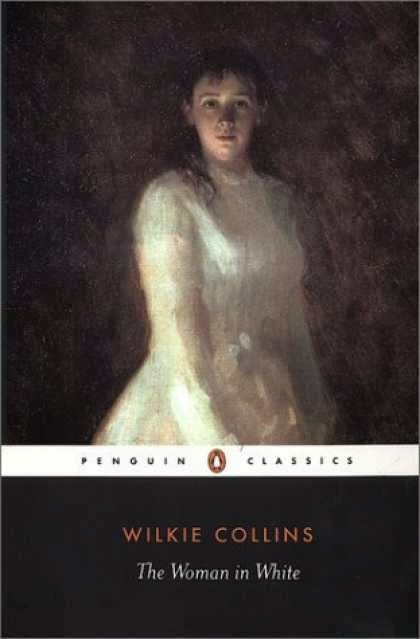
Wilkie Collins - The Woman in White (M)

http://discover.halifaxpubliclibraries.ca/?q=title:%22woman%20in%20white%22collinsThe Woman in White begins when the main character, Walter Hartright, meets a mysterious woman dressed all in white on a lonely country road. This chance encounter fuels Hartright's curiosity about the woman, and he unknowingly stumbles upon a scandalous secret that has long been covered up - a secret that involves not only Laura Fairlie, the woman Hartright loves, but also her fiancee Sir Percival Glyde and his cunning companion Count Fosco. Collins constructs a compelling mystery with attention to social issues of the time, and his characters are well-constructed, each with their own histories and personalities. Originally published in 1859-1860 by Charles Dickens, this novel is a timeless classic which continues to thrill readers even 155 years later.

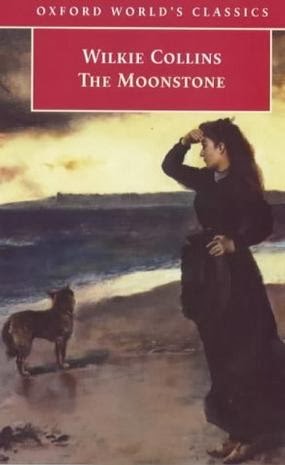
Wilkie Collins - The Moonstone (M)

http://discover.halifaxpubliclibraries.ca/?q=title:%22moonstone%22collinsOn her eighteenth birthday Rachel Verinder inherits a large Indian diamond called the Moonstone, which besides being extremely valuable, carries a great religious significance to the temple from which it was stolen years before. The diamond is a legacy from her estranged uncle, who was a corrupt British army officer who had served in India. At Rachel's birthday party, she wears the diamond, which is admired by everyone - including a mysterious band of Indian jugglers who turned up in the village. When the diamond is stolen later that night, suspicion falls not only on the jugglers, but also upon a housemaid named Rosanna Spearman and on Rachel herself. The ensuing attempts to recover the diamond and reveal the culprit are told through narratives by the main characters.

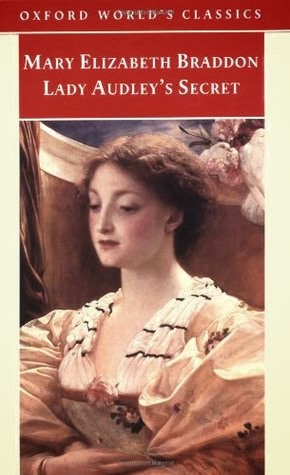
Mary Elizabeth Braddon - Lady Audley's Secret  (M)

http://discover.halifaxpubliclibraries.ca/?q=title:%22lady%20audley%27s%20secret%22Lady Audley's Secret, falls into the genre of a sensation novel, which was the Victorian precursor to the mystery genre. Sensation novels are a combination of criminal investigation and gothic or romantic styles. Braddon's book, playing on Victorian fears of bigamy, tells the story of Lady Audley, who was a governess who climbed to a position of power by marrying a wealthy man. When a young man named George Talboys becomes interested in uncovering her past, the ambitious and ruthless Lady Audley will do anything to maintain her position.

William Godwin - Things as They Are; or, The Adventures of Caleb Williams (M)

http://digitalmedia.halifaxpubliclibraries.ca/A8B606ED-93FE-4E40-9125-71EEA4A1ADEA/10/50/en/ZRPublicDomainCollection.htmWilliam Godwin is most well known for his novel Caleb Williams, which is considered to be one of the first psychological thrillers ever written. When Caleb Williams discovers that his new employer, a seemingly mild mannered man named Ferdinando Falkland, is implicated in a mysterious murder he becomes suspicious about Falkland, and fears for his own life. When finally Williams flees the estate, Falkland pursues him in a deadly chase. In a style reminiscent of Mary Shelley's Frankenstein (who was in fact his daughter), Godwin's dark tale of madness and fear draws the reader in.

Although I have not yet finished reading The Moonstone, The Woman in White is my favourite of the group because of its fast pace and complex characters