Showing posts with label racism. Show all posts

Monday, October 5, 2015

Staff Pick: Between the World and Me by Ta-Nehisi Coates


On the cover of Ta-Nehisi Coates' latest, Between the World and Me, the celebrated novelist Toni Morrison declares, "this is required reading". Outside such glowing book blurbs, readers report mixed feelings. For anyone with a stake in racial justice (this means you), Between the World and Me is an important book to read at this particular moment in history.

A 2015 recipient of the MacArthur fellow “genius” grant and a well-regarded national correspondent for The Atlantic, Coates was inspired by James Baldwin's 1963 publication The Fire Next Time . Like Baldwin, the structure of Between the World and Me is presented as a letter to a 15-year-old child; in this case, Coates' own son, Samori. In his book, Coates touches on dominant themes in current critical discussions about race and racism. Describing how systemic racism functions, he points out,

The law did not protect us. And now, in your time, the law has become an excuse for stopping and frisking you, which is to say, for furthering the assault on your body. [...] It does not matter if the agent of those forces is white or black - what matters is our condition, what matters is the system that makes your body breakable.

Throughout the text, Coates criticizes the myth of the American Dream and its Dreamers, particularly those most invested in the racial hierarchy and their privileged positions therein.

In her review in the Independent, Ayesha Siddiqi finds fault with "a message that appears to be addressed to white America, to those that need it justified that black lives matter, or do not seem to realise that they are in jeopardy." Perhaps because I am white, I feel somewhat differently: I believe that this population needs to hear and act on Coates' message if the conditions he describes are to change. In opting to speak to a white audience, however, Siddiqi laments that Coates may have compromised the book: "what work of beauty and introspection a writer as thoughtful as Coates could have produced if he had chosen as his intended audience one of the young black men or women with similar journeys to his own that he befriended at Howard [University]." We can but hope that Coates' writing is moving in this direction and that Siddiqi's vision will be realized in a third book.

By contrast, Michelle Alexander draws attention to those passages Coates clearly directs at his son and to Black America as a whole. Neither Samori nor the social movements emerging in response to racist police violence should expect white people to easily give up their privileges, in spite of the damage done. Wrestling with her expectations for the book, Alexander concludes that Coates seeks to challenge his son and the reader; to grapple with the questions he raises without offering any easy solutions. Alexander suggests that "maybe, just maybe, this is what is most needed right now — a book that offers no answers but instead challenges us to wrestle with the questions on our own." If so, Between the World and Me might very well prove to be ground-breaking.

Such an incisive and elegantly-written book invites multiple readings. Pessimistic or challenging? Did Coates miss an opportunity or is he fleshing out of a new kind of struggle? Read for yourself and decide what comes next.

Looking for more titles along these lines? Consider these books from Halifax Public Libraries' collection:


The Fire Next Time by James Baldwin
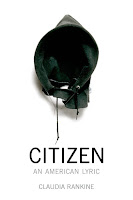
Citizen: an American lyric by Claudia Rankine
 Men We Reaped by Jesmyn Ward
http://discover.halifaxpubliclibraries.ca/?itemid=|library/m/halifax-horizon|1863482 http://discover.halifaxpubliclibraries.ca/?itemid=|library/m/halifax-horizon|1821812

Sunday, June 28, 2015

Skin deep


Like many in North America I have been following the story of Rachel Dolezal. This woman has been claiming to be black for a number of years. One article I read asks how she could be a black woman without first being a black girl! Dolezal also had sued the traditional black school, Howard University, for racism against her being white! I don’t really know what to think about this. I am white but given the “one drop rule” my children and grandchildren are black. I worry how this woman’s actions will effect their future. My grandson is very blond and has hazel eyes and could “pass” easily. While it would be nice to think the colour of one’s skin does not matter, it does. Some people predict that everyone will be a shade of brown in the future. Who knows! Race is and probably always be a very complicated issue.

The first book I read on race was the classic Black Like Me by John Howard Griffin. In 1959, journalist John Howard Griffin was a white native of Dallas, Texas. Under a doctor’s care Griffin darkened his skin colour through drugs and a tanning lamp. He spent six weeks traveling through the racially segregated southern states of Louisiana, Mississippi, Alabama and Georgia posing as a black man. During his trip Griffin did not change his name or alter his identity. If asked, he told the truth about his racial experiment. This book was very eye opening to me as a teen. Since it was published 15 years previous I believed the world had changed. Little did I know!

Andre Brink was a white anti-apartheid South African novelist. His novel, Other Lives, is three interconnecting stories in post-apartheid Cape Town. The story I want to concentrate on is the story of David. He is a white architect who wakes up one morning to discover while looking in the mirror that he is black now. Ever the opportunist, David sees that this colour change could be used to his advantage in the new South Africa.

Jess Row’s debut novel, Your Face in Mine, presents less of the broad blackface of a minstrel show but a more nuanced touch. Martin Wilkinson, nee Lipkin, grew up in the 1990’s, a time when black rap culture spoke to teen rebellion and the world’s injustice. He self diagnoses himself with “Racial Identity Dysphoria Syndrome.” Martin travels to Bangkok for racial reassignment surgery, and in doing so transforms himself from a white Jewish man to an African American one. This company does not just perform white to black surgeries. Oh no, they have turned a Japanese man into a Jamaican Rastafarian and a Korean woman into a Gwyneth Paltrow type.

I will never claim to be an expert in any topic. Culture is one that I am very interested in and I hope that in reading these books you also learn something yourself.

Thursday, June 11, 2015

Backgrounding the News, Part 2: Indian Residential Schools and the Truth and Reconciliation Commission


On June 2nd of this year, Canada's Truth and Reconciliation Commission achieved a historic milestone: after six years of gathering testimony from 7, 000 witnesses, the Commission released a summary from its final report into the history and legacy of the Indian Residential School system in Canada.

The numbers are striking. Over 100 years, 139 residential schools operated across Canada. Before the the last school was finally shut down in 1996, 150, 000 First Nation, Métis, and Inuit students had been made to attend these institutions, leaving an estimated 80, 000 Survivors and 6, 000 dead children. More arresting, however, are the statements made by survivors, in their own words.

Although the full report will not be made available until later in the year, the summary includes 94 recommendations which call on the various levels of government, public servants, teachers, and other Canadians to acknowledge the direct harm done by the Indian Residential School system to First Nation, Métis, and Inuit children and their families. More broadly, the Commission has drawn up the terms by which the relationship among our various peoples can and must go forward.

http://discover.halifaxpubliclibraries.ca/?itemid=|library/m/halifax-horizon|1865225 http://discover.halifaxpubliclibraries.ca/?itemid=|library/m/halifax-horizon|1820940 http://discover.halifaxpubliclibraries.ca/?itemid=|library/m/halifax-horizon|1841628

To better understand the experiences of residential school Survivors and to learn more about what you can do to engage in this process of reconciliation, have a look at these books from Halifax Public Libraries' own collection.

The Education of Augie Merasty: a residential school memoir by Joseph Auguste Merasty with David Carpenter

They Called Me Number One: secrets and survival at an Indian residential school by Bev Sellars

Back to the Red Road: a story of survival, redemption and love by Florence Kaefer and Edward Gamblin

Out of the depths : the experiences of Mi'kmaw children at the Indian Residential School at Shubenacadie, Nova Scotia by Isabelle Knockwood, with Gillian Thomas

Rethinking the Great White North: race, nature, and the historical geographies of whiteness in Canada, edited by Andrew Baldwin, Laura Cameron, and Audrey Kobayashi

The Comeback by John Ralston Saul

Dreaming in Indian: contemporary Native American voices, edited by Lisa Charleyboy and Mary Beth Leatherdale.

Indigenous Healing: exploring traditional paths by Rupert Ross

http://discover.halifaxpubliclibraries.ca/?itemid=|library/m/halifax-horizon|1848952 http://discover.halifaxpubliclibraries.ca/?itemid=|library/m/halifax-horizon|1861004 http://discover.halifaxpubliclibraries.ca/?itemid=|library/m/halifax-horizon|1841853

Saturday, May 9, 2015

Backgrounding the News, Part 1


Newspapers, magazines, The World at Six, but also: websites, apps, and podcasts: for a news junkie such as myself, there are so many exciting ways to get my fix each day. As independent media critics like Jesse Brown and Elon James White point out, however, the news that is reported by major media outlets is often a distortion of the bigger picture.

For those who want to learn more about the story behind the story, I present this post; one in a series which offers supplementary reading on the major events that made the news.

--

Part 1: #BaltimoreUprising

When Freddy Gray was killed in police custody on April 19th of this year, outraged Baltimoreans took to the streets to protest his murder and an overall pattern of police brutality against the Black community. Dismissed as "rioters" and "thugs", representations of the protestors by reporters from CTV, CNN, and Fox News, in particular, have been subject to intense scrutiny by media critics and academics.

A common criticism of the mainstream media is that news coverage frequently lacks context. Editors for the Baltimore Sun, for example, have pointed out that what happened to Freddy Gray is part of a larger problem that includes a history of police corruption and "decades of social and economic devastation" in communities like Sandtown-Winchester, the neighbourhood in Baltimore where Gray lived and died.

To learn more about the overall context in which this story is based, check out these titles from our collection.

Red Summer: the summer of 1919 and the awakening of Black America by Cameron McWhirter

Racialized Policing: aboriginal people's encounters with the police by Elizabeth Comack

Killing Rage: ending racism by bell hooks

The Condemnation of Blackness: race, crime, and the making of modern urban America by Khalil Gibran Muhammad

News for All the People: the epic story of race and the American media by Juan González and Joseph Torres

Reproducing Racism: how everyday choices lock in white advantage by Daria Roithmayr

Visitor: my life in Canada by Anthony Stewart

http://discover.halifaxpubliclibraries.ca/?itemid=|library/m/halifax-horizon|1483853 http://discover.halifaxpubliclibraries.ca/?itemid=|library/m/halifax-horizon|1810538

http://discover.halifaxpubliclibraries.ca/?itemid=|library/m/halifax-horizon|1769342 http://discover.halifaxpubliclibraries.ca/?itemid=|library/m/halifax-horizon|1838593 http://discover.halifaxpubliclibraries.ca/?itemid=|library/m/halifax-horizon|1856042

Friday, March 6, 2015

The Sunday Edition with Michael Enright: a reader


If you're anything like me, the only station playing on your radio is the CBC. I go back and forth between Radio 1 and Radio 2, depending on the time of day and the day of the week. On Sunday mornings, however, I make sure to tune my battered little portable to 90.5 by 9:00 a.m. for The Sunday Edition with Michael Enright.

Among the fascinating figures interviewed by Enright on his program are politicians, economists, and journalists who are also authors. I've compiled a list of some of the books mentioned in recent episodes - with links to the original podcasts - in case you slept in that morning.

Sunday, March 1
Why debt and deficit are not dirty words - Tim Harford
The Undercover Economist
Harford's newest book is The Undercover Economist Strikes Back.
Prime Minister Harper's think tank army - Donald Gutstein
Harperism: how Stephen Harper and his think tank colleagues have transformed Canada

http://discover.halifaxpubliclibraries.ca/?itemid=|library/m/halifax-horizon|1860442 http://discover.halifaxpubliclibraries.ca/?q=title:undercover%20economist%20strikes%20back http://discover.halifaxpubliclibraries.ca/?itemid=|library/m/halifax-horizon|1854325


Sunday, February 15
Remembering David Carr
The Night of the Gun: a reporter investigates the darkest story of his life, his own

Sunday, January 11
Race, fear and the law - Patricia Williams

The Alchemy of Race and Rights

Sunday, January 5
Rebels in Pink: the Gulabi gang's gender revolution in India
Pink Sari Revolution: a tale of women and power in India by Amana Fontanella-Khan
Wally Lamb on the craft of writing and his latest novel
We are Water: a novel

http://discover.halifaxpubliclibraries.ca/?itemid=|library/m/halifax-horizon|1815675 http://discover.halifaxpubliclibraries.ca/?itemid=|library/m/halifax-horizon|1816189


Sunday, December 21, 2014
The secret feminist history of Wonder Woman
The Secret History of Wonder Woman by Jill Lepore

Sunday, November 30, 2014
"Religion does not beget violence." - Karen Armstrong
Fields of Blood: religion and the history of violence