Showing posts with label fan fiction. Show all posts

Monday, February 29, 2016

Revisiting the Classics: Jane Eyre

I am starting to understand that there are two types of readers: those who love to re-read their favourite books, and those who read books once and then move on. I am firmly in the re-reading camp.

http://discover.halifaxpubliclibraries.ca/?q=title:jane%20eyre%20author:bronteI first read Charlotte Brontë's Jane Eyre as a teenager. The classic gothic tale tells the story of Jane Eyre's sad childhood, her unhappy school years, and her tumultuous relationship with her employer, Mr. Rochester. I always loved the dramatic setting and the unexpected plot twists but my favourite part was the witty repartee between Mr. Rochester and Jane (although I can't help but find him more manipulative every time I re-read the book.) I keep coming back to Jane Eyre's story because of the character's complexity; although Jane appears meek and understated, she is able to stand up to people more powerful than her in order to maintain her sense of self. She is fiercely uncompromising when it comes to her inner core of morality.

http://discover.halifaxpubliclibraries.ca/?itemid=|library/m/halifax-horizon|1758781There are loads of adaptations, mash-ups, prequels and sequels that relate to Jane Eyre. Here are a few notable selections:

Jane Eyre : the graphic novel  by Amy Corzine and illustrated by John M. Burns is a fairly faithful adaptation of the the original book, designed to bring classic literature to a young adult audience.

http://discover.halifaxpubliclibraries.ca/?itemid=|library/m/halifax-horizon|198535Wide Sargasso Sea by Jean Rhys was published in 1966 as a prequel to Jane Eyre, and tells the story of Antoinette Mason, a daughter of Dominican slave owners who lost their fortune. When her mother remarries, Antoinette is married off by her step-father to a British man who we gradually understand is Mr. Rochester. He feels duped by his hasty marriage, and is alarmed and alienated by the wildness of the Caribbean. Upon return to England, he locks her up in his attic where she eventually goes mad. Wide Sargasso Sea has become a feminist classic in its own right and is a fascinating counterpoint to Jane Eyre.

There are many other Jane Eyre-inspired books that will definitely never become classics but are nonetheless fun to read!  Jane Eyrotica by Karena Rose and Jane Eyre laid bare : the classic novel with an erotic twist by Eve Sinclair are mash-ups that combine Charlotte Bronte's text with newly written erotic scenes.  Rose's book simply cuts and pastes erotic scenes into the original story, which I found rather alarming and not true to the original character of Jane at all. (Spoiler alert: Jane sleeps with practically everybody.) Sinclair is a little more creative in her attempts to reimagine Jane's secret sensual life, and includes some rather hilarious plot twists. (Spoiler alert: the mysterious noises in the attic are not what you think they are!)
If you like mash-ups but erotica isn't your thing, you could check out Jane Slayre by Sherri Browning Erwin, where - you guessed it! - Jane stars as a vampyre/zombie/werewolf slaying heroine. The popularity of Pride and Predjudice and Zombies probably means that we'll see more of this particular genre in the near future.

http://discover.halifaxpubliclibraries.ca/?itemid=|library/m/halifax-horizon|1792779 http://discover.halifaxpubliclibraries.ca/?itemid=|library/m/halifax-horizon|1793083 http://discover.halifaxpubliclibraries.ca/?itemid=|library/m/halifax-horizon|1712823

Wednesday, January 13, 2016

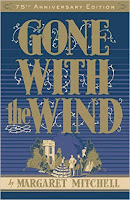
Revisiting the Classics: Gone with the Wind


http://discover.halifaxpubliclibraries.ca/?itemid=|library/m/halifax-horizon|1866616I’ve always enjoyed revisiting books that meant a lot to me at a particular time in my life - partly because it's fun to re-immerse myself into a familiar narrative world, but also because it allows me to see how my own perspective toward life has changed throughout the years. In How to be a heroine ; or, what I've learned from reading too much, Samantha Ellis reflects upon the changes in her own life that has caused her to rethink some of her all-time favourite literary characters like Cathy Earnshaw from Wuthering Heights, Anne from Anne of Green Gables, and Elizabeth Bennett from Pride and Predjudice. The book is really more of a personal memoir than literary criticism, but it shows how deeply our love of certain characters can affect us throughout our lives.

http://discover.halifaxpubliclibraries.ca/?itemid=|library/m/halifax-horizon|197186In one of my favourite chapters, Ellis explores her feelings about Scarlett O’Hara, the wonderfully complicated heroine of Margaret Mitchell’s 1936 Pullitzer Prize winning epic, Gone With The Wind. Thoughout the chapter, Ellis reflects on her own development as a feminist and how strong characters like Scarlett initially helped her achieve a sense of independence from family pressures and expectations.  Ellis recognizes that Scarlett’s pushy determination inspired her to move past her own Melanie-like teenaged bookish tendencies to take more risks and to focus on herself, but she eventually realizes that Melanie may have been the stronger character all along, and that Scarlett would have been a much happier person if she could have appreciated Melanie's friendship throughout her life.

It’s an interesting perspective, and one that I can identify feeling as a teenager. Gone with the Wind was my all-time favourite book during my middle school years. Like Ellis, I remember loving Scarlett’s lack of willingness to suffer fools gladly and her determination to survive despite all odds, but wished that she could have appreciated the people around her a little more. But my hero-worship of Scarlett is long gone: upon rereading the book several times since my teenage years I find the implicit racism of the book impossible to ignore. None of the many African-American characters are shown to have lives of their own, and even saintly characters like Melanie support the activities of the Ku Klux Klan.

http://discover.halifaxpubliclibraries.ca/?itemid=|library/m/halifax-horizon|1848862 In recent years, several authors have attempted to create back stories for many of the secondary characters in Gone With The Wind. In 2014, Donald McCaig was commissioned by the Margaret Mitchell estate to write the back story for the Mammy character, which resulted in Ruth’s Journey. (McCaig was previously commissioned by the Gone with the Wind estate to write Rhett Butler’s People in 2007). Although this story finally offered Mammy the dignity of a name and an origin story, I was disappointed with Ruth's Journey because it still focused more on the lives of Scarlett's mother and grandmother rather than exploring Ruth's thoughts, feelings and motivations. The Ruth character still only exists in relation to white slavemasters.

http://discover.halifaxpubliclibraries.ca/?itemid=|library/m/halifax-horizon|1364035I much preferred The Wind Done Gone by Alice Randall, which reveals the story of Cyanara, the secret daughter of Mammy and Gerald O'Hara (Scarlett's half-sister), which continues the story after Gone With The Wind ends. This book is a really fun read: lots of secrets about the lead characters are revealed, and we learn that the African American characters were pulling the strings of their white owners all along. Nowadays, we'd likely call this fan fiction, but in 2001, the Margaret Mitchell estate was furious with the book and sued Randall's publisher for alleged copyright infringement. Randall was forced to add a big disclaimer to the front cover of The Wind Done Gone to make it clear the book was an anauthorized parody.While it's not attempting to be great literature, it does make an interesting companion piece to the original.

There are plenty of other officially endorsed prequels and sequels, as well as non-fiction accounts of the Gone With the Wind phenomenon. If you are (or were) a big fan of Gone With The Wind, it's worth it to revisit some of these titles. 

Friday, December 11, 2015

Staff Pick: Emma: a modern retelling by Alexander McCall Smith


Emma: a modern retelling by Alexander McCall Smith is a part of the Austen Project which is re-imagining Austen's major novels in modern times. What an undertaking!

Alexander McCall Smith was called upon to take on the enormous challenge of recreating a twenty-first century version of one of Austen's most challenging characters - Emma Woodhouse.

Emma Woodhouse, handsome, clever, and rich, with a comfortable home and happy disposition, seemed to unite some of the best blessings of existence; and had lived nearly twenty-one years in the world with very little to distress or vex her.

So begins Austen's Emma and in much the same vein McCall Smiths'. His Emma is wealthy with little need to do much with her life or any desire to make a contribution to the world. She is arrogant, opinionated, and presents herself much as Austen intended, as a person who is hard to like. Emma returns home from university to her eccentric hypochondriacal father with a vague notion of beginning a career in design. She takes it upon herself to interfere with her friend Harriet's romance, deeming her beau to be not good enough for her. Her snobbishness and unkindness land her in a whole mess of trouble, which eventually leads her to self-awareness and humility.

Austen's novels have survived and been beloved for 300 years because they are really quite perfect and this project is ambitious indeed. Alexander McCall Smith's fans will be delighted by this pleasant and witty re-creation and reflect on how money and background still effect relationships. Purists might note that these 21st century girls still had a governess chosen from an ad in lady's magazine and how none of Emma's machinations were conducted through social media. Both are examples of a few of the details which were slightly jarring in an otherwise fun read.

Still, for me, the best re-creation of Emma will always be the wonderful Clueless.

Sunday, October 27, 2013

Staff Pick - William Shakespeare's Star Wars by Ian Doescher

William Shakespeare's Star Wars: verily, a new hope (M) by Ian Doescher is the ultimate in fan fiction. Really! Can it get any better than this?

Doescher has lovingly translated this epic story into Shakespeare's iambic pentameter creating a play which is crying out to be read and performed in the homes of geeks all over. Verily, a new hope has all the fantastic qualities of Shakespearean drama: valour, villainy, mistaken identities, long detailed death soliloquies, magic, political intrigue and a chorus to fill in the visual gaps.

All the great lines of George Lucas and William Shakespeare are here - the iconic "These aren't the droids you're looking for" becomes "True it is, that these are not the droids for which thou search'st." 

Hans Solo: "Is this an asteroid field I see before me".

C-3PO frightened on Tatooine: "Hark, over hear! Hey nonny, non! Please help!"

And Luke channels Mark Antony with his "Friends, rebels, starfighters, lend me your ears."

R2D2 steals the show with his interior soliloquies masked by his beeps, squeaks and meeps. Who know the impish little droid had such depths?

Apparently there are plans to publish The Empire Striketh Back and The Jedi Doth Return in the next year or so. I hope to see this book on the high school English curriculum. What a great way to introduce Shakespeare!

William Shakespeare's Star Wars was published by Quirk Books (publisher of the now classic Pride and Prejudice and Zombies: the classic regency romance now with ultra violent zombie mayhem (M) by Jane Austen and Seth Grahame-Smith) which has also offered up these delights:

Wedding Dogs: a celebration of holy muttrimony (M) by Katie Preston Toepfer

Crafting with Cat Hair: cute handicrafts to make with your own cat (M) by Kaori Tsutaya

Geek Wisdom: the sacred teachings of nerd culture (M) by Stephen H. Segal

Broetry: poetry for dudes (M) by Brian McGackin

The Meowmorphosis (M) by Franz Kafka

Night of the Living Trekkies (M) by Kevin David Anderson