Monday, November 30, 2015

Happy Birthday, L.M. Montgomery!


syndetics-lcOn this day in 1874, Lucy Maud Montgomery was born on Prince Edward Island. As a fellow Islander, I'm happy that such an incredibly talented author put PEI on the literary map. She is, of course, most famous for her novel Anne of Green Gables about that red-haired orphan, but did you know there are seven more wonderful books in the series? As with many authors, Montgomery's life is partially reflected in the books she wrote. Montgomery herself felt like an orphan - her mother died when she was less than two years old, and her father left her in the care of her strict grandparents.

syndetics-lc Published in 1909 right after the first novel, Anne of Avonlea details a young Anne's experiences teaching school in PEI starting at the tender age of 16! L.M. Montgomery was also a teacher at three different Island schools, but she did not enjoy the experience. She preferred to focus on her writing and her teaching career was short-lived - although it probably gave her some good experiences to draw on for writing material.

syndetics-lc In Anne of the Island, Anne moves to Nova Scotia for further education. Montgomery attended Dalhousie University and you may recognize parts of the fictitious town of Kingsport as Point Pleasant Park, the Public Gardens, Dalhousie University and Halifax Harbour (Stop #6 on our virtual Halifax Literary Walking Tour). Montgomery also spent time working in Halifax for the Daily Echo, writing columns and proofreading, before returning to PEI to care for her widowed grandmother. 
It's in the third novel that Anne finally realizes who she truly loves, but Montgomery's love life wasn't as clear cut. She turned down several marriage proposals, broke off her first engagement after falling in love with another man, and finally married Ewen MacDonald in 1911 after her grandmother died. She had been secretly engaged to the minister since 1906 and moved to Ontario to be with him, but it was not a happy life. Montgomery bore three children (her second son was stillborn) and suffered from periods of depression. While raising her children, she also cared for her husband during his bouts of mental and physical illness, and many now believe her death in 1942 was a suicide.

syndetics-lc
syndetics-lcIn 1917 a magazine asked Montgomery to write the story of her career. It was later published as The Alpine Path. In it she describes her childhood and career up to the time when she moves to Ontario with her husband, but the short tome does not give many details of her life. However, as of 2012 and 2013, people were able to get a glimpse into the more honest (and somewhat darker) side of the author when The Complete Journals of L.M. Montgomery: The PEI Years, 1889-1900 and The Complete Journals of L.M. Montgomery: The PEI Years, 1901-1911 were published. 

Montgomery's son donated her journals and scrapbooks to the University of Guelph in 1981 and an edited version of her journals had been published before, but it was carefully edited for size and revised to provide a certain positive slant to her life. These two new uncensored volumes by Mary H. Rubio and Elizabeth Waterston are a must-read for fans. They contain not just Montgomery's writing but newspaper clippings, postcards, photographs, and other paraphernalia that reflect her life and her thoughts throughout these years. Happy 141st birthday, Lucy Maud Montgomery.

Sunday, November 29, 2015

Then and Now - dreaming of the past


Since childhood, I’ve loved to spend hours sitting and walking by myself while imagining the many individual experiences that took place on the same ground that I am now on. An old mossy foundation, a path by the shore or a historic property in Downtown Halifax can provide me with hours of curious daydreaming. I’ve recently taken to sitting on Citadel Hill and picturing the hustle and bustle of the days gone by. When I saw the cover of Then and Now: following in the footsteps of Nova Scotia photographer Wallace MacAskill by Len Wagg it seemed to jump out of my imagination! It quickly became a cherished favorite of mine.


“In this remarkable collection of then and now photographs, Len Wagg follows in the footsteps of 50 of MacAskill’s best shots, recreating them in colour contemporary portraits. Through side-by-side comparisons, readers see how much has changed, and how much has remarkably remained the same” publisher

If you enjoy this book, check out Halifax: A Visual Legacy: 200+ iconic photographs of the city from 1853 to the present  by William D. Naftel. "This collection of “over 200 key images shows the building of Halifax” publisher.

A Halifax Boyhood: growing up on the city's outskirts in the 1940s and 1950s by Malcolm MacLeod will also provide you with fuel for your imagination or memory as it “brings back the sights, sounds, and feelings of the era” publisher

A Portrait of Lunenburg County: images and stories from a vanished way of life  by Peter Barss “is a moving tribute to the warmth, humour, and vitality of a people whose lives have formed a rich and vital chapter in Canada's past” and features photographs of local men who made their living from the sea.

http://discover.halifaxpubliclibraries.ca/?q=Halifax:%20A%20Visual%20Legacy:%20200+%20iconic%20photographs%20of%20the%20city%20from%201853%20to%20the%20present http://discover.halifaxpubliclibraries.ca/?q=A%20Halifax%20Boyhood%20growing%20up%20on%20the%20city%27s%20outskirts%20in%20the%201940s%20and%201950s http://discover.halifaxpubliclibraries.ca/?q=a%20portrait%20of%20lunenburg%20county

~Amanda

Saturday, November 28, 2015

The House We Grew Up In by Lisa Jewell


Growing up, the Bird children have what can only be described as the perfect childhood. Living in an idyllic country home in the English Cotswold Village, their unique and happy-go-lucky mother, Lorelai, works to ensure that her children know they are surrounded by love and beauty and magic. This manifests itself particularly in their yearly Easter Sunday celebrations, with a garden-wide egg hunt and a lamb dinner for family and friends. Lorelai is also rigid about preserving memories – the walls of their kitchen are covered floor to ceiling with drawings that the kids have made over the years, and she makes sure to save every foil wrapper from every chocolate egg.

As they reach adolescence however, things begin to change. The oldest daughter, Meg, becomes increasingly disenchanted with her mother’s carefree attitude and desire to hold onto things. The twins, Rory and Rhys, are growing apart as their personalities take very different turns, and middle child Beth is troubled by Rhys’ attitude. This all culminates in a tragic event that becomes the catalyst for the family’s unraveling.

This story is told through a series of vignettes that take place on various Easter Sundays throughout the family’s history, and is supplemented with current-day narrative told through Meg’s eyes. In 2011, Meg is returning to her family’s home for the first time in years, where she discovers the reality of her mother’s hoarding disorder. Her siblings and father soon join her, and they slowly begin to uncover and work through what really happened on that Easter Sunday so many years ago.

Character-driven and compelling, this novel is typical Jewell. It takes you on a ride through the Bird family’s drama and shows how secrets can ruin even the strongest of relationships. However, despite the story’s many twists and turns (death, mental illness, marital affairs, and familial backstabbing included), Jewell is never heavy handed or over the top. The way that the story is told, with the present and past intermingling, leaves readers anticipating the moments when secrets are revealed and things fall apart.

If you enjoyed The House We Grew Up In for its developed characters and family secrets, some other novels you should check out are:

The Hour I First Believed by Wally Lamb tells the story of Caelum and Maureen Quirk. After surviving the Columbine Shooting, the couple move back to Caelum’s childhood home. As Maureen experiences a downward spiral caused by PTSD that leads to a tragic car accident and jail time, Caelum finds himself delving into his family history and uncovering dark secrets that he never expected to find.

In Everything I Never Told You by Celeste Ng, the Lee family are shocked and devastated by the seeming suicide of their daughter Lydia. In the eyes of her parents, Lydia was a star student with lots of friends, but in the wake of her death they start to learn the truth – that Lydia was a loner who struggled through most of her classes. As they try to come to terms with their daughter’s death, they must also try to reconcile the girl they thought they knew with the person their daughter really was.

~Heather

Friday, November 27, 2015

The Art of Living Danishly

After the last of October's beauty dies away, the increasingly dark days and gloomy weather of November always bring me down. The one redeeming thing about November is that we start using our woodstove a lot more which makes our house blissfully cozy. I recently read an article on the Danish art of hygge, which translates roughly to "coziness of the soul". Despite their long and dark winters, the Danish have lower rates of depression than other industrialized countries, and this article suggested that making hygge a priority might be one of the contributing factors for their collective happiness. I like the idea that treasuring all that is warm and cozy - like mulled wine, cozy quilts, dinner at home with friends, and reading a good book in front of the fire - is good for my mental health. These are some of the books that could teach us all a thing or two about the art of living Danishly.

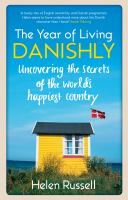
 http://discover.halifaxpubliclibraries.ca/?itemid=|library/m/halifax-horizon|1886121The year of living Danishly : uncovering the secrets of the world's happiest country is a memoir by Helen Russell, a Londoner transplanted to rural Denmark for a year. She attempts to find out why Danes rate themselves happier than citizens of any other country. Besides having a whole chapter devoted to the concept of hygge, the book explores various aspects of Danish culture: "From childcare, education, food and interior design to SAD, taxes, sexism and an unfortunate predilection for burning witches, this is a funny, poignant record of a journey that shows us where the Danes get it right, where they get it wrong, and how we might just benefit from living a little more Danishly ourselves." Publisher. 
 
http://discover.halifaxpubliclibraries.ca/?itemid=|library/m/halifax-horizon|1831357How to be Danish : a journey to the cultural heart of Denmark by Patrick Kingsley is another British book about Denmark that attempts to uncover why Danes are reputedly the happiest people in the world. This book focuses a lot more on the pop culture exports from Denmark, especially dark TV dramas such as The Killing, The Bridge and Borgen, and is written in a breezy travel guide style."Part reportage, part travelogue, How to be Danish is an attempt to fill in some of the gaps - an introduction to contemporary Danish culture that spans television, food, design, architecture, politics, and race." Publisher.


I'm not personally planning to get to Denmark any time soon, but I'm still going to cultivate my own hygge right here at home. Here are my top pics to cultivate your cozy this winter!

http://discover.halifaxpubliclibraries.ca/?itemid=|library/m/halifax-horizon|1887225The Year of Cozy: 12 Months of Creature Comfort by Adrianna Adarme is a new book that I intend to study closely in the next few months. "Like her blog, A Cozy Kitchen, The Year of Cozy features stunning photography and Adarme's friendly voice. Adarme gives us special (but totally doable) things we can do for others and ourselves. From recipes to DIY crafts, Adarme focuses on easy, inexpensive undertakings that have a big reward: happiness. The best moments in life don't require stuff, they just require intention." Publisher.

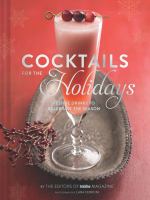
http://discover.halifaxpubliclibraries.ca/?itemid=|library/m/halifax-horizon|1853846Nothing's more cozy than a hot toddy on a cold and rainy night. Cocktails for the holidays : Festive Drinks to Celebrate the Season by the editors of Imbibe magazine has an entire chapter on warm boozy drinks, in addition to tons of fancy cocktail recipes for your holiday parties this season.

Coziness can make the winter pass more comfortably, but eating and drinking obviously only go so far to help you if you are actually suffering from seasonal depression. Winter Blues : Everything You Need to Know to Beat Seasonal Affective Disorder by Norman E. Rosenthal describes and suggests treatment for the winter blues. Many mild cases of SAD can be treated with light therapy, which can sometimes be as simple as regularly going outside for a winter walk whether or not the sun is shining.
 

Thursday, November 26, 2015

Staff Pick: Purity by Jonathan Franzen


The characters in Jonathan Franzen's latest novel Purity are all connected by one person, Purity Tyler, who goes by the nickname "Pip". Like her namesake in Charles Dickens' novel Great Expectations, Pip Tyler is a young person whose life is shaped by past events she does not understand.

We meet Pip when she is 23, saddled with a huge student debt and an emotionally needy mother. She's smart, funny in an offhand way, unhappy in her job, and fairly unsuccessful in romantic relationships. A seemingly chance encounter with Annagret, a beautiful German visitor, leads to an invitation to join the Wikileaks-like "Sunshine Project" as an intern. Pip is skeptical of the group's founder, Andreas Wolfe, but is eventually drawn in by a promise that the Sunshine Project can help her find out who her father is (her mother will not divulge this information but Pip hopes she can find him and get him to pay off some of her student debt). The story moves around in time and place, between 1960s-1990s East Berlin, 1990s New York, and present day at the Sunshine Project's Bolivian compound.

Purity is divided into seven sections, each relating parts of the story from a different character's perspective: Pip begins, centres, and ends the book, two sections are devoted to the magnetic and strange Andreas Wolfe, and one sections each from the point of view of journalists Tom Aberant, and Leila Helou. Through the narrative another important character emerges: Annabel Laird, an artist who has rejected her large inheritance and creates chaos for those who love her. This is where Jonathan Franzen really excels: creating diverse voices and vivid characters. What first attracted me to Franzen as a writer was his ability to write women characters who were complex and struggled with the social expectations put upon them to be "nice". Reading Purity, as well as his previous novel Freedom, I found many moments of recognition and sometimes unflattering truth. In this novel even though Pip as a character may represent the ideal of Purity pursued by several other characters, she is still very human and imperfect.

The story of Purity is complex and sometimes suspenseful -part of the suspense is created by the reader trying to guess exactly how the characters fit together. There's also a murder, the dread of living in Communist Germany, and the excitement and disillusionment of the Sunshine Project's truth-telling mission. Purity is also about ideas: feminism, the far reaching effects of the internet on our culture, fame, privilege, class, education, love; there is a lot to think about and talk about in this book, but none of it comes at the expense of character and story. I think it would be a great choice for literary minded book clubs.

If you read and liked Purity and haven't read Franzen's other acclaimed novels yet his most notable works are
The Corrections and Freedom.

Purity has also made me want to re-visit Great Expectations "In these literary novels, characters idealistically seeking fame and fortune find instead a rocky, dangerous coming-of-age journey through unforeseen situations while confronting unpredictable people. Both are darkly witty and psychologically rich stories filled with unforgettable, complex characters". -- Jen Baker, Novelist

Wednesday, November 25, 2015

Fascinated by the Food Industry?


I frequently find myself picking up books about the food industry. I am fascinated by the social, cultural, economic, and political implications of food production. Fortunately for me there is a wealth of literature available on the subject. Here are a few of my recent reads…

The Dorito Effect: the surprising new truth about food and flavor by Mark Schatzker

In The Dorito Effect, Mark Schatzker explores the connection between nutrition and flavour, specifically the idea that industrial food production has led to flavourless, nutritionally substandard food that must be made marketable by the addition of artificial flavours, and that these artificial flavours confuse our bodies and are the root cause of the recent global increase in health problems such as obesity, heart disease, and diabetes. It’s an idea I hadn’t heard before and Schatzker presents a good case.

Salt, Sugar, Fat: how the food giants hooked us by Michael Moss

Meanwhile Michael Moss blames the usual culprits: salt, sugar, and fat. He pulls no punches over how the food industry has used our biologically hardwired desire for these three ingredients to boost sales of food products by increasing consumption with little regard for the health or wellbeing of consumers. The relationship between government policy and food production is particularly compelling. Moss illustrates this very clearly with the example of how cheese went from being a food that was consumed in small servings off a cheese board to a dominant ingredient in most fast food and freezer meals due to subsidies that the dairy industry receives from the American government.

Bet the Farm: how food stopped being food by Frederick Kaufman

If you have no idea what commodity indexes, speculation, and derivatives have to do with the food on your plate, this book is worth a read. In Bet the Farm, Kaufman explores the relationship between food and finance. The first part looks at the impact that demand has on the food chain. Using the franchise pizza chain Dominos as an example, Kaufman shows how the demand for a consistent sauce has led to the decimation of tomato varieties and small farms on a global scale. The second part of the book focuses on GMOs, intellectual property, and the implications for society when a corporation becomes the owner of the right to grow grain. The final chapters bring everything together, documenting a global trend towards food being treated like currency, and cautioning that the same forces that led to the 2008 financial meltdown are now at work on the food chain. The author does an excellent job of explaining complex concepts from the world of finance in a manner that is both clear and enjoyable.

Pandora’s Lunchbox: how processed food took over the American meal by Melanie Warner

Melanie Warner has an easy, engaging style that is a pleasure to read. In Pandora’s Lunchbox, she dives into artificial ingredients, why they are there, what they do, and what that means in terms of texture, shelf life, production cost, and health. A great deal of research went into this book, but Warner has the gift of presenting information in a way that is as easy to follow as an interesting conversation with a friend.

Stuffed: an insider’s look at who’s (really) making America fat by Hank Cardello

The author worked in the industry as a marketing executive for many years so, while his book covers similar ground to Salt, Sugar, Fat, there is greater focus on how advertising and marketing campaigns influence our food choices. This book was clearly written by someone who is entrenched in the food and advertising industries; the marketing side of it is quite interesting; however, I was frustrated by the underlying assumption that North Americans are nothing but passive consumers with no conscious choice in the matter of what goes in their mouths.

The Tastemakers: why we’re crazy for cupcakes but fed up with fondue by David Sax

For those who are looking for something a little lighter in tone, this book about food trends is just the thing. Instead of lamenting about the unhealthy side of the food industry, the author shares stories about optimistic young hipsters who just want to share their goats’ milk caramels with the world, nice Dutch farmers who have married their hopes and dreams to the success of the Red Prince apple, and scientists who are attempting to resurrect our lost heirloom varieties of rice. It was a nice change to read about a side of the food industry that is not controlled by greedy profit driven corporations with no concern for the health and wellbeing of others and food trends are fun because you can witness them playing out all around you.

~Chloe

Tuesday, November 24, 2015

Costa Book Awards Shortlists 2015


The Costa Book Awards is one of the UK's most prestigious and popular literary prizes and recognises some of the most enjoyable books of the year, written by authors based in the UK and Ireland.

Here are but a few of the nominated titles for your reading consideration. Please check out the Costa Awards website for the full list of nominated titles.

Best Novel
A God in Ruins by Kate Atkinson

The Green Road by Anne Enright

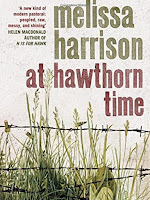
At Hawthorne Time by Melissa Harrison


http://discover.halifaxpubliclibraries.ca/?q=title:green%20road%20author:enright http://discover.halifaxpubliclibraries.ca/?q=title:at%20hawthorn%20time

First Novel Award
Spill Simmer Falter Wither by Sara Baume
The Girl in the Red Coat by Kate Hamer
The Loney by Andrew Michael Hurley

http://discover.halifaxpubliclibraries.ca/?q=title:loney

Biography Award
The Story of Alice: Lewis Carroll and the secret history of Wonderland by Robert Douglas-Fairhurst
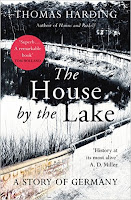
The House by the Lake by Thomas Harding (available in 2016)
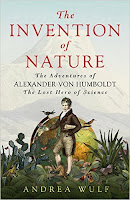
The Invention of Nature: the adventures of Alexander Von Humboldt, the lost hero of science by Andrea Wulf

http://discover.halifaxpubliclibraries.ca/?q=title:house%20by%20the%20lake%20author:harding http://discover.halifaxpubliclibraries.ca/?q=title:invention%20of%20nature%20author:wulf

Monday, November 23, 2015

Staff Pick: In a Dark, Dark, Wood


syndetics-lcMaybe you left high school and never looked back. But do you have that one friend that you wish you hadn't lost touch with? Or do you still wince when certain memories of those teenage years surface without warning? Our formative years can be our most emotional, and the protagonist of In a Dark, Dark Wood has spent years trying to forget about her high school days. Leonora (a.k.a Lee, a.k.a Nora) is a solitary crime writer living a unobtrusive life in London, England. Upon returning from a jog one autumn day she checks her email and finds an invitation to a hen party (a stagette for us Canucks). The party is in celebration of Clare Cavendish's upcoming nuptials - Leonora's best friend from high school, who she hasn't seen or spoken to in ten years. Leonora is hesitant to attend, but her curiosity wins over and she makes a pact with a mutual friend that they will both go.

The story flashes back and forth between the after effects of the gathering and the events themselves. Leonora wakes up in the hospital with only scattered memories of the hen party weekend. It takes her time to put the pieces together of what has happened. As she does so, we get to see how the weekend gathering played out and led to tragic consequences. Ware's description of the architecturally striking house Leonora and the others are staying in and the snowy, wooded environment surrounding them also adds to the chilly atmosphere. To say it's a gathering of friends would be stretching the truth - most of them don't know each other and it turns out, they don't really like each other either. This is understandable as the characters are certainly flawed - nonetheless, I was sucked in to the mystery and did not figure out the whodunnit before the end. I would have liked more elucidation about the other characters and their motivations, but it was nonetheless a very enjoyable read. I devoured the book over two evenings, so I hope that Ruth Ware continues to write more books after this bestselling debut. If you like this tale you might also like Elizabeth is Missing by Emma Healey, Precious Thing by Colette McBeth, and Abroad by Katie Crouch.

syndetics-lc syndetics-lc syndetics-lc


Sunday, November 22, 2015

Knit Your Way Through Winter


We are well into November now and the weather is getting colder. I am not someone who does well with Canadian winters and I sometimes wish I could hibernate until the spring. One of my favourite ways to avoid the cold is to stay indoors and knit or crochet. If you are a knitter, you probably know your local library is the best place to find great patterns and project ideas. Today, I’ve compiled some recent titles that offer unique projects to inspire you this winter. Have fun and stay warm!

Yarn, Yarn, Yarn: 50 fun crochet and knitting projects to color your world, by Sania Hedengren and Susanna Zacke.

This is a great book to read when looking for crafting inspiration. Yarn, Yarn, Yarn, offers a great variety of projects, including clothing and home décor.


Knitting Rugs: 39 traditional contemporary,innovative designs by Nola Heidbreder and Linda Pietz.

Personally, I’ve never considered knitting a rug until I saw this book. Knitting Rugs is filled with beautiful patterns that play with colour and texture. Also includes an entire chapter on making rugs from re-purposed materials, including old t-shirts.

Happy Feet: unique knits to knock your socks off, by Cathy Carron.

Knitting socks or slippers is the perfect winter activity and Happy Feet has over 40 different patterns to keep your feet warm.

Faux Taxidermy Knits: 15 wild animal knitting patterns, by Louise Walker.

Because you were looking for a way to knit a giant moose head for your living room. Also includes patterns for a knitted fox stole and hedgehog slippers.

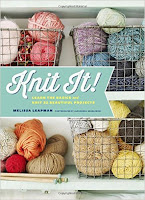
Knit It!: learn the basics and knit 22 beautiful projects, by Melissa Leapman.

Don't know how to knit? No problem. This book teaches all of the knitting basics, while also offering some fun projects to try. Start with a scarf or cowl and work your way up to a jacket or pullover sweater.

http://discover.halifaxpubliclibraries.ca/?q=title:happy%20feet%20unique%20knits%20to%20knock%20your%20socks%20off http://discover.halifaxpubliclibraries.ca/?q=title:Faux%20Taxidermy%20Knits http://discover.halifaxpubliclibraries.ca/?q=title:knit%20it%20learn%20the%20basics%20and%20knit%2022%20beautiful%20projects

Saturday, November 21, 2015

Staff Pick: Our Endless Numbered Days


All of civilization has been annihilated. Or so eight-year-old Peggy Hillcoat believes after her father, James, takes her from her North London home deep into the German woods to start a new life as the "only survivors."

So begins Peggy's captivity in Claire Fuller's compelling work of literary fiction, Our Endless Numbered Days. After nine years in the wilderness, Peggy is found wandering around a small German town--injured, malnourished, delirious, and alone--looking for a man named Reuben. As she adjusts to a world she believed had disappeared, the mysteries surrounding her time in the woods are gradually unveiled, bringing to light some disturbing realities.

I was first drawn to this novel because it was described as a coming-of-age story, which always piques my interest. As I read through it, I was struck by the author's vivid and lyrical descriptions of natural settings. The beauty of these moments provides an interesting contrast to the oftentimes unsettling content, which intensifies as the story progresses. Told from Peggy's perspective, the chapters switch back-and-forth between her life before, during, and after her captivity. Fuller scatters clues throughout to help readers piece together what exactly happened to Peggy during her time in the woods, ultimately creating a moving account of one girl's attempts to cope with and comprehend traumatic experiences and to find ways to survive.

Interested in reading other compelling and disturbing fictional tales of abduction, but with a stronger element of suspense? Emma Donoghue's Room follows five-year-old Jack, who narrates his experiences growing up in captivity with his mother, their dramatic escape, and adjustments to life on the outside. Similar to Our Endless Numbered Days, Isla Morley's Isla Morley's Above is an intricately plotted tale of a female protagonist abducted by a survivalist, but Morley's story of captivity contains a post-apocalyptic turn.

Friday, November 20, 2015

Love in the library

Last week a good friend told me that she was heading to the library to meet someone for a blind date. It seemed like a great idea to me - libraries are generally brightly lit public spaces that offer opportunities to sit and chat as well as stroll through the stacks, and we also have a great coffee shop. Plus it's never too early to determine if you share the same taste in books, right? (Although if having a similar taste in books is a compatibility marker, then my non-reading husband and I are in trouble!)

http://discover.halifaxpubliclibraries.ca/?itemid=|library/m/halifax-horizon|1496258The Romance of Libraries by Madeleine Lefebvre is a lovely anthology of true-life stories about relationships that began (or ended) within libraries, and although many of the stories vary a great deal, the physical setting of the library as a public space always plays a role. "While most accounts are about romances that developed in a library setting, some are about romances with libraries themselves. Loosely arranged by context, the stories―happy, sad, or bittersweet―share an over-arching theme of the transformative and emotive power of libraries in our lives. Lefebvre's underlying message is that the physical library can play a role in our affections that the virtual library never can." Publisher.

http://discover.halifaxpubliclibraries.ca/?itemid=|library/m/halifax-horizon|1854558Some other books for the literary-minded romantic:
The Jane Austen rules : a classic guide to modern love by Sinéad Murphy gleans dating advice from everyone's favourite Regency Era author, Jane Austen. "What's a strong, independent-minded woman supposed to do in a world of insipid dating guides? Sinéad Murphy responds by asking: Who has more time-tested secrets than Jane Austen, whose novels continue to captivate us almost two hundred years later? Whether you can recite paragraphs from Pride and Prejudice or just admired Colin Firth in his wet t-shirt, the romance of Jane Austen's world is one you'll never forget. Does love like that even exist today? Yes, it does. If you look closely at the women of Jane Austen's books, as the witty scholar Sinéad Murphy has, you'll discover Austen's countless tips for finding the right leading man, navigating the ups and downs of courtship, and building a happy, independent life for yourself." Publisher.


http://discover.halifaxpubliclibraries.ca/?itemid=|library/m/halifax-horizon|1775142Much Ado about Loving : What our Favorite Novels can Teach You About Date Expectations, Not-so-Great Gatsbys, and Love in the Time of Internet Personals  by Jack Murnighan and Maura Kelly takes a critical look at romances in literature. Rather than providing dating advice, this book is a fun look at our favourite classic books from two authors with different perspectives. The books is set up in a "he said - she-said" format, with the two authors taking alternate chapters debating the romantic feasibility of literary couples while sharing personal anecdotes. This book is a fun read, whether or not you're actively looking for love!