Monday, February 29, 2016

Revisiting the Classics: Jane Eyre

I am starting to understand that there are two types of readers: those who love to re-read their favourite books, and those who read books once and then move on. I am firmly in the re-reading camp.

http://discover.halifaxpubliclibraries.ca/?q=title:jane%20eyre%20author:bronteI first read Charlotte Brontë's Jane Eyre as a teenager. The classic gothic tale tells the story of Jane Eyre's sad childhood, her unhappy school years, and her tumultuous relationship with her employer, Mr. Rochester. I always loved the dramatic setting and the unexpected plot twists but my favourite part was the witty repartee between Mr. Rochester and Jane (although I can't help but find him more manipulative every time I re-read the book.) I keep coming back to Jane Eyre's story because of the character's complexity; although Jane appears meek and understated, she is able to stand up to people more powerful than her in order to maintain her sense of self. She is fiercely uncompromising when it comes to her inner core of morality.

http://discover.halifaxpubliclibraries.ca/?itemid=|library/m/halifax-horizon|1758781There are loads of adaptations, mash-ups, prequels and sequels that relate to Jane Eyre. Here are a few notable selections:

Jane Eyre : the graphic novel  by Amy Corzine and illustrated by John M. Burns is a fairly faithful adaptation of the the original book, designed to bring classic literature to a young adult audience.

http://discover.halifaxpubliclibraries.ca/?itemid=|library/m/halifax-horizon|198535Wide Sargasso Sea by Jean Rhys was published in 1966 as a prequel to Jane Eyre, and tells the story of Antoinette Mason, a daughter of Dominican slave owners who lost their fortune. When her mother remarries, Antoinette is married off by her step-father to a British man who we gradually understand is Mr. Rochester. He feels duped by his hasty marriage, and is alarmed and alienated by the wildness of the Caribbean. Upon return to England, he locks her up in his attic where she eventually goes mad. Wide Sargasso Sea has become a feminist classic in its own right and is a fascinating counterpoint to Jane Eyre.

There are many other Jane Eyre-inspired books that will definitely never become classics but are nonetheless fun to read!  Jane Eyrotica by Karena Rose and Jane Eyre laid bare : the classic novel with an erotic twist by Eve Sinclair are mash-ups that combine Charlotte Bronte's text with newly written erotic scenes.  Rose's book simply cuts and pastes erotic scenes into the original story, which I found rather alarming and not true to the original character of Jane at all. (Spoiler alert: Jane sleeps with practically everybody.) Sinclair is a little more creative in her attempts to reimagine Jane's secret sensual life, and includes some rather hilarious plot twists. (Spoiler alert: the mysterious noises in the attic are not what you think they are!)
If you like mash-ups but erotica isn't your thing, you could check out Jane Slayre by Sherri Browning Erwin, where - you guessed it! - Jane stars as a vampyre/zombie/werewolf slaying heroine. The popularity of Pride and Predjudice and Zombies probably means that we'll see more of this particular genre in the near future.

http://discover.halifaxpubliclibraries.ca/?itemid=|library/m/halifax-horizon|1792779 http://discover.halifaxpubliclibraries.ca/?itemid=|library/m/halifax-horizon|1793083 http://discover.halifaxpubliclibraries.ca/?itemid=|library/m/halifax-horizon|1712823

Sunday, February 28, 2016

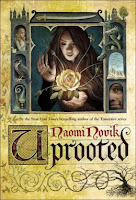
Staff Pick: Uprooted by Naomi Novik


Naomi Novik’s Uprooted is a fantasy novel based on Polish folklore taken from the author’s own ancestry. In the book, a young woman named Agnieszka and her family live in a small rural village that is generally quiet…except that occasionally its inhabitants disappear or suddenly go insane. The reason is that the creeping Wood that borders their village will literally swallow up livestock, people, or even entire towns and leave them “corrupted,” a horrifying sickness for which the only cure is death.

This menacing Wood is only kept at bay by an enigmatic magician named “the Dragon,” who in return picks an eligible girl from the town to be his servant, locked away in his tower for a decade. At this year’s “choosing,” although every indication points to her best friend, Kasia, being chosen, Agnieszka is stunned when she is picked instead.

This begins Agnieszka’s journey of adjusting to her new role in society and discovering more about the world around her, like the intricacies of magic and secrets about her village and herself.

I loved how the author skillfully plotted the story, which enthralled me with its loveable characters, details, and cleverness. Even though the kingdom and its lands are complex, the author doesn’t inundate readers with too many characters, places, and complicated names at once. Instead, we are introduced to this fantasy world and its inhabitants carefully, getting to slowly see the intricacies in each one. And yet the story remains fast-paced but emotionally satisfying.

Uprooted has been deservedly nominated for both the Nebula Award and the Hugo Award, which recognize excellent writing in science fiction and fantasy, and I am excited to see which books will take home the awards this year!

For similar reads, try these:

Howl’s Moving Castle by Diana Wynne Jones

Both this and Uprooted have the trappings of traditional fairy tales but add richness and depth to the characters and worlds. The two novels involve a pragmatic young woman (Sophie from Howl’s Moving Castle and Agnieszka from Uprooted) moving into a castle with a vain and grumpy wizard (Howl and the Dragon). The main characters then slowly begin to realize that there is more to everything than meets the eye, including the castle, the magician, the nature of magic, and even themselves. They even both have to face a wicked witch who attempts to take over their worlds. It’s interesting to discover each detail of the fantasy universes through their experiences.

His Majesty’s Dragon by Naomi Novik

This is another book by author Naomi Novik, and I enjoyed it just as much as Uprooted. His Majesty’s Dragon is the first book of the Temeraire series, an alternate history set in the early 1800s in which the British are fighting Napoleon…via exciting aerial combat on specially trained dragons! Will Laurence is a stiff and proper navy man, captain of his ship, when they engage in battle with the French and capture a precious dragon egg. When it hatches onboard, Laurence names the dragon Temeraire, and they form a special lifelong bond (the dragon talks!).

Like with Uprooted, I found that this book just flew by: the world-building is rich and the action scenes are thrilling, but it’s really the three-dimensional characters that make the world come alive. Both the novels have a little romance, but they focus more deeply on the bonds of friendship, community, and duty. This is the first book in the ten-part Temeraire series (the final book, League of Dragons, was just released), and I am so excited to read the next one!

Saturday, February 27, 2016

Almost Time for Spring Cleaning

With this unseasonably warm weather (anyone remember what Halifax looked like this time last year?), I am already in gear to start my spring cleaning. There's something about the change of the season and the promise of sunshine that makes me want to tidy, organize, and purge, purge, purge. I have a deep fear of junk, and I am constantly trying to de-clutter my life and my home. Sometimes, this can be a real challenge. Here are some books that can give you some tips and help make the process a little less painful!

The Life-Changing Magic of Tidying Up is written by Marie Kondo, a Japanese cleaning consultant and inventor of the KonMari method. The premise here is that you can simplify and organize your living space correctly once, and then never have to do it again. This book can get a little bit hokey (among other things, Kondo implores you to talk to your possessions and your home, and insists that every article of clothing has a soul). However, if you're able to get through it you'll find that Kondo is teaching you some important lessons about minimalism and how to live a life based on something other than material possessions. She strongly believes in having respect for your possessions, and for keeping only those things that "bring you joy." Her approach certainly does make it easier for you to let go of things you've accumulated over the years but no longer really want or need, and she does it all with a guilt-free approach, never admonishing the reader for having collected all of this extraneous stuff. It may not be for everyone, and there were a few moments where I found myself rolling my eyes, but it has definitely helped me develop good habits for purging my life of unnecessary clutter.

Author of thehairpin.com's column "Ask a Clean Person", Jolie Kerr has a written a book titled My Boyfriend Barfed in my Handbag... and Other Things You Can't Ask Martha. Touted as being a "hilarious and practical guide to cleaning up life's little emergencies," Kerr focuses on everything from the absolute basics of cleaning, to very specific questions such as "what should I do when bottles of home brewed ginger beer explode in my kitchen?" Many of the topics she covers are things you would never dream of calling your mom about, and may even have you clearing your search history after a stealthy Google. While I am a true believer in the spring clean and throwing/giving stuff away, I would have to say that I err on the side of messy in my day to day life. Regular housework is just not my forte and is not something that I find very interesting, but reading Kerr's book made me laugh, held my attention, and gave me many little eureka moments when I discovered something I could incorporate into my life (or realized a cleaning problem that I didn't even know I had). While some of the content could be considered a little racy (she really does cover ALL kinds of messes), if you have a sense of humour, this book is for you!

Erin Rooney Doland, editor-in-chief of unclutterer.com, is nothing short of an organization expert. In her book Unclutter Your Life in One Week, she teaches you not only how to organize your home, but how to eliminate clutter in order to ease stress and anxiety, and prevent you from feeling overwhelmed within your surroundings. "There is no one-size-fits-all answer for organization. Erin offers useful and innovative suggestions for tackling the physical, mental, and systemic distractions in different areas of your home and office each day. Her down-to-earth approach will help you part with sentimental clutter, organize your closet based on how you process information, build an effective and personalized filing system, avoid the procrastination that often hinders the process, and much more. Once you cure the clutter, she shares practical advice for maintaining your harmonious home and work environments with minimal daily effort." - publisher


Friday, February 26, 2016

Nebula Award Nominees - 50th Annual


The 2015 Nebula Award nominees have been announced. The books are voted on by members of the Science Fiction and Fantasy Writers of America. Amongst this year's in the running are:

Raising Caine by Charles E. Gannon
The Fifth Season by N.K. Jemisin
Ancillary Mercy by Ann Leckie
The Grace of Kings by Ken Liu
Uprooted by Naomi Novik
Barsk: the elephant's graveyard by Lawrence M. Schoen
Updraft by Fran Wilde

http://discover.halifaxpubliclibraries.ca/?q=title:fifth%20season http://discover.halifaxpubliclibraries.ca/?q=title:ancillary%20mercy http://discover.halifaxpubliclibraries.ca/?q=title:grace%20of%20kings
http://discover.halifaxpubliclibraries.ca/?q=title:uprooted%20author:novik http://discover.halifaxpubliclibraries.ca/?q=title:barsk%20the%20elephant%27s%20graveyard http://discover.halifaxpubliclibraries.ca/?q=title:updraft%20author:wilde

Thursday, February 25, 2016

Books for Cat Lovers


Does it sometimes feel as though you would do anything for your feline friends? Below, I have gathered some of my favourite cat books for my fellow cat lovers.

For those that like to knit, Knitted Cats & Kittens by Sue Stratford offers patterns for some of the most adorable knitted cats I have ever seen. Some of my favourite patterns include, Super Cat, Doorstop Cat, and Fluff Balls.


Henri, le Chat Noir:the existential musings of an angst-filled cat, is written by William Braden and filled with exactly the type of witty thoughts that I imagine cats must have. A quick and very funny read, the book is filled with funny cat thoughts, including, “Every search for truth must begin somewhere. If mine begins on the couch, who are you to judge?”

The Big New Yorker Book of Cats is an anthology featuring articles, short stories, poetry, cover artwork, and cartoons about cats. The book has been beautifully put together and includes cat-related contributions from Margaret Atwood, Roald Dahl, Haruki Murakami, and Ted Hughes.

The Life & Love of Cats by Lewis Blackwell, is a beautiful coffee table book filled with gorgeous photography taken by leading animal photographers from around the world. Alongside the beautiful images, Blackwell offers an informative text which discusses different breeds of cats as well as the changing relationship humans have had with cats throughout history.

Review of My Cat by Tanner Ringerud and Jack Shepherd, invites cat owners to write reviews of their cats. Using criteria such as appearance, sociability, usefulness, and huggability, cat owners each write a review and then assign an overall grade. The ratings range from excellent to awful and will be amusing for any cat-owner to read. Quotes include “A true sociopath, Cielito knows exactly how to manipulate you to get what he wants.” and “She flings litter out of the box with incredible strength and skill that makes a joke of any human innovation to prevent it.”

Cats in Hats: 30 knit and crochet patterns for your kitty by Sara Thomas, is a must-read, even if you just borrow it to look at the pictures. The photographs of different kittens wearing outrageous hats are hilarious. If you are into knitting or crocheting, you can decide whether you want to make your own cat wear a hat that makes them look like a turkey, a reindeer, a shark, or my personal favourite, a banana.

Wednesday, February 24, 2016

Try Out a New Genre: Cli-Fi

In the last few decades, the issues surrounding climate change has gained increasing public awareness. By 2016, it is something that is deeply rooted in politics and that society must confront on an almost daily basis (whether through changing temperatures, increase in storms, food or water shortages, etc.). It only stands to reason that it would find it's way into our literature as well.

Climate fiction may not be an entirely new concept, but in recent years it has gone from being a sub-genre of science fiction to a genre all on it's own, known as "cli-fi." Usually taking on a distinct dystopian quality, cli-fi novels play with the idea of how our world will be affected by the negative impacts of climate change and global warming. This new genre is being touted as a way to connect activism to literature, and also promote an interest in climate sciences in youth. It's finding its way into other forms of media as well, with movies like The Day After Tomorrow and the more recent Interstellar

If you want to try your hand at this contemporary genre, check out some of these cli-fi titles from your library:

Margaret Atwood's MaddAddam series is my favourite example of cli-fi. It takes place on an Earth that has slipped under the control of a global corporation that has managed to gain power through the questionable use of genetic modification and engineering. In the first installment, Oryx and Crake, the story is told through Jimmy's eyes, and we get glimpses of the past and the present. In the present, he is a wild man and, as far he knows, the only remaining human being in the wake of a disastrous plague. The flashes to the past show us how things turned out that way, largely at the hands of Jimmy's best friend Crake. The sequel, The Year of the Flood, is written in the same manner (past and present), but gives us the perspective of a few characters. In the present, we meet a few other plague survivors in the pursuit of staying alive and finding other living humans. In the past, we get a grittier look at Atwood's world before the plague, centered largely around a religious cult-like group called God's Gardener's. The two novels end at the same point, and the finale, MaddAddam picks up right where they leave off. This series is extremely gripping, and Atwood has crafted a world that is at the same time all too recognizable and totally incomprehensible. I've read this series several times, and each time I pick up on some new nuance or clever connection that I didn't grasp before. Together, these books work as an excellent introduction into the genre of cli-fi.

In Flight Behavior, by Barbara Kingslover, Delorobia Turnbrow has found herself in a loveless marriage brought on by a teenage pregnancy. To compensate, she enters into an affair, and while on her way to meet her lover, discovers that a forest behind her farm is completely covered with millions
of Monarch butterflies. It seems that their migratory route has been disrupted, and what is initially called a miracle, is soon discovered to be a scientific disaster: the butterflies have been driven from their natural habitat by pollution and are facing extinction in this new, northerly climate. Imbued with strong, likable characters and a heavy sense of activism, this novel does double duty in sending an important message regarding pollution and climate change, and telling a heartwarming story of a woman in turmoil. 

In Paolo Bacigalupi's The Windup Girl, "Anderson Lake is a company man, AgriGen’s Calorie Man in Thailand. Under cover as a factory manager, Anderson combs Bangkok’s street markets in search of foodstuffs thought to be extinct, hoping to reap the bounty of history’s lost calories. There, he encounters Emiko. One of the New People, Emiko is not human; instead, she is an engineered being, creche-grown and programmed to satisfy the decadent whims of a Kyoto businessman, but now abandoned to the streets of Bangkok. Regarded as soulless beings by some, devils by others, New People are slaves, soldiers, and toys of the rich in a chilling near future in which calorie companies rule the world, the oil age has passed, and the side effects of bio-engineered plagues run rampant across the globe." - publisher

Bacigalupi touches on the topic of climate change again, this time taking the water crisis in the American South West to the extreme in The Water Knife. "In the American Southwest, Nevada, Arizona, and California skirmish for dwindling shares of the Colorado River. Into the fray steps Angel Velasquez, detective, leg-breaker, assassin and spy. A Las Vegas water knife, Angel “cuts” water for his boss, Catherine Case, ensuring that her lush, luxurious arcology developments can bloom in the desert, so the rich can stay wet, while the poor get nothing but dust. When rumors of a game-changing water source surface in drought-ravaged Phoenix, Angel is sent to investigate. There, he encounters Lucy Monroe, a hardened journalist with no love for Vegas and every reason to hate Angel, and Maria Villarosa, a young Texas refugee who survives by her wits and street smarts in a city that despises everything that she represents.  With bodies piling up, bullets flying, and Phoenix teetering on collapse, it seems like California is making a power play to monopolize the life-giving flow of a river. For Angel, Lucy, and Maria time is running out and their only hope for survival rests in each other’s hands. But when water is more valuable than gold, alliances shift like sand, and the only thing for certain is that someone will have to bleed if anyone hopes to drink." - publisher


Tuesday, February 23, 2016

Parenting with a Healthy Dose of Humour


Raising children is a tough job. Chaos and exhaustion are two words that come to mind. I have compiled a list of funny, quick reads that embrace the crazy and will have you laughing about the realities of life with kids. These books are highly recommended for days when you are stressed out and could use a giggle.

Confessions of the World’s Best Father, by Dave Engledow, includes a funny and creative collection of photographs of the author and his daughter during the first few years of her life. The photographs feature father and daughter in amusing, sweet, and sometimes dangerous situations as Engledow explores the joys and challenges of fatherhood.

It is absolutely impossible not to laugh out loud while reading, Things I’ve Said to my Children, written and illustrated by Nathan Ripperger. Alongside Ripperger’s fun graphic designs, each page includes something that the author has said while raising his own five children. Personal favourites include, “Honey, please don’t lick the toaster,” “We do not poop in books,” and “Finish your Doritos if you want some Cheetos.” This one is not to be missed.

The book, When Parents Worry: the real calls doctors receive… from moles that seem to move to funny-smelling poo, lists real concerns that the author, Dr. Henry Anderson has heard from parents. These hilarious concerns from well-meaning and probably extremely sleep-deprived parents make for a very fun read. Some favourite examples include, “We just bought our daughter a sippy cup. What should we put in it?”, “Can my two-week-old go outside?” and “One of my twins swallowed a penny, but I’m not sure which one it was.”

Parenting is Easy: you’re probably just doing it wrong, is written by Sara Given, creator of the Tumblr blog, “It’s Like They Know Us.” Given’s book is filled with idealized photos of parents and their children. For each photograph, Given’s writes a funny, sarcastic caption. This is a quick read that will have you laughing right away. Life with children is never easy and Sara Given’s book is a great reminder to have a sense of humour in the midst of the chaos.

Monday, February 22, 2016

Staff Picks! A World Elsewhere by Wayne Johnston

A World Elsewhere by Wayne Johnston.

Landish Druken, son a renowned sealing captain, convinces his father to send him to Princeton, with the understanding that he will return to Newfoundland and take his place on his father's ship. While at Princeton he meets astonishingly wealthy Padgett "Van" Vanderluyden and the course of his life changes. Academic dishonesty and Van's betrayal sees Landish expelled from both Princeton and his father's good graces. Back in Newfoundland Landish's father Abram Druken (reminiscent of Abram Kean of the 1914 Newfoundland Sealing Disaster) is held by some to be morally responsible for Francis Carson's death while on a sealing exhibition. Carson's posthumous son, Deacon, is orphaned and adopted by Landish. They find themselves in dire circumstances; the Druken name too feared for Landish to find employment. Landish throws himself on Van's mercy and like Coriolanus seeks out "a world elsewhere".

A World Elswhere is gothic and melodramatic. Landish and Deacon find themselves virtual prisoners is Van's mansion - called Vanderland - modeled on Biltmore created by George Washington Vanderbilt in North Carolina. Vanderluyden, due to his extreme wealth and warped mind, is solitary and has no equal. Their early friendship makes Landish a sort of equal and he fulfills Van's need to have a witness to his life. Landish can still be controlled, however, and is powerless because of his love for Deacon. The plot revolves around a murder which may or may not have happened. As the final of many versions of the tragic event is revealed you are still left wondering if it is indeed truthful.

I found this novel to be so compelling that I was not bothered by my bus being delayed 45 minutes on the Bedford Highway. Johnston has created in Landish Druken another character which just propels you through the story, much like his Joey Smallwood in The Colony of Unrequited Dreams and, my favourite, Draper Doyle of The Divine Ryans. Again, characteristic of a Johnston novel is playful language and word play. Landish, who was fond of a drink, would sing "what shall we do with a Druken sailor" and Van's daughter Goddie, who seems out of step with the rest of the world, has some of the best lines including, " he sent his son to die on the cruise of fiction." Again it reminds me of The Divine Ryans. Uncle Reg is helping young Draper deal with his father's death calling it psycho-oralysis, meaning the patient has to do all the talking. "But for God's sake, he said, don't tell anyone you're being oralized by your uncle. If you do I'll be arrested." This word play is sprinkled throughout the book and is reminiscent of P.D. Wodehouse, James Joyce and G.K. Chesterton.


Sunday, February 21, 2016

Captains of Industry

In Merchant Kings: when companies ruled the world 1600 to 1900 (M) by Stephen R. Bown describes a time a rapid industrialization when intelligent, quick-witted and ruthless entrepreneurs amassed great personal fortunes while guiding the economic destiny of their countries.
"Through the Age of Heroic Commerce, from the 17th to the 19th centuries, a rogue’s gallery of larger-than-life merchant kings ruled vast tracts of the globe and expanded their far-flung monopolies to generate revenue for their shareholders, feather their own nests and satisfy their vanity and curiosity. Their exploits changed the world during an age of unfettered globalization, mirroring a world we know today." - Publisher

Morgan: American financier (M) by Jean Strouse - This massive and detailed biography tells the story of John Pierpont Morgan, the power behind General Electric, US Steel and railroad empires. He lived during America's Gilded Age and was a major force behind the country's rapid industrialization. Strouse shows Morgan to have had a complex personal life in addition to possessing financial genius. Morgan's life was plagued by frequent illnesses and he lost his beloved first wife at an early age. His second wife proved challenging and the marriage was distant. Over time Morgan developed a reputation for arrogance and bigotry. Strouse attempts to humanize this incredibly powerful man. Strouse makes the banking and financial world (almost for me) readable and there is a great deal of information about Morgan's life as art collector.
Publisher's Weekly says, "The Morgan who emerges from these pages is, for all his hard ambition and ruthlessness, not merely ruthless and greedy. By blending the different facets of this most complicated man, Strouse humanizes without shrinking or whitewashing one of America's mythic figures."


There must be something about industrial financiers and art collecting that go together. American-born William C. Van Horne worked his way through the railroad business to become general manager of the Canadian Pacific Railway and the company's president. In the course of his career he developed a telegraph service, opened hotels and launched a line of steamships. He was outgoing and gregarious and had a wide range of interests that extended beyond railroads and finance. Compared to our other captains of industry Van Horne appeared to enjoy a happy home life. He was a typical Victorian man who controlled finances and household decisions, still his family was deeply important to him and he doted on his wife and children. Van Horne was not only an art collector, but an artist in his own right. His art collection contained Dutch and Flemish masters, a large portion of which he gave to the Royal Ontario Museum. From Telegrapher to Titan: the life of William C. Van Horne (M) by Valerie Knowles was nominated for the Ottawa Book Award.

So what about a woman at the helm? Barbe-Nicole Clicquot Ponsardin, 18th century vintner, is the subject of Tilar J. Mazzeo's The Widow Clicquot: the story of a champagne empire and the woman who ruled it (M). Madame Clicquot was known as the Grande Dame of Champagne. She was widowed at the age of 27 and took over her husband's wine business. She developed fermentation techniques that made her product superior to that of her competitors. In her youth she lived against the backdrop of the French Revolution and as an adult entertained Napoleon and Josephine Bonaparte. She was a daring entrepreneur who grabbed hold of the freedom that widowhood provided her. Drinkers asked for her product by requesting a bottle of "The Widow". This book is as much a history of wine as it is a biography of this remarkable woman.

Saturday, February 20, 2016

Staff Picks - The Guardians by Andrew Pyper

There is something sinister about an abandoned house. Houses are meant to be lived in. They silently carry history as they pass from one generation to another and from one family to another. Something terrible happened in the old Thurman House in The Guardians (M)by Andrew Pyper and four young men were to carry this burden into adulthood.

Trevor, Carl, Randy and Ben were typical teenage boys growing up in small town Ontario in the 1980s. They were nice enough kids whose lives centered around hockey and girls. Their friendship is tested early when Ben's father dies suddenly. They are a tight loyal group of kids. The town is shaken up when the young attractive music teacher disappears. Ben, who lives across the street from the abandoned Thurman House, has reason to be suspicious that something terrible happened to her there and the boys are compelled to act.

What they see, or believe they see and what they do, or believe they do is so traumatic that they suffer the consequences 24 years later. They all suffer in one way or another, whether from failure in career or relationships, illnesses both mental and physical, and drug addiction. Ben, who had been watching and guarding the Thurman House for decades, commits suicide and this act brings the friends back to their home town again. Once Ben's sojourn ends, another girl disappears.

This book is a departure for me. Horror is never my first choice, but with this book, I have to admit, I have never turned pages so quickly. Sometimes I turned the pages faster than I could read the words and had to go back and catch up. I'm not sure if the action was propelling me through the story or if I just found it so unnerving that I wanted to get through it quickly. Although never gory, it was creepy and disturbing to feel the characters' loss of control. The boys are compelled to make choices that you know are wrong and they know are wrong and as much as you yell at the book, they still make those choices. You never get the feeling that ok, now the worst has happened.

Although this is a haunted house story much in the tradition of Stephen King and Peter Straub, it is also a story about male friendships and about boys becoming men. The present narrative is told by adult Trevor and the past from his memories of his sixteen year old self. It is a coming of age meeting a midlife crisis.

I live across the street from an abandoned house and could not read this book from my usual spot by the window.

The Guardians themes of secrets, friendship and loyalty reminds me of I Know What You Did Last Summer (M) by Lois Duncan."They didn't mean it. They didn't mean to hit the boy. There was a party, and it was an accident...that wasn't who they were. They were pre-law, a football player, bound for New York. No one could know, so Barry, Julie, Helen, and Ray swore one another to secrecy. But now, a year later, someone knows. Julie receives a haunting, anonymous threat: "I know what you did last summer." The dark lie is unearthed, and before the four friends know it they need to outsmart a killer...or they will be the next to die." - publisher

Friday, February 19, 2016

Literary Exclamation Points: or Books! Books! Books!

The exclamation point: intended to give emphasis to a statement, it doesn't get a lot of play in the world of novels. Other than in dialogue, the exclamation point generally doesn't seem to fit in a novel: it's too silly, not mature enough. Remember that episode of Seinfeld where Elaine's boyfriend wouldn't use exclamation points? It was Season 5's "The Sniffing Accountant" and as episodes of Seinfeld were able to do, it perfectly describes the situations where something was desirable (in notes and phone messages) and not (excessively in novels).

This post started percolating in my mind with a single book title: Swamplandia! by Karen Russell, which was released to much buzz this past spring. I was definitely intrigued by the descriptions of a book set in a family run theme park in the Florida Keys where the main attractions were alligators, but I have to admit that the inclusion of the exclamation point in the title made me want to read it a bit more. This book isn't just "Swamplandia", it's "Swamplandia!" and somehow that extra punctuation made all the difference to me. The book, by the way, totally lives up to the hype: it's a wonderfully crafted, imaginative story of loss and family ties (with a sizable serving of adventure) with one of my favourite protagonists in a long time: 13 year old Ava Bigtree.

So, Swamplandia! You hooked me with your exclamation point, but you also made me wonder who else has tried this crafty trick of titlingand I found you weren't alone.

(all quotes from library catalogue summaries unless otherwise noted)


We Sure Can! : how jams and pickles are reviving the lure and lore of local food by Sarah B. Hood. Exclamation points aren't just for fiction, this book "celebrates the ongoing "Canvolution," in which urban "preservationists," local-food aficionados, rural picklers and jammers, and food bloggers are rediscovering the lost art of home canning jams, pickles, and other preserves." And if I'm not mistaken, there's a pun in that title as well as an exclamation point: extra points!

Westward Ho! by Charles Kingsley. It's not just modern types who can pepper their titles with exclamation points, as this 1855 novel can attest to. Beginning in England, this high seas adventure set in the Elizabethan era includes romance, kidnap and the Spanish Inquisition.

Author Robin Jones Gunn may get the prize for exclamation point usage though, in her ongoing faith based, globetrotting, chick lit Sisterchicks series, including Sisterchicks say ooh la la!, Sisterchicks do the hula! and Sisterchicks down under!

And if Horror is more your game, you can try Zombies! Zombies! Zombies! edited by Otto Penzler, released just this past September, Booklist called it an "exhaustive compendium of zombie literature".

If you know of more bookish exclamation points, feel free to add them in the comments. Or, I guess I should say, in the comments!